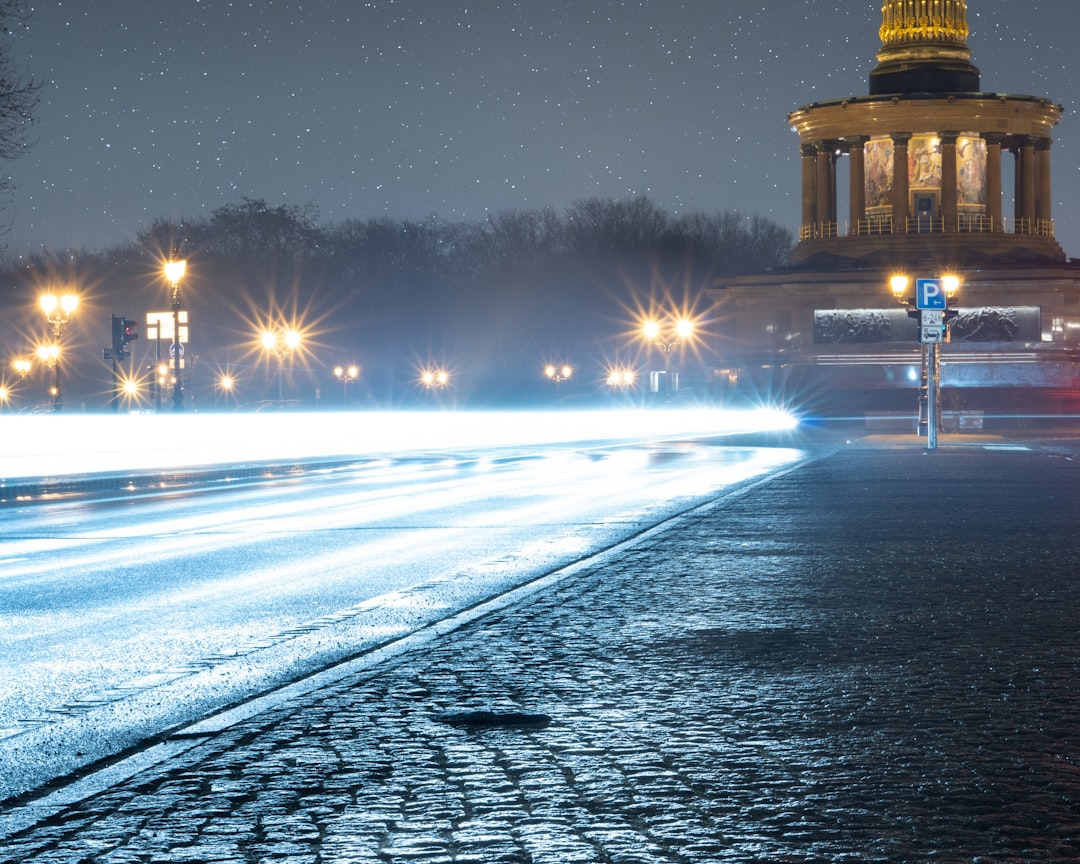
Berlin on $30, $100 or $350 a day
Berlin is Europe's capital of reinvention — a city where Cold War history, world-class clubbing, cutting-edge art, and a fiercely independent food scene coexist in gloriously gritty harmony. Every neighbourhood feels like a different city.
Share
Plan by budget
One city, three ways to travel it.
How much does Berlin cost per day? Budget travellers get by on about $30 a day, mid-range trips run around $100, and luxury starts near $350 — accommodation, food, transport and activities included. That makes Berlin the joint 32nd cheapest of 110 cities for a mid-range trip (see all 110 ranked).
Daily budget · Budget
Berlin is one of Europe's cheapest capitals. Döner kebabs cost €4, club entry is often free before midnight, and many of the best museums are free on the first Sunday of the month. Public transport is excellent and affordable.
Where your money goes
How to Get There
What to Do
The longest surviving stretch of the Berlin Wall — 1.3 km painted by 118 artists in 1990, from the Fraternal Kiss to the breakthrough Trabant.
Read guide → Map ↗ Get tickets on Tiqets →Five world-class museums on one Spree island — Nefertiti, the Ishtar Gate, and 6,000 years of civilisation. UNESCO-listed, one day ticket.
Read guide → Map ↗ Get tickets on Tiqets →The GDR's 368-metre flex on the Alexanderplatz skyline — Germany's tallest structure, a 40-second lift, and the city flattened out below.
Read guide → Map ↗ Get tickets on Tiqets →Where to Stay
The Mitte house of the design-hostel chain, on the north side of the centre near Nordbahnhof and walkable to Museum Island. Large ground-floor bar and co-working space, dorms with proper mattresses, and private rooms that undercut most budget hotels in Berlin. The trade-off is the usual Generator one: the bar is the point of the building and it stays busy late, so light sleepers should book a room away from it.
Map ↗ Check prices on Klook →Hostel accommodation with dorm beds and, usually, a few private rooms.
Check prices on Klook →Hostel accommodation with dorm beds and, usually, a few private rooms.
Check prices on Klook →Where to Eat
Sample 3-Day Itinerary
Wall, Gates & History
Brandenburg Gate at 8am (free, 24h). The Reichstag dome (book free tickets at bundestag.de months ahead - worth it for the view and the symbolism of walking above the German parliament). Walk to the Holocaust Memorial (free, 24h).
Checkpoint Charlie (free to walk through - the museum is overpriced; the location is the point). Topography of Terror (free - the most affecting Nazi-era documentation site in Berlin, built on the SS and Gestapo headquarters site). Lunch at a Kreuzberg Imbiss: a doner kebab for €4.
East Side Gallery at sunset (free, 1.3km of Wall murals). Walk along the Spree. Dinner in Friedrichshain: Simon-Dach-Strasse for a beer at €4 and a currywurst for €3 - the essential Berlin street meal.
Museum Island & Markets
Museum Island: the Pergamon Museum (€19 - the reconstructed Pergamon Altar, the Ishtar Gate from Babylon, the Market Gate of Miletus - three of the ancient world's greatest structures under one roof). Book timed entry. Allow 3 hours.
Walk through Mitte to Hackescher Markt. The courtyards (Höfe) behind the market have street art and independent shops. Lunch at a Mitte cafe (€8-12). Then the DDR Museum (€9.50 - the most interactive museum in Berlin; you actually sit in a Trabant).
Mauerpark on a Sunday (free - the outdoor karaoke amphitheater, the flea market, the food trucks). Or: Kreuzberg bar evening - Monarch bar above a supermarket for €4 beers and a city view.
Charlottenburg & Tiergarten
Charlottenburg Palace (€12 for the historic apartments - the most palatial interior in Berlin). The palace gardens are free. Walk back east through the Tiergarten (Berlin's vast central park, free).
Victory Column (Siegessaule) - climb for the view (€4). Continue east through the Tiergarten to the Kulturforum: the Gemaldegalerie (€10) for Vermeers and Rembrandts, or the Neue Nationalgalerie (€14, Mies van der Rohe building - the most beautiful modern building in Berlin).
Potsdamer Platz for a walk through the architectural chaos of reunification. Dinner in Neukölln: a Lebanese mezze at a Sonnenallee restaurant for €12-15. A natural wine at a Reuterkiez bar for €7.
Get a day pass (Tageskarte) for €8.80 — covers all zones. Eat döner at Mustafa's Gemüse Kebap (worth the queue). Free walking tours from Brandenburg Gate are excellent.
Daily budget · Mid-range
Mid-range Berlin gets you a design hotel in Mitte or Kreuzberg, proper restaurant meals with natural wine, and skip-the-line museum access. The city's creative scene is best experienced at this level.
Where your money goes
How to Get There
What to Do
Five world-class museums on one Spree island — Nefertiti, the Ishtar Gate, and 6,000 years of civilisation. UNESCO-listed, one day ticket.
Read guide → Map ↗ Get tickets on Tiqets →The GDR's 368-metre flex on the Alexanderplatz skyline — Germany's tallest structure, a 40-second lift, and the city flattened out below.
Read guide → Map ↗ Get tickets on Tiqets →East German daily life you're allowed to touch — drive a Trabi, rifle a Stasi-bugged flat, and understand the country the Wall enclosed.
Read guide → Map ↗ Get tickets on Tiqets →Where to Stay
A design four-star in Mitte with a rooftop bar that is genuinely used by Berliners rather than just guests. Rooms are compact, concrete-and-oak, and priced well below what the location deserves — Rosenthaler Platz puts you inside the bar and gallery district with a U-Bahn station at the door. Compact is the honest word: these are small rooms, and the cheapest categories have very little floor space beyond the bed.
Map ↗ Check prices on Klook →A former factory in Friedrichshain, opposite the Warschauer Straße station, run with a distinctly Berlin looseness — courtyard, communal tables, its own restaurant sourcing from a farm the owners run. It is the best expression of east Berlin hotel culture at this price. It is also firmly in the nightlife belt: the area is loud at weekends and the walk to the historic centre is a train ride, not a stroll.
Map ↗ Check prices on Klook →Four-star chain hotel, reliably comfortable rooms and full service without luxury pricing.
Map ↗ Check prices on Klook →Where to Eat
Natural wine bar in Neukölln with excellent small plates
Sample 3-Day Itinerary
History & the East
Reichstag dome (book in advance - free but pre-registration required) and the government quarter walk. Jewish Museum Berlin (€8 - Daniel Libeskind's landmark building is itself the exhibit; the collection inside is also excellent).
Lunch at a Kreuzberg restaurant (€18-25). East Side Gallery walk. Oberbaum Bridge views across the Spree. Friedrichshain afternoon: the RAW-Gelande market if weekend.
Dinner at Nobelhart & Schmutzig (the most locally-sourced restaurant in Germany - radical localism, €90-110 for the set menu, book ahead). Or: Crackers in Mitte (elegant Berlin brasserie, €40-60).
Museums & the West
Pergamon Museum (€19). Then the Neues Museum (€12) for the bust of Nefertiti - one of the most arresting objects in any museum in the world. Lunch on Museum Island.
Charlottenburg in the afternoon: the KaDeWe food hall (the best in Germany - free to browse, impossible to leave without buying something). Walk the Kurfurstendamm. The Brücke Museum (€8) for German Expressionist painting in a beautiful park setting.
Dinner in Charlottenburg or back in Mitte: Grill Royal (the best steak in Berlin, riverside terrace, €60-80) or Lode & Stijn in Neukölln (extraordinary value tasting menu, €55, book ahead).
Potsdam Day Trip
S-Bahn to Potsdam (35 min, €4.50 each way, ABC day ticket). Sanssouci Palace (€14 - Frederick the Great's summer palace, the Prussian Versailles). The terraced vineyard gardens above the palace are extraordinary. Arrive at 10am.
Lunch in Potsdam town. The New Palace (€8) or the Orangery Palace (€6). The Dutch Quarter (Hollandisches Viertel) - a cluster of 17th-century Dutch houses in the heart of Brandenburg.
Return to Berlin. Prenzlauer Berg evening: dinner at a Kollwitzplatz restaurant (€30-45), then a drink at a Kastanienallee bar. The neighborhood at 9pm on a summer evening is Berlin at its most liveable.
Stay in Kreuzberg or Friedrichshain for the best neighbourhood feel. Book Museum Island combo tickets online. Rent a bike — Berlin is flat and perfectly suited for cycling.
Daily budget · Luxury
Luxury Berlin is understated but world-class. The city has exceptional 5-star hotels, a growing Michelin scene, and private experiences that reveal hidden layers of history and culture most visitors never see.
Where your money goes
How to Get There
What to Do
Five world-class museums on one Spree island — Nefertiti, the Ishtar Gate, and 6,000 years of civilisation. UNESCO-listed, one day ticket.
Read guide → Map ↗ Get tickets on Tiqets →The longest surviving stretch of the Berlin Wall — 1.3 km painted by 118 artists in 1990, from the Fraternal Kiss to the breakthrough Trabant.
Read guide → Map ↗ Get tickets on Tiqets →The GDR's 368-metre flex on the Alexanderplatz skyline — Germany's tallest structure, a 40-second lift, and the city flattened out below.
Read guide → Map ↗ Get tickets on Tiqets →Where to Stay
Converted Danish embassy in Tiergarten, Michelin-starred restaurant
Map ↗ Check prices on Klook →The Adlon stands at the Brandenburg Gate, rebuilt in the 1990s on the site of the 1907 original, and it remains the address for state visits and the closest thing Berlin has to a grand hotel tradition. Two restaurants, a proper spa, and rooms overlooking the Gate that justify their premium. The building is a reconstruction rather than a survivor, so the grandeur is convincing but not old, and service leans formal in a way not everyone enjoys.
Map ↗ Check prices on Klook →Five-star international hotel with a full spa, notable restaurants and the service standard the brand implies.
Map ↗ Check prices on Klook →Where to Eat
2 Michelin stars, avant-garde dessert-only tasting menu
Following the opening of the hotel in 1907, the restaurant was immediately successful in setting new standards for the culinary world. The most famous recipes of that splendor of time remain on the menu, which are still savored by connoisseurs today. The Lorenz Adlon Esszimmer is not only reminiscent of that time of tradition, luxury, and grandeur - today the restaurant remains a trendsetter that indulges guests with culinary delights, served with genuine passion.
Map ↗Sample 3-Day Itinerary
History & Private Collections
Private Reichstag tour including the roof terrace and plenary chamber - arranged through a Berlin MP contact or luxury hotel concierge. Then a private scholar-led tour of Museum Island.
Lunch at Horváth (2 Michelin stars, Kreuzberg - modern Austrian cooking at the highest level, beautiful Landwehrkanal setting). Afternoon: private gallery tour with a Berlin art dealer - the city's gallery scene (Mitte and Charlottenburg) is among Europe's strongest.
Dinner at Tim Raue (2 Michelin stars - Berlin's most internationally celebrated chef, Asian-inflected German cuisine, reserve 2 months ahead). Cocktails at the Monkey Bar at the 25hours Hotel Bikini Berlin - the rooftop view over the Berlin Zoo at night is unexpected and beautiful.
Potsdam & Prussian Culture
Private chauffeured day to Potsdam: Sanssouci Palace private tour before public opening - the frescoed ceilings, the Concert Room where Frederick the Great played flute, the private apartments. Vineyard walk with a guide.
Lunch at the Kempinski Hotel Vier Jahreszeiten's garden restaurant in Potsdam. Return to Berlin. Afternoon: private viewing at a Mitte gallery or auction preview.
Dinner at Rutz (2 Michelin stars - Germany's most influential modern German wine restaurant; the wine pairing is the reason to go). Nightcap at the Adlon hotel's lobby bar, overlooking the Brandenburg Gate.
Art & Farewell
Hamburger Bahnhof (contemporary art museum in a former train station - free or €14 depending on exhibition; the Anselm Kiefer and Joseph Beuys rooms are permanent and extraordinary). Private tour with a curator.
Lunch at Cookies Cream (Michelin-starred vegetarian restaurant hidden behind a nightclub - ring the bell on the back door to enter, €55-75). Shopping at the concept stores on Potsdamer Strasse or Brunnenstrasse.
Farewell dinner at Reinstoff (2 Michelin stars, in a former industrial building near Berlin Hauptbahnhof - modern German cuisine that draws heavily on Brandenburg regional ingredients). Chauffeured transfer to hotel.
Book Hotel Adlon's suite with Brandenburg Gate view months ahead. Tim Raue needs 6–8 weeks advance booking. The Boros Collection private tour is one of Europe's most exclusive art experiences.
Sight guides
Berlin Sight Guides
About Berlin
When to go, and what it's like on the ground.
Best time to visit
May – September
Continental climate with warm summers (26°C) and cold winters (-1°C). Berlin has more sunshine than most German cities. May-September is genuinely pleasant - long evenings, outdoor culture, and a city that moves outside. Winters are cold and grey but the Christmas markets (December) are excellent, and the city's indoor culture - museums, clubs, galleries - is year-round. August is peak season; June-July offers the best combination of weather and manageable prices.
- January: 0°C average high, 10 rain days, low crowds
- February: 1°C average high, 8 rain days, low crowds
- March: 5°C average high, 9 rain days, low crowds
- April: 10°C average high, 9 rain days, moderate crowds
- May: 15°C average high, 9 rain days, moderate crowds
- June: 18°C average high, 9 rain days, high season
- July: 20°C average high, 9 rain days, high season
- August: 20°C average high, 8 rain days, high season
- September: 15°C average high, 8 rain days, moderate crowds
- October: 10°C average high, 9 rain days, moderate crowds
- November: 5°C average high, 10 rain days, low crowds
- December: 2°C average high, 11 rain days, low crowds
Getting around
Getting around Berlin
Berlin has an excellent public transport network: U-Bahn (metro), S-Bahn (urban rail), trams (in the east), and buses. A single ticket (AB zone, covers all of central Berlin) costs €3.50; a day ticket is €9. The BVG app sells tickets directly. Most tourist areas are in zones A and B. Cycling is genuinely excellent - Berlin is flat and has hundreds of kilometers of bike lanes. Bolt and Lime bikeshare operate throughout the city. Taxis are metered; rideshares (Bolt, Uber) are common.
A travel eSIM gets you online the moment you land in Germany — data plans start at $4 — no roaming bill, no queue for a local SIM, and nothing to swap in and out of your phone. Install it before you fly.
On foot
Walking routes in Berlin.
The brick bridge that was a border crossing, a market hall reborn as a food hall, the main street of SO36, the canal and its Turkish market.
Brandenburg Gate through the memorial and the old squares to the island and the cathedral.
The old water tower, the leafy square named for Käthe Kollwitz, a brewery turned culture centre, currywurst under the railway and the Mauerpark's Sunday flea market.
The airport of the Berlin Airlift, its runways now a park, and the streets of the old village of Rixdorf.
The Prussian queen's palace, the square of bookshops under the railway, the West's grand avenue, the bombed church kept as a memorial and the food hall of the KaDeWe.
The Wall, the checkpoint, the terror headquarters and the museum of everyday life on the other side.
The glass dome over the parliament, the chancellery, the city's great park, the Victory Column and the old masters of the Gemäldegalerie.
The Reichstag dome, the Gate and the memorial, the spy museum and Checkpoint Charlie, Gendarmenmarkt, Museum Island, the DDR, the TV tower at dusk and the Wall by night.
Where to stay
Berlin, neighbourhood by neighbourhood.
Mitte
The reunified heart of Berlin: the Brandenburg Gate, Museum Island (5 world-class museums on a river island - UNESCO), the Holocaust Memorial, the Reichstag (free with advance booking), and the Unter den Linden boulevard. The most historically significant square kilometer in Germany, and considerably less touristy than equivalent areas in other European capitals. Hackescher Markt just east has excellent cafes and courtyard restaurants.
Best for mid-rangePrenzlauer Berg
The neighborhood where the Berlin Wall ran, now a leafy residential district beloved by young families and the creative class who arrived in the 1990s. The Mauerpark (Wall Park) hosts a famous Sunday flea market and outdoor karaoke. Kastanienallee is lined with independent cafes and boutiques. Kollwitzplatz has a Saturday farmers market and the neighborhood's best restaurants. More relaxed than Mitte, more local than Kreuzberg.
Best for mid-rangeKreuzberg
Berlin's most politically charged neighborhood: Turkish bakeries next to queer bars next to radical bookshops next to Michelin-starred restaurants. Bergmannstrasse has excellent delis and cafes. The Landwehrkanal banks in summer are one long outdoor party. Oranienstrasse is the nightlife spine. Kreuzberg invented the Berlin club scene (Watergate, Tresor's neighborhood), and the attitude that the city's nightlife carries worldwide still comes from here.
Best for budgetCharlottenburg
The prosperous western core that was West Berlin for 40 years: the KaDeWe department store (the largest in continental Europe), the Kurfurstendamm luxury boulevard, Charlottenburg Palace (the most intact Prussian palace near Berlin), and some of the city's best traditional restaurants. More composed than the east, with wider streets and better parking. The Berlin Zoo is here - and the famous Berlin Aquarium.
Best for luxuryNeukölln
Berlin's most rapidly changing neighborhood: Arab and Turkish families who've been here for generations, alongside artists priced out of Kreuzberg and Prenzlauer Berg. Sonnenallee (Arab Street) has the best Lebanese and Syrian food in the city at neighborhood prices. The northern tip around Reuterkiez has a dense cluster of galleries, natural wine bars, and coffee shops. Klunkerkranich - a rooftop bar on top of a shopping center - has one of the best views in Berlin.
Best for budgetFriedrichshain
The home of Berghain (the world's most famous nightclub), the East Side Gallery (the longest remaining stretch of the Berlin Wall, 1.3km of murals), and the Simon-Dach-Strasse bar street. Young, loud, and unapologetically hedonistic. The RAW-Gelande (former railway repair yard) has weekend markets, skating rinks, and temporary clubs. More authentic than Mitte, cheaper than Prenzlauer Berg.
Best for budgetLocal etiquette
Dos & Don'ts
Do
- Be punctual — "fünf vor zwölf" (five to twelve) is on time
- Carry cash — many beloved cafés and bars are cash-only
- Greet shopkeepers with "Hallo" or "Guten Tag" when you enter
- Recycle by colour — Pfand bottles get cash back
- Stay out of bike lanes — pedestrians standing there get yelled at
- Buy and stamp a transit ticket — no gates, but inspectors check
Don't
- Jaywalk in front of children — locals will scold you, very directly
- Joke about the Nazi past — humour there is heavily charged
- Show up at a club in flashy clothes — Berghain dress code is anti-glamour
- Expect retail on Sundays — almost all shops close (Spätis aside)
- Be loud or do laundry late — Ruhezeit (quiet hours) is real
- Underestimate the bureaucracy — anything official requires patience
Useful phrases
Say it like a local.
Beyond the city
Day trips worth the journey.
Potsdam
Sanssouci's rococo park and Prussian palaces in the bordering city.
Sachsenhausen Memorial
A sobering memorial at the former concentration camp at Oranienburg.
Dresden
The reconstructed baroque capital of Saxony, the Frauenkirche and Zwinger.
Spreewald
A network of waterways navigated by punting boats through forests and villages.
Tropical Islands
A giant indoor tropical-resort dome in a former airship hangar.
Where to eat
Must-try dishes.
Currywurst
Sliced pork sausage smothered in spiced ketchup and curry powder — the city's street icon.
Döner Kebab
Berlin's Turkish-German invention: roast meat carved into pita with salads.
Berliner Pfannkuchen
A jam-filled doughnut without a hole — known just as a "Berliner" outside the city.
Schnitzel
Pan-fried breaded pork or veal cutlet, large as a plate.
Königsberger Klopse
Veal meatballs in a creamy caper-lemon sauce — a hearty Prussian classic.
Eisbein
Slow-cooked pork knuckle with sauerkraut and pea purée — a traditional winter feast.
Berliner Weisse
A pale sour wheat beer, served with a shot of raspberry or woodruff syrup.
Travel insurance
Do I need travel insurance for Germany?
Travel insurance is strongly recommended for any trip to Berlin. Safety is rated Very safe - standard big-city awareness — even in safe destinations, unexpected medical emergencies or trip cancellations can be costly. Make sure your policy covers emergency medical treatment, hospitalisation, trip cancellation, and emergency evacuation.
Visa note: Schengen zone - 90 days visa-free for most nationalities. Some countries require proof of travel insurance as part of the visa application.
Good to know
FAQ: Berlin travel questions
Is Berlin safe to visit?
Very safe - standard big-city awareness
When is the best time to visit Berlin?
May – September Continental climate with warm summers (26°C) and cold winters (-1°C). Berlin has more sunshine than most German cities. May-September is genuinely pleasant - long evenings, outdoor culture, and a city that moves outside. Winters are cold and grey but the Christmas markets (December) are excellent, and the city's indoor culture - museums, clubs, galleries - is year-round. August is peak season; June-July offers the best combination of weather and manageable prices.
How much does a trip to Berlin cost per day?
- Budget $30–$70 / day
- Mid-range $100–$175 / day
- Luxury $350–$600 / day
Do I need a visa to visit Germany?
Schengen zone - 90 days visa-free for most nationalities
How do I get around Berlin?
Berlin has an excellent public transport network: U-Bahn (metro), S-Bahn (urban rail), trams (in the east), and buses. A single ticket (AB zone, covers all of central Berlin) costs €3.50; a day ticket is €9. The BVG app sells tickets directly. Most tourist areas are in zones A and B. Cycling is genuinely excellent - Berlin is flat and has hundreds of kilometers of bike lanes. Bolt and Lime bikeshare operate throughout the city. Taxis are metered; rideshares (Bolt, Uber) are common. Berlin has a metro system. Taxi base fare ~$4. Day pass ~$9.
Is tipping expected in Berlin?
Round up or leave 10%. Say the total you're paying when handing over cash: "Das macht 18 Euro" means you're paying 18 and keeping the change.
What currency is used in Germany?
The local currency is EUR (€), and the official language is German (English very widely spoken - more so than most European capitals).
Compare
Berlin vs other cities
Onward