Mexico City on $25, $80 or $300 a day
Mexico City is one of the world's great metropolises — 21 million people, 300+ museums (more than any city on earth), a food scene that just produced the world's best restaurant, and a cultural richness that takes years to understand. Remarkably cheap for a capital of this size, with extraordinary art, architecture, and tacos on every corner.
Share
Plan by budget
One city, three ways to travel it.
How much does Mexico City cost per day? Budget travellers get by on about $25 a day, mid-range trips run around $80, and luxury starts near $300 — accommodation, food, transport and activities included. That makes Mexico City the joint 14th cheapest of 110 cities for a mid-range trip (see all 110 ranked).
Daily budget · Budget
Mexico City is one of the world's great budget destinations for Western visitors — tacos al pastor cost MXN 15-20 (under $1), museum entry is often free on Sundays, and the city's extraordinary street life, markets, and neighbourhoods cost nothing to explore. The Metro is MXN 5 per ride.
Where your money goes
How to Get There
What to Do
The marble opera house that sinks a little every year — Tiffany glass, Rivera's revenge mural, and the Ballet Folklórico under an art-deco sun.
Read guide → Map ↗ Get tickets on Tiqets →The only royal castle in the Americas — Maximilian's doomed empire on a hill, stained-glass corridors, and the best view down the Reforma.
Read guide → Map ↗ Get tickets on Tiqets →The greatest museum in the Americas — the Aztec Sun Stone, Pakal's jade mask, and every civilisation Mexico ever was, under one heroic roof.
Read guide → Map ↗ Get tickets on Tiqets →Where to Stay
Capsule-style hostel in the Centro Histórico, walkable to the Zócalo and Bellas Artes.
Map ↗ Check prices on Klook →Selina''s downtown house, mixing dorms, private rooms and co-working space in a Centro Histórico building.
Map ↗ Check prices on Klook →Hostel accommodation with dorm beds and, usually, a few private rooms.
Map ↗ Check prices on Klook →Where to Eat
The al pastor benchmark of Mexico City since 1959 — MXN 20/taco, unmissable
Map ↗Queued birria de res tacos in Colonia Roma — MXN 25 each, phenomenal
Largest market in CDMX — fresh produce, street food, pozole, tamales for $3
Map ↗Classic Mexican breakfast institution — tamales, atole, enchiladas, all under $10
Map ↗Sample 3-Day Itinerary
Centro Historico & Zocalo
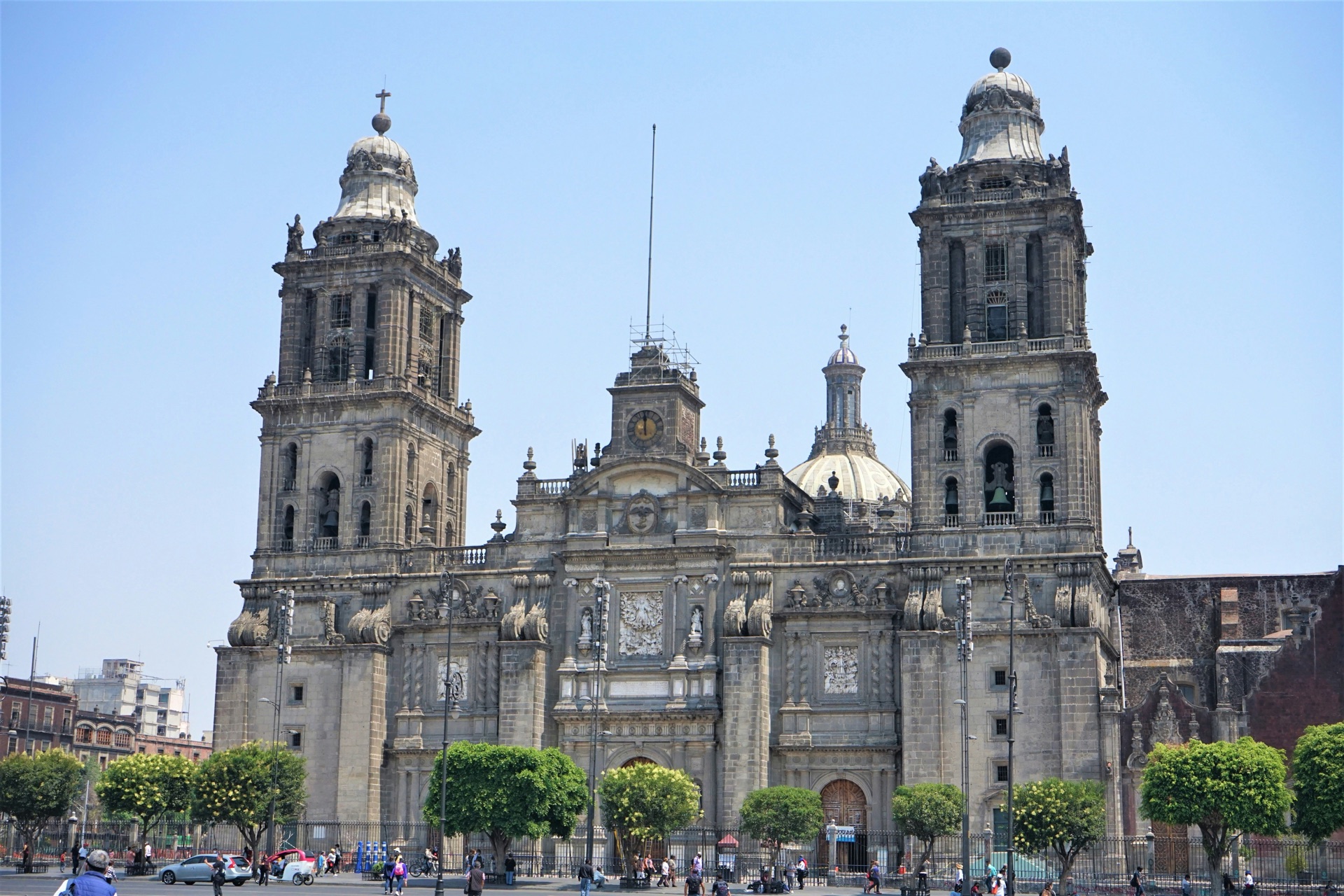
Zocalo (free) and the Metropolitan Cathedral (free - the sinking nave, the extraordinary churrigueresque altarpieces). Templo Mayor ($80 MXN - the Aztec temple excavation beneath the city square). Palacio Nacional murals by Diego Rivera (free - arrive early, the murals are magnificent and uncrowded before 10am).
Lunch at a Centro mercado: pozole (a hominy stew, $60 MXN) or tacos de canasta ($15 MXN each) from a basket-taco vendor. Bellas Artes Palace (exterior free, entry $90 MXN - the Art Nouveau marble facade and the Diego Rivera mural inside the foyer). The Alameda Central park (free).
Tacos al pastor in the Centro: El Califa de Leon (the only taco stand with a Michelin star, $45 MXN per taco - a single taco, perfectly made). Mezcal at a Centro cantina ($60 MXN per copita). The Zocalo at night, lit and almost empty.
Coyoacan & Frida
Metro to Coyoacan (M5). La Casa Azul ($270 MXN - book online at least a week ahead). The house where Frida Kahlo was born, painted, loved Diego Rivera, and died: the vivid blue walls, her studio with the mirror above the bed, her wheelchair, her dresses. Allow 2 hours.
Coyoacan market lunch ($50-80 MXN for a full meal with agua fresca). The Trotsky Museum ($80 MXN) and the main plaza market. Walk to Viveros park (free, a tree nursery for the city, serene and local). Return by metro.
Roma Norte evening: tacos de cochinita at El Turix ($30 MXN each, the best cochinita pibil in the city). Mezcal bar on Alvaro Obregon ($80-100 MXN per pour). The Roma parks at night with locals.
Xochimilco & Markets
Metro + bus to Xochimilco (1h, M10 total). Rent a trajinera ($300 MXN for 2 hours - negotiate at the dock, the standard tourist price is $400 MXN). Sunday mornings are the best: the canal is busy with families, floating food vendors (corn, tlayudas, chicharron), and mariachi boats ($100 MXN per song).
Return to the city. Mercado de Jamaica (the flower market - the most colorful market in Mexico City, cempasuchil marigolds, orchids, and the flowers used for Dia de los Muertos altars, free to enter). Lunch at a market comida corrida stall ($80 MXN for soup, main, and agua fresca).
Farewell tacos: Los Cocuyos near the Centro (open late, $25 MXN each, cabeza - braised beef head - is the specialty and more delicious than it sounds). A final michelada ($60 MXN) at a cantina.
The CDMX Metro costs MXN 5 per ride — use it everywhere. Sunday is museum free day for Mexicans and usually discounted for foreigners. Eat tacos at El Huequito (al pastor) and tortas at Café de Tacuba. Avoid the Uber surge pricing on Friday nights.
Daily budget · Mid-range
Mid-range Mexico City is one of the world's great-value food cities — Pujol and Quintonil are both accessible at lunch for under $60 for an extraordinary meal. The Polanco and Roma neighbourhoods have excellent boutique hotels, and the city's cultural programme is world-class and cheap.
Where your money goes
How to Get There
What to Do
The city the Aztecs found already ancient — the Pyramid of the Sun, the Avenue of the Dead, and dawn balloons over it all, an hour from CDMX.
Read guide → Map ↗ Get tickets on Tiqets →The Blue House in Coyoacán — Frida's studio, her mirrored bed, her corsets and her kitchen, exactly as a life this intense left them.
Read guide → Map ↗ Get tickets on Tiqets →The marble opera house that sinks a little every year — Tiffany glass, Rivera's revenge mural, and the Ballet Folklórico under an art-deco sun.
Read guide → Map ↗ Get tickets on Tiqets →Where to Stay
El patio 77 is the first eco-friendly B&B in Mexico City and the best boutique B&B in the center part of the city. More than a hotel, come and enjoy our house of the XIX Century with only 8 unique suites and a great service in the middle of this great city. San Rafael is a safe and central neighborhood near from the city center, roma, condesa and Polanco.
Check prices on Klook →Marriott-group four-star on Reforma, walking distance to the Angel of Independence and the Zona Rosa.
Map ↗ Check prices on Klook →The Condesa's design hotel icon — French ambassador's residence converted to chic
Map ↗ Check prices on Klook →Where to Eat
Farm-to-table in Colonia Roma, best value for modern Mexican cooking
Map ↗The great Mexico City restaurant — tuna tostadas, pescado a la talla, very busy
Map ↗Elena Reygadas's Roma Norte destination — modern Mexican and Italian influences
Map ↗Enrique Olvera's flagship — Mole Madre is legendary, lunch menu is best value
Sample 3-Day Itinerary
Anthropology & Roma
Museo Nacional de Antropologia ($90 MXN - the finest pre-Columbian collection in the world: the Aztec Sun Stone, the jade mask of Pakal, the Olmec heads. Allow 3-4 hours minimum). Bosque de Chapultepec park (free) around it.
Lunch in Polanco: a Roma or Polanco restaurant for $350-500 MXN (Mexico City's mid-range dining is exceptional value by international standards). The Soumaya Museum (free). Walk Masaryk avenue.
Roma Norte dinner: Contramar (the tuna tostadas and grilled fish, $600-800 MXN pp - the most beloved restaurant in Mexico City for a reason; reserve ahead, always full). Mezcal at Expendio de Maiz after.
Art & Lucha Libre
Museo Dolores Olmedo ($90 MXN - the finest collection of Frida Kahlo and Diego Rivera outside a national museum, in a hacienda south of the city with peacocks and hairless xoloitzcuintli dogs in the garden). The Museo de Arte Moderno ($90 MXN) in Chapultepec.
Teotihuacan day trip alternative: Ubers ($300 MXN each way, 50 min) to the Pyramids of the Sun and Moon ($90 MXN entry - the third-largest pyramids in the world, pre-Aztec, built around 100 AD). Climb both pyramids. Return for late afternoon.
Lucha Libre at Arena Mexico or Arena Coliseo ($150-800 MXN depending on seat - the Mexican wrestling spectacle, every Friday and Tuesday at Arena Mexico; the ringside seats are under $20 USD and the crowd is part of the show). Tacos after from the vendors outside.
Design & Farewell
Museo Jumex ($90 MXN - the finest contemporary art museum in Latin America, in the Nuevo Polanco art district, Damien Hirst to Gabriel Orozco). The Soumaya Museum next door (free). The Nuevo Polanco street art and the Mercado del Parque in the neighborhood.
Condesa lunch at a terrace restaurant ($400-600 MXN - the Art Deco buildings, the tree-lined boulevards, the dog walkers and coffee drinkers). A final walk through Parque Mexico.
Farewell dinner at Rosetta ($700-900 MXN pp - Elena Reygadas' Italian-Mexican restaurant in a Roma mansion; the bread alone is extraordinary; one of the finest restaurants in the country).
Pujol lunch is one of the world's great dining value experiences — book 2 months ahead. Stay in Colonia Roma or Condesa for the best boutique options and neighbourhood life. Xochimilco on a Saturday morning is a uniquely Mexican experience.
Daily budget · Luxury
Luxury Mexico City means Polanco's finest hotels, the world's best restaurant (Pujol), and experiences that are uniquely Mexican — private museum access, mezcal master classes, and a cultural depth that rivals any capital. The city is safer in Polanco and Condesa than its reputation suggests.
Where your money goes
How to Get There
What to Do
The marble opera house that sinks a little every year — Tiffany glass, Rivera's revenge mural, and the Ballet Folklórico under an art-deco sun.
Read guide → Map ↗ Get tickets on Tiqets →The city the Aztecs found already ancient — the Pyramid of the Sun, the Avenue of the Dead, and dawn balloons over it all, an hour from CDMX.
Read guide → Map ↗ Get tickets on Tiqets →The only royal castle in the Americas — Maximilian's doomed empire on a hill, stained-glass corridors, and the best view down the Reforma.
Read guide → Map ↗ Get tickets on Tiqets →Where to Stay
Reforma tower with large rooms, a Remède spa and butler service, overlooking Chapultepec.
Map ↗ Check prices on Klook →Paseo de la Reforma landmark, the most venerable luxury hotel in CDMX
Map ↗ Check prices on Klook →High-floor five-star above Chapultepec Park, with the highest hotel views in the city.
Map ↗ Check prices on Klook →Where to Eat
Martha Ortiz's feminist Mexican cuisine — stunning presentation and flavour
Map ↗The full Pujol experience — arguably Latin America's greatest restaurant
Sample 3-Day Itinerary
Private Mexico City
Private guided tour of Teotihuacan before the public opening: the Pyramid of the Sun, the Avenue of the Dead, and the Temple of Quetzalcoatl at dawn with a specialist in Mesoamerican archaeology. The site at 7am, in silence, with the mountains around it emerging from mist. Breakfast at the Camino Real or St Regis.
Lunch at Quintonil ($2,500-3,500 MXN pp tasting menu - Jorge Vallejo's restaurant is consistently among the World's 50 Best; the ingredients are entirely Mexican, the techniques are precise, the flavors are unlike anywhere else). Private afternoon: the Palacio Nacional murals with a Rivera scholar, or a private mezcal tasting with a palenque representative.
Dinner at Pujol ($3,000-4,500 MXN pp - Enrique Olvera's flagship, consistently in the World's 50 Best; the mole madre (a mole aged for 2,500+ days, the longest continuously maintained mole in Mexico) is a dish unlike anything else in gastronomy). Reserve 2-3 months ahead.
Art & Oaxaca Day Trip
Private flight or early morning flight to Oaxaca (1h, $150-250 USD return - worth it for a day trip): the Zocalo and the Santo Domingo Church (the finest baroque interior in Mexico), the Mercado Benito Juarez (the best food market in Mexico, tlayudas, chapulines, mole negro), and the Mezcal distilleries of the Valles Centrales.
Lunch at a Oaxacan restaurant (the most complex and varied regional cuisine in Mexico - mole negro, estofado, tasajo, the seven moles of Oaxaca). Return afternoon flight to Mexico City.
Dinner at Sud 777 ($1,500-2,000 MXN pp - Edgar Nunez's Mexican contemporary restaurant in Pedregal; the tasting menu celebrates Mexican biodiversity ingredient by ingredient). Or: a private dinner at a Roma mansion arranged through the hotel.
Markets, Crafts & Farewell
Private shopping tour with a design expert: the Mercado de Artesanias (artisan crafts from every Mexican state), the gallery district in Polanco, and the vintage furniture dealers of La Lagunilla. The talavera pottery, the alebrijes (the painted wooden animals from Oaxaca), and the huipil textiles are among the finest artisan traditions in the world.
Lunch at Contramar or Loup Bar (the private dining room, $1,200-1,800 MXN pp). Museo Soumaya for a final visit to the Rodin collection.
Farewell dinner at Maximo Bistrot ($1,000-1,500 MXN pp - Eduardo Garcia's market-driven restaurant, the menu changes daily based on what arrived that morning; one of the most consistent restaurants in the city). A final mezcal at a Roma mezcaleria.
Pujol chef's table is the ultimate dining experience in Latin America — book 3 months ahead. Las Alcobas is the finest boutique in Polanco. Hot air balloon over Teotihuacan at dawn is one of the world's great travel experiences.
Sight guides
Mexico City Sight Guides
About Mexico City
When to go, and what it's like on the ground.
Best time to visit
March - May, October - December
Mexico City sits at 2,240m altitude - this moderates the tropical latitude and creates a pleasant year-round climate (16-26 degrees C). March-May is dry season and the warmest period before the rains. June-September is rainy season: intense afternoon thunderstorms (usually 3-6pm) clear by evening, leaving the air fresh. October-December is the finest season: dry, clear, the festivals of Dia de los Muertos (Nov 1-2) fill every neighborhood with marigolds and sugar skulls - the most atmospheric week in the Mexican calendar. The altitude affects non-acclimatized visitors: take it easy on day 1, drink extra water, and expect reduced alcohol tolerance.
- January: 13°C average high, 1 rain day, moderate crowds
- February: 14°C average high, 1 rain day, moderate crowds
- March: 17°C average high, 1 rain day, moderate crowds
- April: 19°C average high, 2 rain days, moderate crowds
- May: 19°C average high, 7 rain days, moderate crowds
- June: 18°C average high, 13 rain days, low crowds
- July: 17°C average high, 16 rain days, moderate crowds
- August: 17°C average high, 15 rain days, moderate crowds
- September: 17°C average high, 16 rain days, moderate crowds
- October: 16°C average high, 5 rain days, high season
- November: 14°C average high, 1 rain day, high season
- December: 13°C average high, 1 rain day, high season
Getting around
Getting around Mexico City
Mexico City has a large and inexpensive metro (12 lines, M5 per ride - under $0.30) that covers the city comprehensively, but it is extremely crowded at rush hour and pickpocketing occurs. Uber is the recommended option for tourists: safe, cheap (a 15-minute ride costs $2-4 USD), and available everywhere. The Metrobus (BRT, M6-12) is also reliable. Taxis hailed on the street carry risk - use Uber, InDrive, or a hotel taxi exclusively. Walking is excellent in Roma, Condesa, and Polanco - flat, tree-lined boulevards. The airport (NAICM/AIFA) is 45 min from the city by metro or Uber ($8-12 USD).
A travel eSIM gets you online the moment you land in Mexico — data plans start at $4 — no roaming bill, no queue for a local SIM, and nothing to swap in and out of your phone. Install it before you fly.
On foot
Walking routes in Mexico City.
The blue house, the market, and the two colonial squares the village kept.
The great square and the sinking cathedral, the Aztec temple beside it, and the art deco palace along the avenue.
Where to stay
Mexico City, neighbourhood by neighbourhood.
Roma Norte & Condesa
The most desirable neighborhood in Mexico City: tree-canopied boulevards, Art Deco apartment buildings, and the highest concentration of excellent restaurants in Latin America. Parque Mexico and Parque España are the twin green hearts - locals exercise, read, and eat tacos on the surrounding benches. Álvaro Obregon and Avenida Amsterdan are the main dining streets. The coffee culture here rivals Tokyo and Melbourne - single-origin pours, cold brew, and serious baristas in every block. Roma Norte has the best taco spots (El Turix for cochinita, Los Cocuyos for cabeza).
Best for mid-rangePolanco
The wealthy northern neighborhood: the Museo Nacional de Antropologia (the greatest pre-Columbian museum in the world, $90 MXN) is here, in Bosque de Chapultepec park. Avenida Presidente Masaryk is the luxury shopping street (Louis Vuitton, Prada, Hermes). The restaurant scene includes Pujol and Quintonil (two of the World's 50 Best restaurants), Rosetta, and dozens of excellent mid-range options. The Soumaya Museum (free - Carlos Slim's private collection, 66,000 pieces, the largest collection of Rodin bronzes outside Paris) is in the Nuevo Polanco extension.
Best for luxuryCentro Historico
The historic heart of Mexico City, built on the ruins of the Aztec capital Tenochtitlan: the Zocalo (one of the largest public squares in the world, free), the Metropolitan Cathedral (free - sinking 10cm per decade into the ancient lake bed, the interior tilted visibly), and the Templo Mayor ruins beneath the square (M80 entry - the main Aztec temple, excavated only since 1978, extraordinary). The Palacio Nacional murals by Diego Rivera (free) depict the entire history of Mexico across 1,200 square meters. The Mercado de la Merced (the largest traditional market in Latin America) is walking distance.
Best for budgetCoyoacan
The village within the city: 30 minutes south by metro, Coyoacan is where Frida Kahlo was born, lived, and is buried. La Casa Azul (the Blue House, $270 MXN - book weeks ahead, sells out; the blue walls, the studio, the bed where she painted, the ashes in a pre-Columbian urn). The weekend market in the main plaza (the most pleasant market in Mexico City: food, crafts, live music, excellent chiles en nogada in season). Leon Trotsky's house (M80) where he was assassinated in 1940 is two blocks from Frida's.
Best for budgetXochimilco
The floating gardens south of the city: the last surviving Aztec chinampas (agricultural islands created by the Aztecs by piling lake sediment onto reed frames - the entire historic city was built this way). Rent a trajinera (a flat-bottomed boat painted with the name of a woman, $300-500 MXN for 2 hours) and spend a Sunday afternoon drifting through the canals with a mariachi boat alongside. The experience is quintessentially Mexican - chaotic, beautiful, and nothing like anything else. UNESCO World Heritage Site. 45 minutes south by metro + bus.
Best for budgetTepito & La Lagunilla
The antique and flea market district north of the Centro: La Lagunilla (Sunday only - the finest flea market in Mexico City, pre-Columbian replicas, vintage furniture, used books, retablos, and random objects from Mexican homes). Tepito itself is the most notorious neighborhood in the city (best avoided alone at night) but the Sunday market around its edges is extraordinary. The best vintage Lucha Libre posters, pre-owned everything, and the cheapest tacos in the city.
Best for budgetLocal etiquette
Dos & Don'ts
Do
- Use Uber or DiDi — far safer than hailing street taxis
- Take the altitude (2,240 m) easy on day one
- Greet warmly — Mexicans are formal and friendly
- Tip 10–15% at restaurants and a few pesos for everyone who helps
- Carry small bills; vendors and taxis dislike large notes
- Embrace the late dining — lunch 2–4 pm, dinner from 8 pm
Don't
- Drink the tap water — bottled or filtered only
- Hail street taxis, especially at night
- Walk lonely streets at night — stick to Roma, Condesa or Polanco
- Discuss politics or cartel violence casually
- Photograph police or military operations
- Joke about Day of the Dead — it's deeply meaningful
Useful phrases
Say it like a local.
Beyond the city
Day trips worth the journey.
Teotihuacan
The vast pre-Aztec pyramids of the Sun and the Moon.
Xochimilco
Trajinera punts on Aztec canals, with mariachi bands and tequila.
Puebla
The colonial city of azulejos tiles and the mole sauce.
Tepotzotlán
A Pueblo Mágico with a baroque convent and weekend market.
Tula
Atlantean warrior statues atop a Toltec pyramid.
Where to eat
Must-try dishes.
Tacos al Pastor
Marinated pork carved off a vertical spit onto small corn tortillas with pineapple.
Tamales
Corn dough with savoury or sweet fillings, steamed in banana leaves or husks.
Mole
Complex chocolate-chilli sauce over poultry — Puebla and Oaxaca styles.
Chilaquiles
Fried tortilla triangles in green or red salsa, topped with egg, cream and cheese.
Pozole
Hominy and pork stew topped with shredded cabbage, radish and lime.
Tlacoyos
Oval masa boats topped with beans, salsa and cheese — a city street classic.
Churros
Crisp fried-dough sticks with chocolate or cinnamon sugar.
Travel insurance
Do I need travel insurance for Mexico?
Travel insurance is strongly recommended for any trip to Mexico City. Safety is rated Exercise normal caution. The tourist areas (Roma, Condesa, Polanco, Coyoacan, the Historic Centre) are generally safe during the day. Avoid unfamiliar areas at night. Use Uber rather than street taxis. — even in safe destinations, unexpected medical emergencies or trip cancellations can be costly. Make sure your policy covers emergency medical treatment, hospitalisation, trip cancellation, and emergency evacuation.
Visa note: Visa-free for most Western nationalities for up to 180 days. Fill the immigration form on arrival (or online via the e-immigration system). No tourist card fee since 2021.. Some countries require proof of travel insurance as part of the visa application.
Good to know
FAQ: Mexico City travel questions
Is Mexico City safe to visit?
Exercise normal caution. The tourist areas (Roma, Condesa, Polanco, Coyoacan, the Historic Centre) are generally safe during the day. Avoid unfamiliar areas at night. Use Uber rather than street taxis.
When is the best time to visit Mexico City?
March - May, October - December Mexico City sits at 2,240m altitude - this moderates the tropical latitude and creates a pleasant year-round climate (16-26 degrees C). March-May is dry season and the warmest period before the rains. June-September is rainy season: intense afternoon thunderstorms (usually 3-6pm) clear by evening, leaving the air fresh. October-December is the finest season: dry, clear, the festivals of Dia de los Muertos (Nov 1-2) fill every neighborhood with marigolds and sugar skulls - the most atmospheric week in the Mexican calendar. The altitude affects non-acclimatized visitors: take it easy on day 1, drink extra water, and expect reduced alcohol tolerance.
How much does a trip to Mexico City cost per day?
- Budget $25–$50 / day
- Mid-range $80–$160 / day
- Luxury $300–$700 / day
Do I need a visa to visit Mexico?
Visa-free for most Western nationalities for up to 180 days. Fill the immigration form on arrival (or online via the e-immigration system). No tourist card fee since 2021.
How do I get around Mexico City?
Mexico City has a large and inexpensive metro (12 lines, M5 per ride - under $0.30) that covers the city comprehensively, but it is extremely crowded at rush hour and pickpocketing occurs. Uber is the recommended option for tourists: safe, cheap (a 15-minute ride costs $2-4 USD), and available everywhere. The Metrobus (BRT, M6-12) is also reliable. Taxis hailed on the street carry risk - use Uber, InDrive, or a hotel taxi exclusively. Walking is excellent in Roma, Condesa, and Polanco - flat, tree-lined boulevards. The airport (NAICM/AIFA) is 45 min from the city by metro or Uber ($8-12 USD). Mexico City has a metro system. Taxi base fare ~$3. Day pass ~$5.
Is tipping expected in Mexico City?
10-15% at restaurants is expected - service staff earn very low base wages and depend on tips. Round up for taxis (Uber has no tip built in - add 15% in app). Tip hotel staff, parking attendants, and bag carriers.
What currency is used in Mexico?
The local currency is MXN ($), and the official language is Spanish (Mexican - clear and well-articulated, the easiest Spanish for non-native speakers).
Compare