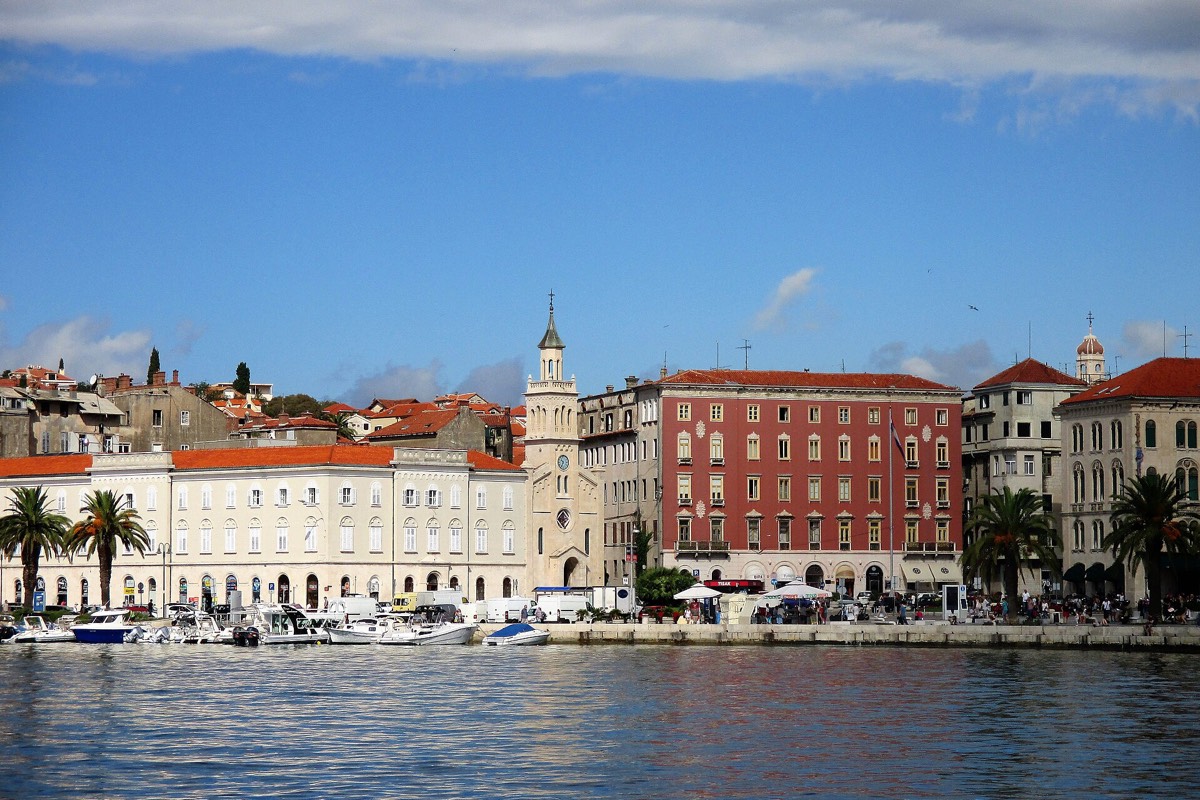
Split on $35, $100 or $320 a day
Croatia's second city lives inside a Roman emperor's retirement palace: cafés fill Diocletian's colonnaded courtyard, a cathedral occupies his mausoleum and washing hangs over streets laid out around AD 300. It is also the ferry port for Brač, Hvar and Vis, with a pine-covered hill park and beaches a short walk from the walls.
Share
Plan by budget
One city, three ways to travel it.
How much does Split cost per day? Budget travellers get by on about $35 a day, mid-range trips run around $100, and luxury starts near $320 — accommodation, food, transport and activities included. That makes Split the joint 35th cheapest of 110 cities for a mid-range trip (see all 110 ranked).
Daily budget · Budget
Split is cheaper than Dubrovnik and easier on a budget than its summer reputation suggests. Walking the palace, climbing Marjan and swimming at Bačvice cost nothing, ćevapi or a slice of pizza make lunch for under €10, and the car ferry to Brač or Šolta costs a few euros.
Where your money goes
What to Do
An eleven-hour day by speedboat to the Blue Cave on Biševo, Hvar and the islands between; the cave's own ticket is extra
Get tickets on Tiqets →Five and a half hours by speedboat to the Blue Lagoon, Šolta and Trogir, with snorkelling gear
Get tickets on Tiqets →A 24- or 48-hour bus pass with a guided walk of the old town and lines out to Klis, Salona and Trogir
Get tickets on Tiqets →Where to Stay
Simple hostel on Kralja Zvonimira, a few minutes on foot from the old town and the Riva
Map ↗Social hostel on Zagrebačka, a four-minute walk from the palace walls
Map ↗Long-running hotel in Renaissance houses inside Diocletian's Palace, above the emperor's baths
Map ↗Where to Eat
Artisan bakery behind the fish market: burek, sourdough and pastries, mornings only, closed Sundays
Map ↗Ćevapi in soft bread with ajvar, kajmak and raw onion from a corner counter in Varoš; pay in cash
Map ↗The city's oldest pizzeria, opened in 1980, with a wood-fired oven and a slice counter next door
Map ↗Small, colourful place in a residential street, best for its home-made pasta
Sample 3-Day Itinerary
Diocletian's Palace
Walk into Diocletian's Palace through the Golden Gate and on to the Peristyle before the tour groups arrive.
Ćevapi at Kantun Paulina, then the afternoon on the Riva promenade.
Up the steps to the first Marjan viewpoint for sunset, then pizza at Galija.
Marjan and the sea
Climb Marjan Hill from Varoš past the Jewish cemetery to the Telegrin summit.
Down to the Kašjuni cove for a swim and a picnic.
Dinner at a family konoba in Varoš.
Buses and beaches
City bus out to Klis Fortress on its ridge, then down to the Roman ruins of Salona in Solin.
Back to Bačvice beach for a swim and a game of picigin in the shallows.
Slices from Galija's counter and the Riva at night.
Eat your main meal at lunch in the konobas of Varoš, where the daily dishes are cheapest. Take the Jadrolinija car ferry rather than a catamaran or tour boat to the islands. Hostel prices double in July and August, so book early or come in June.
Daily budget · Mid-range
Mid-range Split is a heritage hotel inside or beside the palace walls, the cathedral and the cellars with a ticket, a speedboat day to the Blue Lagoon and Trogir, and long fish dinners at the konobas Croatians book for themselves.
Where your money goes
What to Do
Five and a half hours by speedboat to the Blue Lagoon, Šolta and Trogir, with snorkelling gear
Get tickets on Tiqets →A 24- or 48-hour bus pass with a guided walk of the old town and lines out to Klis, Salona and Trogir
Get tickets on Tiqets →An eleven-hour day by speedboat to the Blue Cave on Biševo, Hvar and the islands between; the cave's own ticket is extra
Get tickets on Tiqets →Where to Stay
Heritage hotel in old stone houses just west of the palace walls, a minute from the Riva
Map ↗Contemporary hotel by the palace's north side, with a rooftop terrace, bar and hot tub
Map ↗A handful of rooms in joined Roman, Gothic and Renaissance houses beside the Vestibule
Map ↗Where to Eat
Family seafood konoba: choose from the day's fish on the tray and have it grilled
Map ↗Stone tavern serving generous Dalmatian dishes of land and sea, away from the crowds
Map ↗Wine bistro with Croatian bottles by the glass and modern Croatian plates to share
Map ↗Michelin Bib Gourmand: shrimp risotto, amberjack and a quiet courtyard terrace
Map ↗Sample 3-Day Itinerary
Inside the palace
The Cathedral of Saint Domnius, its crypt and bell tower, then Diocletian's Cellars beneath the old apartments.
Lunch at K.užina, then the Meštrović Gallery on the Meje shore.
Fish chosen from the tray at Konoba Fetivi.
Islands by speedboat
The Blue Lagoon and Trogir speedboat leaves the harbour at 11:00 for Šolta's clear water.
Snorkelling at the Blue Lagoon and an hour in Trogir's walled old town before the run back.
Dinner at Šug, away from the waterfront crowds.
Fortress and hill
Bus up to Klis Fortress on its ridge above the city.
Back for the walk over Marjan Hill and a swim at Kašjuni.
Croatian wines and plates to share at Zinfandel.
Buy the cathedral ticket that includes the bell tower and climb it early, before the heat. At Konoba Fetivi the day's fish comes to the table on a tray and is priced by weight, so ask before you choose. Reserve K.užina and Šug; both fill with locals.
Daily budget · Luxury
Luxury Split is a five-star room on the seafront or a beach resort at Podstrana, a speedboat to the Blue Cave and Hvar, a day at the Krka waterfalls with a driver, and a counter seat at Krug, the city's one Michelin-starred table.
Where your money goes
What to Do
An eleven-hour day by speedboat to the Blue Cave on Biševo, Hvar and the islands between; the cave's own ticket is extra
Get tickets on Tiqets →Five and a half hours by speedboat to the Blue Lagoon, Šolta and Trogir, with snorkelling gear
Get tickets on Tiqets →A 24- or 48-hour bus pass with a guided walk of the old town and lines out to Klis, Salona and Trogir
Get tickets on Tiqets →Where to Stay
A 1921 hotel a minute from Bačvice beach and ten from the palace, renovated in 2015
Map ↗Large resort with an 800-metre beach, pools and a spa at Podstrana, 8 km south of the city
Map ↗Rebuilt and reopened in 2022 on the site of the 1937 hotel of the same name, on the seafront by the Riva, with a spa
Map ↗Where to Eat
Fish and shellfish at the ACI marina, with a terrace over the yachts and the old town
Map ↗Contemporary Mediterranean tasting menus by candlelight, upstairs in the palace's seafront wall
Map ↗Michelin star: twelve seats at a counter facing the open kitchen, aged fish and meat, five or nine courses
Map ↗Sample 3-Day Itinerary
Split in style
A private guide through Diocletian's Palace and the cathedral before the crowds.
Long lunch on the terrace at Dvor, then the Meštrović Gallery.
The counter tasting menu at Krug.
The Blue Cave
The Blue Cave and Hvar speedboat leaves at 07:15 for Biševo and its blue-lit grotto.
Swimming stops among the islands and an afternoon in Hvar town.
Back by evening for dinner at ZOI.
Krka with a driver
Driver to Krka National Park to see the waterfalls before the coaches arrive.
Lunch in Skradin on the river, then back by Trogir.
Fish and shellfish at Zrno Soli in the marina.
Krug has twelve seats at a counter and takes bookings by phone; reserve weeks ahead. Leave early for the Blue Cave on Biševo, before the queue of boats builds. The Ambasador and Hotel Park are a short walk from the palace; Le Méridien Lav is 8 km south, with its own long beach.
About Split
When to go, and what it's like on the ground.
Best time to visit
May–June and September to early October, when the sea is warm and the island ferries run full timetables without the July–August crowds and prices.
Mediterranean: hot, dry summers (daily means about 27°C, highs into the 30s) and mild, wet winters (8–9°C), when the cold bura wind can blow down from the mountains. Most rain falls from November to January.
- January: 8°C average high, 11 rain days, low crowds
- February: 9°C average high, 9 rain days, low crowds
- March: 11°C average high, 10 rain days, low crowds
- April: 15°C average high, 10 rain days, moderate crowds
- May: 20°C average high, 9 rain days, moderate crowds
- June: 24°C average high, 8 rain days, high season
- July: 27°C average high, 5 rain days, high season
- August: 27°C average high, 5 rain days, high season
- September: 22°C average high, 8 rain days, high season
- October: 17°C average high, 9 rain days, moderate crowds
- November: 13°C average high, 12 rain days, low crowds
- December: 9°C average high, 12 rain days, low crowds
Getting around
Getting around Split
The old town is pedestrian and small enough to cross in ten minutes. City buses run to Klis, Salona and Trogir, and ferries and catamarans leave the harbour beside the bus and train stations for Brač, Hvar, Šolta and Vis. The airport is about 20 km west, near Trogir, with a shuttle bus to the port.
A travel eSIM gets you online the moment you land in Croatia — data plans start at $4 — no roaming bill, no queue for a local SIM, and nothing to swap in and out of your phone. Install it before you fly.
On foot
Walking routes in Split.
Meštrović's Gregory of Nin, the Peristyle, the emperor's mausoleum turned cathedral, the cellars and the Riva.
Up the steps to Marjan's summit, down to the hermit caves of St Jerome, a swim at Kašjuni and Meštrović's villa by the sea.
Where to stay
Split, neighbourhood by neighbourhood.
Grad (Diocletian's Palace)
The old town inside and around the palace walls: heritage hotels and apartments in stone houses, cafés on the Peristyle and the Riva, and bars that stay loud late in summer.
Best for mid-rangeVaroš
The old quarter of fishermen and farmers on the lower slopes of Marjan, just west of the centre. Cheaper rooms, family konobas and the stairs up to the hill.
Best for budgetBačvice & Firule
East of the ferry port: the sandy city beach, its clubs and the coves at Firule. Ten minutes on foot from the palace, and busy day and night in July and August.
Best for budgetMeje
The road along Marjan's south side, lined with villas, the Meštrović Gallery and small beaches. Green and quiet, twenty minutes' walk from the Riva.
Best for luxuryLučac-Manuš
The streets just north-east of the palace, near the green market. Ordinary city life and good-value apartments within five minutes of the walls.
Best for budgetPodstrana
A coastal town 8 km south-east with long pebble beaches and the area's biggest resort hotel. Calm and spacious, but a taxi or bus ride from the old town.
Best for luxuryLocal etiquette
Dos & Don'ts
Do
- Say "dobar dan" when you walk into a shop or a konoba
- Cover shoulders and knees in the cathedral and churches
- Book island boats and ferries early in July and August
- Carry some cash for kiosks, bakeries and small konobas
- Ask the price of fish sold by weight before you order
- Join the evening walk along the Riva
Don't
- Walk through the old town in swimwear or without a shirt
- Expect sand: most beaches are pebble, so bring water shoes
- Drive into the old town; it is pedestrian
- Rush a coffee: Dalmatians make one last an hour
- Leave bags on the beach while you swim
- Climb on the palace walls or columns for photos
Useful phrases
Say it like a local.
Beyond the city
Day trips worth the journey.
Trogir
A walled medieval town on an islet, with Master Radovan's Romanesque cathedral portal.
Hvar
The island's harbour town, with a Venetian loggia, a fortress above and the Pakleni islands offshore.
Krka National Park
Travertine waterfalls and lakes on the Krka river, seen from boardwalks.
Klis Fortress
A ridge-top fortress on the pass behind the city, with views over Split and the islands.
Bol and Zlatni Rat
Brač's pebble spit, which shifts with the wind and current, below the island's highest peak.
Omiš
A small town where the Cetina river cuts a gorge to the sea, with rafting and ziplines upstream.
Where to eat
Must-try dishes.
Pašticada
Beef marinated in vinegar and braised for hours with wine, prunes and spices, served with gnocchi. The Dalmatian dish for feast days.
Crni rižot
Black risotto, coloured and flavoured with cuttlefish ink.
Peka
Lamb, veal or octopus baked with potatoes under an iron bell covered in embers; order it hours ahead.
Soparnik
A thin pie of Swiss chard, onion and parsley baked on an open hearth, from the Poljica villages near Omiš.
Brudet
Fish stewed with tomato, wine and vinegar, served with polenta.
Fritule
Small fried doughnuts with raisins and citrus zest, dusted with sugar.
Ćevapi
Grilled fingers of minced meat in soft lepinja bread with ajvar and raw onion.
Travel insurance
Do I need travel insurance for Croatia?
Travel insurance is strongly recommended for any trip to Split. Safety is rated Very safe. Pickpockets work the crowded palace lanes, the Riva and the ferry port in July and August, and the bars in the old town stay loud until late. — even in safe destinations, unexpected medical emergencies or trip cancellations can be costly. Make sure your policy covers emergency medical treatment, hospitalisation, trip cancellation, and emergency evacuation.
Visa note: Schengen area (Croatia joined in 2023) — visa-free for 90 days for UK, US, Canadian and Australian passports; ETIAS pre-authorisation applies from its rollout.. Some countries require proof of travel insurance as part of the visa application.
Good to know
FAQ: Split travel questions
Is Split safe to visit?
Very safe. Pickpockets work the crowded palace lanes, the Riva and the ferry port in July and August, and the bars in the old town stay loud until late.
When is the best time to visit Split?
May–June and September to early October, when the sea is warm and the island ferries run full timetables without the July–August crowds and prices. Mediterranean: hot, dry summers (daily means about 27°C, highs into the 30s) and mild, wet winters (8–9°C), when the cold bura wind can blow down from the mountains. Most rain falls from November to January.
How much does a trip to Split cost per day?
- Budget $35–$70 / day
- Mid-range $100–$190 / day
- Luxury $320–$650 / day
Do I need a visa to visit Croatia?
Schengen area (Croatia joined in 2023) — visa-free for 90 days for UK, US, Canadian and Australian passports; ETIAS pre-authorisation applies from its rollout.
How do I get around Split?
The old town is pedestrian and small enough to cross in ten minutes. City buses run to Klis, Salona and Trogir, and ferries and catamarans leave the harbour beside the bus and train stations for Brač, Hvar, Šolta and Vis. The airport is about 20 km west, near Trogir, with a shuttle bus to the port. Taxi base fare ~$4. Day pass ~$5.
Is tipping expected in Split?
Tipping is not expected but appreciated: round up at a café and leave about 10% in a sit-down restaurant if service was good, ideally in cash.
What currency is used in Croatia?
The local currency is EUR, and the official language is Croatian.
Compare