Bruges on $55, $150 or $380 a day
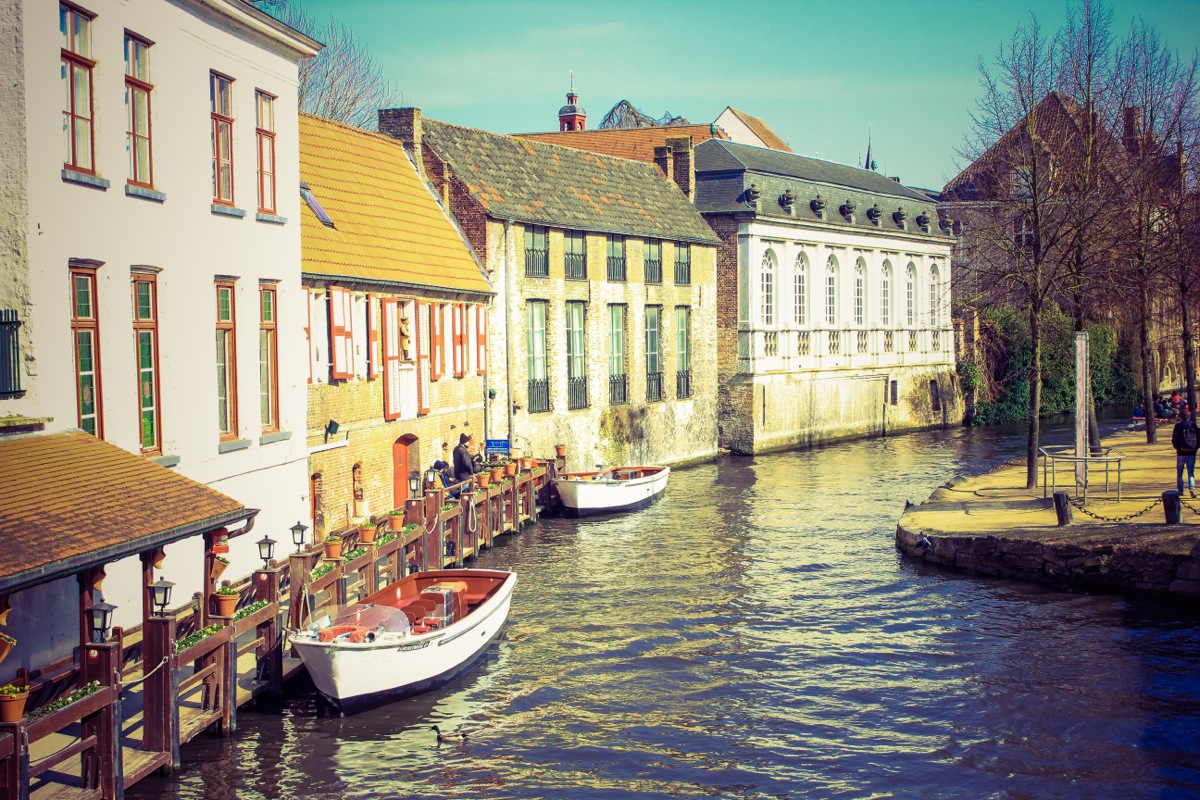
Flanders' best-preserved medieval city: a ring of canals round the Markt and its belfry, a beguinage and almshouses, and the paintings of Jan van Eyck and Hans Memling in the city they were made for. The historic centre has been a UNESCO World Heritage Site since 2000; stay the night and it empties once the day-trippers leave.
Share
Plan by budget
One city, three ways to travel it.
How much does Bruges cost per day? Budget travellers get by on about $55 a day, mid-range trips run around $150, and luxury starts near $380 — accommodation, food, transport and activities included. That makes Bruges the joint 26th most expensive of 110 cities for a mid-range trip (see all 110 ranked).
Daily budget · Budget
Bruges is a city to walk, and walking it costs nothing: the Markt, the Burg, the canals, the Begijnhof and the windmills on the ramparts are all free, and so is the chapel of the Holy Blood. Hostels are central, and a stew and a beer make a cheap dinner.
Where your money goes
How to Get There
What to Do
Michelangelo's marble Madonna and Child and the tombs of Charles the Bold and Mary of Burgundy
Map ↗ Get tickets on Tiqets →A one-hour workshop in the chocolate museum, making your own chocolates to take away
Map ↗ Get tickets on Tiqets →The Gothic Hall on the Burg, under a carved and painted oak vault, with murals of the city's history painted around 1900
Map ↗ Get tickets on Tiqets →Where to Stay
Family-run hostel in the medieval centre since 2004, which brews its own beer
Map ↗Big, sociable hostel on Langestraat with its own bar pouring seventy-odd Belgian beers
Map ↗Three-star in the quiet Sint-Gillis quarter, near the Langerei canal
Map ↗Where to Eat
Bruges' oldest tavern, open since 1515 in the Sint-Anna quarter; Belgian beer and simple snacks, 11am to 9pm daily
Map ↗Beer café with about 300 Belgian beers, five on draught; ask the staff to pick a Trappist for you
Map ↗The brewery's own brasserie on the Walplein: Flemish dishes with an unfiltered Brugse Zot
Map ↗Beer-braised stew and shrimp croquettes with a long list of Belgian beers, open all day
Map ↗Sample 3-Day Itinerary
The Markt, the Burg and the Begijnhof
Climb the Belfry when it opens, then cross from the Markt to the Burg and the Basilica of the Holy Blood.
The Rozenhoedkaai for the classic view, the Church of Our Lady for Michelangelo's Madonna, then the Begijnhof and the Minnewater.
A Trappist at 't Brugs Beertje, from its list of about 300 Belgian beers.
Canals and windmills
Walk north from Jan van Eyck Square along the Spiegelrei and the Langerei into the quiet Sint-Gillis quarter.
Cross into Sint-Anna for the Jerusalem Chapel and a beer at Café Vlissinghe, then the windmills on the Kruisvest rampart.
Beer-braised stew at Cambrinus.
Damme by bike
Hire a bike and ride the seven kilometres of poplar-lined towpath along the Damse Vaart to Damme.
Damme's market square and Gothic town hall, a pancake, and the ride back.
Dinner at De Halve Maan's brasserie with an unfiltered Brugse Zot.
Day-trippers leave by early evening, so stay the night and walk the canals after dinner. The Belfry admits a limited number at a time; go at opening. A bike for the day and the towpath to Damme is the best half-day out of the city.
Daily budget · Mid-range
Mid-range Bruges is a four-star room by a canal, the Flemish Primitives in the Groeninge Museum and St John's Hospital, a canal boat and a brewery tour, and Flemish stew and spit-roast duck in old dining rooms.
Where your money goes
How to Get There
What to Do
Van Eyck, Memling, Bosch and six centuries of Flemish and Belgian painting on the Dijver
Map ↗ Get tickets on Tiqets →A medieval hospital with Memling's paintings in its old ward and a seventeenth-century pharmacy
Map ↗ Get tickets on Tiqets →A one-hour workshop in the chocolate museum, making your own chocolates to take away
Map ↗ Get tickets on Tiqets →Where to Stay
The former house of the consul of Navarre on Sint-Jakobsstraat, with a pool in the old wine cellar
Map ↗Three historic houses beside the Burg joined into a four-star with a spa
Map ↗Five medieval townhouses looking over the Spiegelrei canal, near Jan van Eyck Square
Map ↗Where to Eat
Bib Gourmand lunch room on Smedenstraat, French-inspired and seasonal, open noon to four
Map ↗Flemish dining room on Helmstraat whose stoofvlees has been named the best in Bruges; waffles in the afternoon
Map ↗Daily-changing cooking and a thick wine list on the Zilverstraat, with a walled garden for summer
The Van Hecke family's bistro on the Molenmeers: spit-roast duckling with fries, and a dame blanche
Map ↗Sample 3-Day Itinerary
The Flemish Primitives
The Groeninge Museum at opening for Van Eyck's Madonna with Canon van der Paele and Bosch's Last Judgement.
Lunch at Tou.Gou, then Memling's paintings and the old pharmacy at St John's Hospital.
Spit-roast duckling at Refter by the Molenmeers.
Water and beer
A canal boat tour from one of the landing stages on the Dijver, then the climb up the Belfry.
The De Halve Maan brewery tour, which ends with a view over the rooftops and a Brugse Zot.
Stoofvlees at De Vlaamsche Pot.
Ghent for the day
Train to Ghent, about 25 minutes, for the Van Eyck brothers' Ghent Altarpiece in St Bavo's Cathedral.
The Gravensteen castle and the guildhalls of the Graslei, then the train back.
Dinner at Cafedraal on the Zilverstraat.
The Musea Brugge Card (€49, 72 hours) covers the Belfry, the Groeninge, St John's Hospital, the Gruuthuse and the Church of Our Lady's museum, and pays for itself by the fourth. Ghent is 25 minutes away by train for the Ghent Altarpiece. Book dinner from Thursday to Saturday; small restaurants fill.
Daily budget · Luxury
Luxury Bruges is a room in a Burgundian palace or a canal-side mansion, a private guide before the coaches arrive, and the region's starred tables: De Jonkman, Zet'Joe, Sans Cravate and Goffin.
Where your money goes
How to Get There
What to Do
A one-hour workshop in the chocolate museum, making your own chocolates to take away
Map ↗ Get tickets on Tiqets →The Gothic Hall on the Burg, under a carved and painted oak vault, with murals of the city's history painted around 1900
Map ↗ Get tickets on Tiqets →The restored palace of the lords of Gruuthuse: tapestries, silver and a private oratory looking into the church next door
Map ↗ Get tickets on Tiqets →Where to Stay
A fifteenth-century palace of the Burgundian court in the Prinsenhof, with a garden and spa
Map ↗Patrician house on the Dijver canal, a few doors from the Groeninge Museum
Map ↗Relais & Châteaux hotel in a nineteenth-century mansion a street from the Markt, with a spa
Map ↗Where to Eat
One Michelin star for French cooking on Langestraat, east of the Burg
Map ↗Timothy Goffin's Michelin-starred set menu in Sint-Kruis, mixing Flemish produce with Asian flavours
Map ↗One Michelin star on Langestraat; the Brugge Die Scone tasting menu is the one to order
Map ↗Filip Claeys' two-Michelin-star restaurant in Sint-Kruis, just outside the ring; his seasonal menu on Saturday nights
Map ↗Sample 3-Day Itinerary
Bruges with a guide
A private guided tour of Bruges before the coaches arrive.
The Gruuthusemuseum, then the Gothic Hall of the City Hall on the Burg.
Geert Van Hecke's tasting menu at Zet'Joe.
Chocolate and two stars
A Choco-Story chocolate workshop, then a canal boat on the quiet morning water.
Lunch at Sans Cravate on Langestraat, then a walk out to the windmills.
A taxi to Sint-Kruis for dinner at De Jonkman.
The Western Front
A driver to Ypres for the In Flanders Fields Museum in the rebuilt Cloth Hall.
Tyne Cot, the largest Commonwealth war cemetery in the world, on the way back.
Dinner at Goffin in Sint-Kruis.
Geert Van Hecke, whose De Karmeliet held three stars, now cooks at Zet'Joe on Langestraat. De Jonkman (two stars) and Goffin are in Sint-Kruis, a short taxi ride outside the ring. A driver makes Ypres and the First World War sites an easy day.
About Bruges
When to go, and what it's like on the ground.
Best time to visit
April–June and September–October. July and August bring day-trippers and cruise coaches from Zeebrugge; December has the Christmas market and short, cold days.
Mild and damp: summers are cool (daily highs around 22°C in July and August) and winters around 4–5°C, with rain on about one day in three, most of it from October to January.
- January: 4°C average high, 13 rain days, low crowds
- February: 5°C average high, 11 rain days, low crowds
- March: 7°C average high, 10 rain days, moderate crowds
- April: 10°C average high, 9 rain days, high season
- May: 13°C average high, 10 rain days, high season
- June: 16°C average high, 10 rain days, high season
- July: 18°C average high, 10 rain days, high season
- August: 18°C average high, 11 rain days, high season
- September: 15°C average high, 10 rain days, high season
- October: 12°C average high, 12 rain days, moderate crowds
- November: 8°C average high, 14 rain days, low crowds
- December: 5°C average high, 15 rain days, moderate crowds
Getting around
Getting around Bruges
Bruges has no airport: fly to Brussels (BRU) and take the train, about an hour from Brussels' city stations and a little longer from the airport. The old centre is small and flat enough to walk; De Lijn buses run from the station to the Markt, and bikes are the local way round.
A travel eSIM gets you online the moment you land in Belgium — data plans start at $4 — no roaming bill, no queue for a local SIM, and nothing to swap in and out of your phone. Install it before you fly.
On foot
Walking routes in Bruges.
The Belfry, the two great squares, the chapel of the Holy Blood, the canal view everyone photographs, Michelangelo's Madonna and the beguinage.
Van Eyck and Memling, the brewery on the Walplein, the old port square, the oldest tavern, the Jerusalem Chapel and the windmills on the ramparts.
Where to stay
Bruges, neighbourhood by neighbourhood.
Markt & Burg
The two squares at the heart of the city: the Belfry over the Markt, the town hall and the Holy Blood on the Burg. The grandest hotels are a few streets away; by day it is the most crowded part of town, and after the day-trippers leave it is quiet.
Best for luxuryOnze-Lieve-Vrouw & Begijnhof
South of the Markt along the Dijver: the Groeninge, St John's Hospital, the Church of Our Lady, then the Begijnhof and the Minnewater lake. The canal-side mansion hotels are here.
Best for luxurySint-Gillis
North of Jan van Eyck Square along the Langerei and Spiegelrei: brick houses on still water, few tour groups and good-value small hotels ten minutes from the Markt.
Best for mid-rangeSint-Anna
East across the canal from the Spiegelrei: the Jerusalem Chapel, Café Vlissinghe and the windmills on the Kruisvest rampart. Langestraat, on its southern edge, has the big hostel and two of the starred restaurants.
Best for budget't Zand & Sint-Jakobs
The west side round the big square of 't Zand and the Concertgebouw, with the shopping streets running in to the Markt. Handy for the station and for parking, and lively on Saturday market mornings.
Best for mid-rangeLocal etiquette
Dos & Don'ts
Do
- Greet with "goeiedag" and switch to English if you need to; this is Dutch-speaking Flanders
- Look both ways for bikes; cyclists may ride against the traffic on many one-way streets
- Let each beer come in its own glass; Belgian bars serve it that way
- Keep your voice down in the Begijnhof, which is still home to a religious community
- Climb the Belfry at opening or late in the day; only a limited number are let in at once
- Book dinner ahead from Thursday to Saturday
Don't
- Open with French; Bruges speaks Dutch, and English is the better second choice
- Walk or stand in the red cycle lanes
- Drink a Tripel or a Quadrupel like a lager; they run from 8% to over 10%
- Leave a large tip; service is already in the bill
- Take all the lace in souvenir shops for local handwork; most of it is machine-made
- Visit only for an afternoon if you can stay the night
Useful phrases
Say it like a local.
Beyond the city
Day trips worth the journey.
Ghent
The Ghent Altarpiece in St Bavo's, the Gravensteen and the medieval quays of the Graslei.
Damme
A small medieval town at the end of a poplar-lined canal, by bike along the towpath or the summer paddle steamer.
Ostend and the coast
The seafront, the fish stalls and the coast tram that runs the length of the Belgian shore.
Ypres
The rebuilt Cloth Hall, the In Flanders Fields Museum and the Last Post at the Menin Gate every evening at 8pm.
Brussels
The Grand-Place, the Magritte Museum and the comic-strip murals of the capital.
The Brussels guide →Where to eat
Must-try dishes.
Stoofvlees
Beef stewed slowly in brown beer with onions, mustard and a slice of gingerbread, served with fries.
Garnaalkroketten
Croquettes of North Sea grey shrimp in a creamy filling, fried crisp, with lemon and fried parsley.
Mosselen-friet
A pot of mussels steamed with celery and onion, with fries; at their best from late summer to spring.
Paling in 't Groen
Eel stewed in a sauce of green herbs — sorrel, chervil, parsley — a Flemish river classic.
Waterzooi
Ghent's creamy stew of chicken or fish with vegetables, thickened with egg yolk and cream.
Frieten
Belgian fries, fried twice, from a frituur in a paper cone with mayonnaise.
Wafels
Light rectangular Brussels waffles or dense Liège waffles with pearl sugar, from a stall or tearoom.
Travel insurance
Do I need travel insurance for Belgium?
Travel insurance is strongly recommended for any trip to Bruges. Safety is rated Very safe. Pickpockets work the summer crowds on the Markt, the Burg and the Rozenhoedkaai; the bigger everyday risk is stepping into a cycle lane. — even in safe destinations, unexpected medical emergencies or trip cancellations can be costly. Make sure your policy covers emergency medical treatment, hospitalisation, trip cancellation, and emergency evacuation.
Visa note: Schengen area — visa-free for 90 days for UK, US, Canadian and Australian passports; ETIAS pre-authorisation applies from its rollout.. Some countries require proof of travel insurance as part of the visa application.
Good to know
FAQ: Bruges travel questions
Is Bruges safe to visit?
Very safe. Pickpockets work the summer crowds on the Markt, the Burg and the Rozenhoedkaai; the bigger everyday risk is stepping into a cycle lane.
When is the best time to visit Bruges?
April–June and September–October. July and August bring day-trippers and cruise coaches from Zeebrugge; December has the Christmas market and short, cold days. Mild and damp: summers are cool (daily highs around 22°C in July and August) and winters around 4–5°C, with rain on about one day in three, most of it from October to January.
How much does a trip to Bruges cost per day?
- Budget $55–$95 / day
- Mid-range $150–$260 / day
- Luxury $380–$800 / day
Do I need a visa to visit Belgium?
Schengen area — visa-free for 90 days for UK, US, Canadian and Australian passports; ETIAS pre-authorisation applies from its rollout.
How do I get around Bruges?
Bruges has no airport: fly to Brussels (BRU) and take the train, about an hour from Brussels' city stations and a little longer from the airport. The old centre is small and flat enough to walk; De Lijn buses run from the station to the Markt, and bikes are the local way round. Taxi base fare ~$4. Day pass ~$8.
Is tipping expected in Bruges?
Service is included in Belgian bills. Rounding up or leaving 5–10% for good table service is appreciated but not expected; nothing is expected at the bar.
What currency is used in Belgium?
The local currency is EUR, and the official language is Dutch (Flemish).
Compare