Bordeaux on $45, $130 or $400 a day
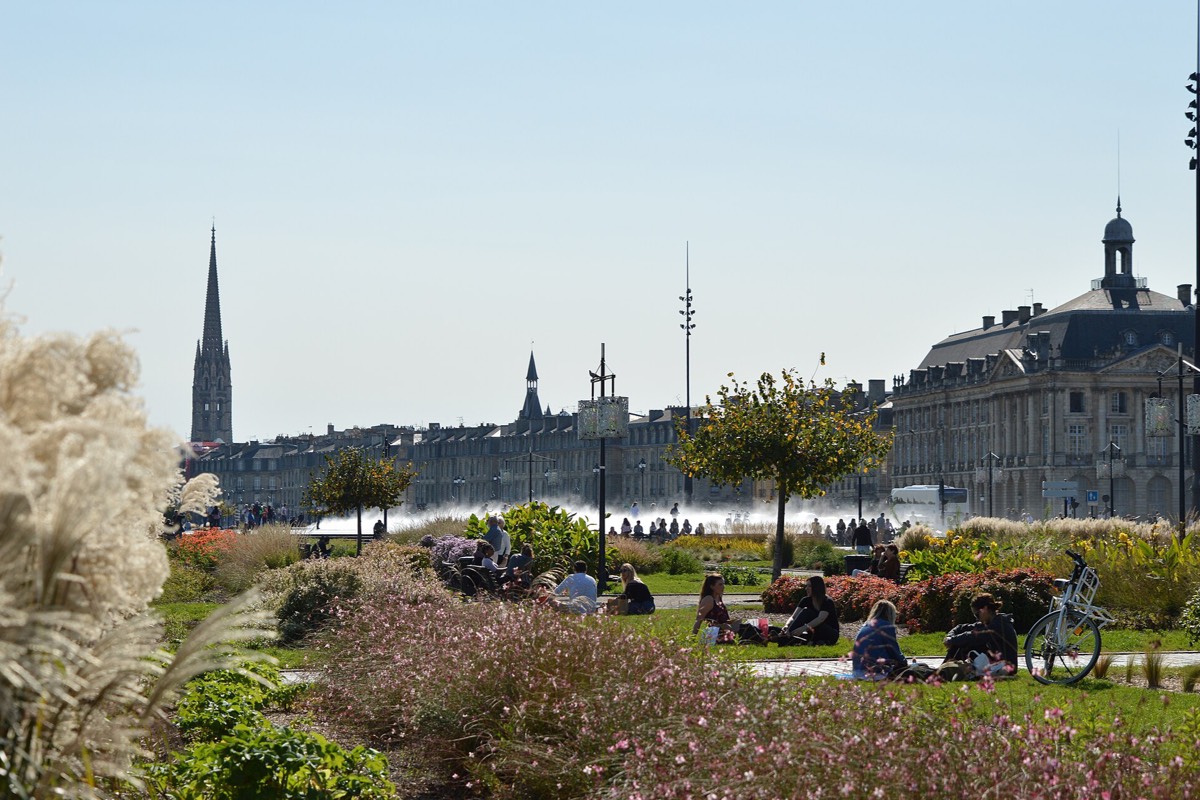
France's wine capital rebuilt itself in pale limestone in the eighteenth century, and much of the city, the Port of the Moon, is a World Heritage Site. The quays that were warehouses are now a riverside promenade with a reflecting pool in front of the Place de la Bourse, the Cité du Vin stands at their northern end, and the châteaux of Saint-Émilion and the Médoc are an hour away.
Share
Plan by budget
One city, three ways to travel it.
How much does Bordeaux cost per day? Budget travellers get by on about $45 a day, mid-range trips run around $130, and luxury starts near $400 — accommodation, food, transport and activities included. That makes Bordeaux the joint 48th most expensive of 110 cities for a mid-range trip (see all 110 ranked).
Daily budget · Budget
Bordeaux costs less than Paris for the same stone and river grandeur. The quays, the cathedral, the Miroir d'eau and the Jardin Public are free, one tram ticket crosses the city, and a dozen oysters with a glass of white at the Capucins market cost about €15.
Where your money goes
What to Do
The free-standing 114-metre bell tower of Saint-Michel, climbed for the view over the rooftops
Map ↗ Get tickets on Tiqets →A fifteenth-century city gate on the quays, its rooms and top open to visitors
Map ↗ Get tickets on Tiqets →Digital art exhibitions projected over the water basins of the old submarine base
Map ↗ Get tickets on Tiqets →Where to Stay
Youth hostel on Cours Barbey, a few minutes from Saint-Jean station and the Capucins market
Map ↗Hostel on rue Borie in the Chartrons, the wine merchants' old quarter
Map ↗Simple modern rooms just off rue Sainte-Catherine in the Golden Triangle
Map ↗Where to Eat
The best-known canelé maker in Bordeaux, with shops across the centre
The wine council's bar in the Maison du Vin: Bordeaux by the glass from about €3
Map ↗Oyster bar in the Marché des Capucins: a dozen from Arcachon Bay with a glass of Entre-Deux-Mers, mornings only
Map ↗One-dish restaurant on Cours du 30 Juillet: steak in a secret sauce with frites; expect a queue
Map ↗Sample 3-Day Itinerary
The old town
The Cathédrale Saint-André, then the Grosse Cloche on rue Saint-James.
Up the Porte Cailhau, then the climb of the Flèche Saint-Michel.
Dusk at the Place de la Bourse and the Miroir d'eau, then a glass at the Bar à Vin.
Markets and quays
Oysters and white wine at Chez Jean-Mi in the Marché des Capucins.
North along the quays to the Chartrons, then the Jardin Public.
Steak and frites at L'Entrecôte.
Across the river
Over the Pont de Pierre to La Bastide and its riverside gardens.
Darwin, the old army barracks turned skatepark, shops and organic canteen.
Canelés from Baillardran and a picnic on the quays as the lights come on.
The city's museums are free on the first Sunday of the month. Glasses at the wine council's Bar à Vin start at about €3. Lunch set menus (formules) cost far less than dinner for the same cooking.
Daily budget · Mid-range
Mid-range is a hotel in the Golden Triangle or the Chartrons, the Cité du Vin and the Bassins des Lumières, oysters and fish in Saint-Pierre and a train out to Saint-Émilion's vineyards for the day.
Where your money goes
What to Do
Digital art exhibitions projected over the water basins of the old submarine base
Map ↗ Get tickets on Tiqets →A guided boat trip along the quays, past the Place de la Bourse and the Pont de Pierre
Get tickets on Tiqets →Guided visit of Victor Louis's theatre of 1780 and its blue and gold auditorium
Map ↗ Get tickets on Tiqets →Where to Stay
Old hotel on Cours du 30 Juillet where Wagner stayed in 1850, steps from the Grand Théâtre
Playful design hotel near the cathedral, with a busy restaurant and bar
Map ↗Four-star with a spa on the Allées de Tourny, by the Esplanade des Quinconces
Map ↗Where to Eat
Brasserie on rue Saint-Rémi known for its entrecôte à la bordelaise and its wine list
Map ↗Saint-Pierre seafood bistro whose fish comes from the Arcachon auction twice a week
Map ↗South-western cooking over an open fire by the Porte de la Monnaie: duck, confit and grilled meats
Map ↗Historic Michelin-listed restaurant on rue Montesquieu: classic cooking and a cellar of over 1,000 bottles
Map ↗Sample 3-Day Itinerary
Wine city
La Cité du Vin, ending with a glass on the belvedere.
The Bassins des Lumières in the old submarine base.
Fish at Le Petit Commerce in Saint-Pierre.
The golden triangle
Guided visit of the Grand Théâtre, then the Esplanade des Quinconces.
A Garonne river cruise along the quays.
Dinner by the fire at La Tupina.
Saint-Émilion
Train to Saint-Émilion and the church cut into the rock beneath the village.
Tastings at two estates among the vines, booked ahead.
Back in town for the entrecôte at La Brasserie Bordelaise.
Do the Cité du Vin in the morning and save the glass on the belvedere for just before lunch. Saint-Émilion is 35 minutes by train and then a 25-minute walk up to the village. Most wine estates take visitors by appointment only; book a few days ahead.
Daily budget · Luxury
Luxury Bordeaux is the Grand Hôtel opposite the opera house, a driver for the châteaux of the Médoc and Saint-Émilion, and two-star dinners from Gordon Ramsay's kitchen and Philippe Etchebest's.
Where your money goes
What to Do
The history of the Bordeaux wine trade in an old merchant's cellars, with a tasting
Map ↗ Get tickets on Tiqets →Where to Stay
Forty-room hotel with a spa and a cocktail bar on Cours de la Marne, near Place de la Victoire
Map ↗Twelve rooms in a nineteenth-century mansion in Saint-Seurin, hung with art and design
Map ↗Eighteenth-century palace opposite the Grand Théâtre, with a spa, a rooftop terrace and Gordon Ramsay's restaurants
Map ↗Where to Eat
Chartrons restaurant on rue du Jardin Public that won its first Michelin star in 2026
Map ↗Philippe Etchebest's two-star restaurant on rue Rode in the Chartrons, one tasting menu
Map ↗Two Michelin stars under Gordon Ramsay's name at the InterContinental, named for its silver lobster press
Map ↗Sample 3-Day Itinerary
Saint-Émilion with a guide
A Saint-Émilion wine tour with tastings at the châteaux.
Lunch among the vines and a walk through the village.
Dinner at Le Pressoir d'Argent.
The Médoc
A Médoc wine tour along the Route des Châteaux.
Tastings in Margaux and Pauillac.
The tasting menu at Maison Nouvelle.
The Chartrons
The Musée du Vin et du Négoce in its merchant's cellars.
A Chartrons food tour, then the antique shops of rue Notre-Dame.
Dinner at Soléna.
The great Médoc estates open by appointment only, and some only to the trade; a specialist guide can get you in. Maison Nouvelle books up weeks ahead. Harvest time in late September is the most rewarding and the busiest season in the vineyards.
About Bordeaux
When to go, and what it's like on the ground.
Best time to visit
May–June and September–October; late September is the harvest in the vineyards. July and August are warm and lively, though some restaurants close for part of August.
Oceanic: warm summers (highs of 27–28°C, with heatwaves past 35°C) and mild, damp winters (highs around 10°C). Rain falls all year, most of it from October to January.
- January: 7°C average high, 12 rain days, low crowds
- February: 8°C average high, 10 rain days, low crowds
- March: 11°C average high, 11 rain days, low crowds
- April: 13°C average high, 11 rain days, moderate crowds
- May: 17°C average high, 10 rain days, moderate crowds
- June: 20°C average high, 8 rain days, high season
- July: 22°C average high, 7 rain days, high season
- August: 22°C average high, 7 rain days, high season
- September: 19°C average high, 9 rain days, high season
- October: 15°C average high, 11 rain days, moderate crowds
- November: 10°C average high, 13 rain days, low crowds
- December: 8°C average high, 13 rain days, low crowds
Getting around
Getting around Bordeaux
The old centre is flat and walkable. Trams cover the city: line A runs to the airport, line B along the quays to the Cité du Vin and line C to Saint-Jean station. Shared bikes and the BAT³ river shuttles fill the gaps.
A travel eSIM gets you online the moment you land in France — data plans start at $4 — no roaming bill, no queue for a local SIM, and nothing to swap in and out of your phone. Install it before you fly.
On foot
Walking routes in Bordeaux.
The royal square and the reflecting pool, two medieval gates, the tallest bell tower in the south of France and the cathedral.
The opera house, the Girondins' monument, the public garden, the wine merchants' quarter and the wine museum on the river.
Where to stay
Bordeaux, neighbourhood by neighbourhood.
Saint-Pierre
The medieval core between the Place de la Bourse and the Porte Cailhau: narrow streets, the Place du Parlement and the Place Saint-Pierre with restaurant terraces, busy until late.
Best for mid-rangeTriangle d'Or
The eighteenth-century triangle between the Grand Théâtre, Place Gambetta and the Allées de Tourny, with the smartest shops, the opera house and the five-star hotels.
Best for luxuryChartrons
The old wine merchants' quarter north of the centre: antique shops on rue Notre-Dame, the iron market hall, the Sunday market on the quay and some of the best restaurants.
Best for mid-rangeSaint-Michel
Around the basilica and its 114-metre bell tower: the Capucins market, North African and Portuguese grocers, and the cheapest food in the centre.
Best for budgetLa Bastide
Across the Pont de Pierre: riverside gardens, the Darwin eco-quarter in old army barracks and the best view back at the Place de la Bourse.
Best for budgetBassins à Flot
The old wet docks in the north, around the Cité du Vin and the submarine base, now new flats, hotels and restaurants on the water. On tram line B.
Best for mid-rangeLocal etiquette
Dos & Don'ts
Do
- Say "bonjour" before asking anything in a shop or café
- Book château visits ahead; most estates open by appointment only
- Use the spittoon at tastings, especially if you are driving
- Ask for "une carafe d'eau"; tap water is free
- Validate your tram ticket every time you board
- Try a canelé with your morning coffee
Don't
- Expect lunch after 2pm outside the brasseries
- Drive into the old centre; much of it is pedestrian and parking is dear
- Turn up at a Médoc château without an appointment
- Ask for ice in your wine at a tasting
- Pick grapes from the vines along the roads at harvest
- Expect most shops to open on Sunday
Useful phrases
Say it like a local.
Beyond the city
Day trips worth the journey.
Saint-Émilion
A medieval wine village on a limestone hill, with a church carved out of the rock and vines up to its walls.
Médoc
The Route des Châteaux through Margaux, Saint-Julien and Pauillac on the left bank of the Gironde.
Arcachon and the Dune du Pilat
Oyster villages on the bay and Europe's tallest sand dune, about 100 metres high.
Sauternes
Sweet-wine châteaux among the vines south of the city.
Blaye
Vauban's citadel on the Gironde estuary, part of the World Heritage listing of his fortifications.
Where to eat
Must-try dishes.
Canelé
Small cake with a dark caramelised crust and a soft custard centre, flavoured with rum and vanilla.
Entrecôte à la bordelaise
Rib steak grilled over vine cuttings and served with a red wine and shallot sauce.
Huîtres d'Arcachon
Oysters from Arcachon Bay, eaten locally with small hot sausages and a glass of white.
Lamproie à la bordelaise
Lamprey stewed in red wine with leeks, a spring speciality.
Grenier médocain
Peppered, pressed pork belly from the Médoc, served cold in thin slices.
Agneau de Pauillac
Milk-fed lamb from the Médoc, roasted.
Dune blanche
Choux bun filled with whipped cream, from Cap Ferret on Arcachon Bay.
Travel insurance
Do I need travel insurance for France?
Travel insurance is strongly recommended for any trip to Bordeaux. Safety is rated Safe overall. Pickpockets work the trams and the crowds on rue Sainte-Catherine, and the streets around Saint-Jean station are rougher late at night. — even in safe destinations, unexpected medical emergencies or trip cancellations can be costly. Make sure your policy covers emergency medical treatment, hospitalisation, trip cancellation, and emergency evacuation.
Visa note: Schengen area — visa-free for 90 days for UK, US, Canadian and Australian passports; ETIAS pre-authorisation applies from its rollout.. Some countries require proof of travel insurance as part of the visa application.
Good to know
FAQ: Bordeaux travel questions
Is Bordeaux safe to visit?
Safe overall. Pickpockets work the trams and the crowds on rue Sainte-Catherine, and the streets around Saint-Jean station are rougher late at night.
When is the best time to visit Bordeaux?
May–June and September–October; late September is the harvest in the vineyards. July and August are warm and lively, though some restaurants close for part of August. Oceanic: warm summers (highs of 27–28°C, with heatwaves past 35°C) and mild, damp winters (highs around 10°C). Rain falls all year, most of it from October to January.
How much does a trip to Bordeaux cost per day?
- Budget $45–$80 / day
- Mid-range $130–$230 / day
- Luxury $400–$800 / day
Do I need a visa to visit France?
Schengen area — visa-free for 90 days for UK, US, Canadian and Australian passports; ETIAS pre-authorisation applies from its rollout.
How do I get around Bordeaux?
The old centre is flat and walkable. Trams cover the city: line A runs to the airport, line B along the quays to the Cité du Vin and line C to Saint-Jean station. Shared bikes and the BAT³ river shuttles fill the gaps. Bordeaux has a metro system. Taxi base fare ~$4. Day pass ~$6.
Is tipping expected in Bordeaux?
Service is included in French bills. Round up or leave a euro or two in a café, and 5–10% in a restaurant for good service.
What currency is used in France?
The local currency is EUR, and the official language is French.
Compare