Strasbourg on $45, $130 or $380 a day
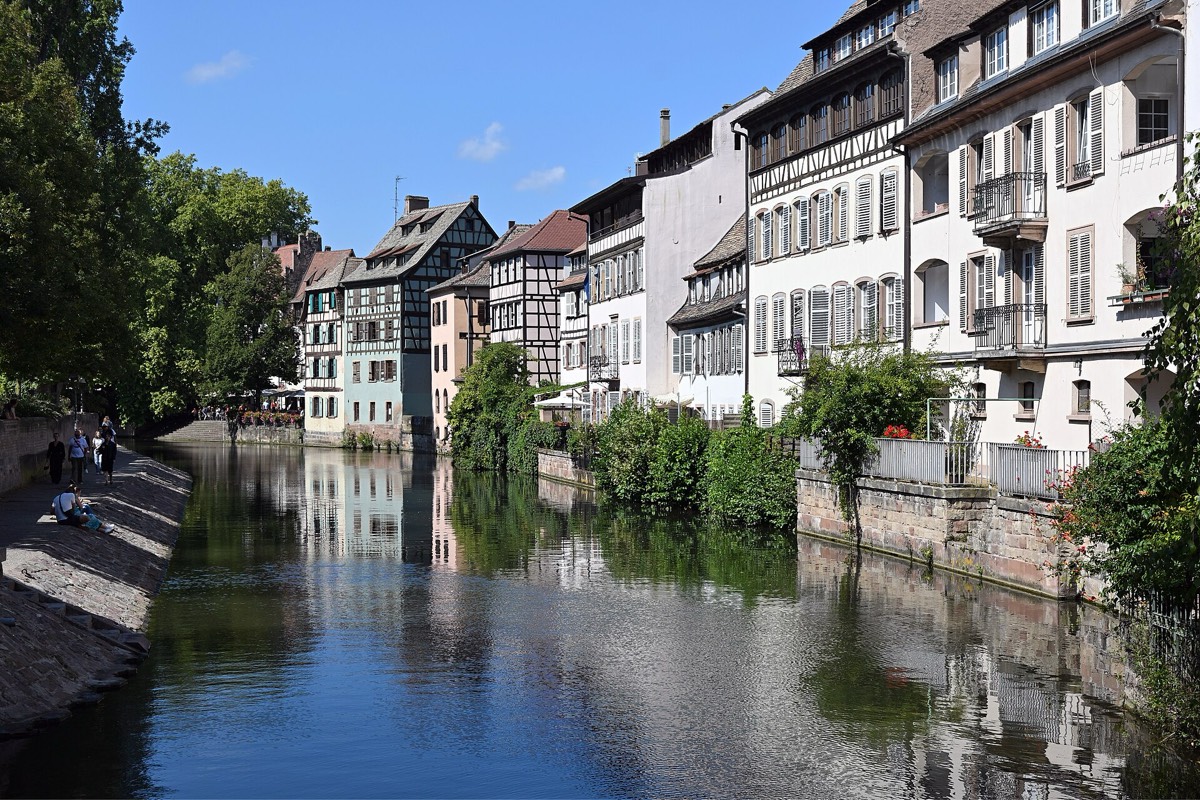
The capital of Alsace is built on an island in the river Ill, around a pink sandstone cathedral and the half-timbered canals of Petite France. French and German by turns, it is the seat of the European Parliament and holds one of Europe's oldest Christmas markets, running since 1570.
Share
Plan by budget
One city, three ways to travel it.
How much does Strasbourg cost per day? Budget travellers get by on about $45 a day, mid-range trips run around $130, and luxury starts near $380 — accommodation, food, transport and activities included. That makes Strasbourg the joint 48th most expensive of 110 cities for a mid-range trip (see all 110 ranked).
Daily budget · Budget
Strasbourg costs less than Paris for an old town of the same rank. The cathedral nave, Petite France, the Barrage Vauban terrace and the Orangerie park are free, a tarte flambée with a beer is about €15, and a 24-hour tram ticket about €5.
Where your money goes
What to Do
A 17th-century covered dam with a free roof terrace over the Ponts Couverts and the old town
Map ↗The city's oldest park, with nesting storks, a boating lake and the Pavillon Joséphine — free
Map ↗The half-timbered tanners' and millers' quarter on the canals at the island's western tip — free
Map ↗Where to Stay
Hostel on Rue de la Krutenau in the student quarter, ten minutes' walk from the cathedral
Map ↗Large, well-run hostel north of Place Kléber, with dorms, private rooms, a restaurant and a bar
Map ↗Simple three-star on Place Kléber whose rooms are named after cakes, fruits and spices
Map ↗Where to Eat
Kougelhopf, hot chocolate and pastries in the tea room on Rue Mercière, by the cathedral
Map ↗Tarte flambée bar in the Krutenau, open until midnight; small, so arrive when it opens at half past six
Tarte flambée by the cathedral at a fair price, with all-you-can-eat formulas and sweet ones to finish
Map ↗Microbrewery on Rue des Veaux pouring its own beers, with tarte flambée and Alsatian plates
Map ↗Sample 3-Day Itinerary
The cathedral and the island
Strasbourg Cathedral at opening, then Place Gutenberg and the church of Saint-Thomas.
Back for the astronomical clock at 12:30, then Petite France and the Ponts Couverts.
Sunset from the Barrage Vauban terrace and a tarte flambée at Binchstub in the Krutenau.
The Neustadt and the storks
Walk the Neustadt from Place de la République past the Palais du Rhin to the Église Saint-Paul.
Picnic in the Parc de l'Orangerie among the storks, then the free Parlamentarium at the European Parliament.
House beer and a tarte flambée at Au Brasseur.
Colmar by train
Regional train to Colmar, about half an hour away.
Little Venice and the timbered streets of the old town, with a lunch formule at a winstub.
Back in Strasbourg for an all-you-can-eat tarte flambée at Flam's.
Winstubs serve weekday lunch formules that are the cheapest way to eat well. The city museums are free on the first Sunday of the month. Colmar is half an hour away by regional train, so a day trip costs little more than the fare.
Daily budget · Mid-range
Mid-range is a four-star room in an old house near the cathedral or in Petite France, the cathedral platform and the Palais Rohan museums, a boat round the island and choucroute in a winstub that has been serving it for generations.
Where your money goes
What to Do
A glass-roofed boat round the Grande Île, through the Petite France lock and out to the European quarter
Map ↗Some 330 steps up the cathedral front to the platform 66 metres above the square
Map ↗The cathedral's original statues and stained glass, with medieval Alsatian art, beside the cathedral
Map ↗Where to Stay
Small four-star behind an old façade on Rue des Serruriers, some rooms looking at the cathedral
Map ↗Twenty-two individually designed rooms in a 16th-century house in Petite France, with a small spa
Map ↗The old national stud farm, a listed monument, redesigned by Patrick Jouin, with a Nuxe spa
Map ↗Where to Eat
Cramped, noisy wine tavern near the cathedral for choucroute, baeckeoffe and ham hock with Riesling
Map ↗Marc Haeberlin's menu, cooked by François Baur, in the old stud farm's brasserie
Map ↗Bib Gourmand winstub on Rue du Sanglier: choucroute, braised ham hock and iced kougelhopf
Map ↗Dinner in the carved timber house on the cathedral square; order the choucroute with three fish
Map ↗Sample 3-Day Itinerary
Cathedral and river
Climb the Cathedral platform at opening, then the original statues in the Musée de l'Œuvre Notre-Dame.
Lunch at Chez Yvonne, then the Batorama boat tour round the Grande Île.
Choucroute with three fish at Maison Kammerzell on the cathedral square.
Palace and Neustadt
The state apartments and museums of the Palais Rohan.
Across the Neustadt to Place de la République and the Musée Tomi Ungerer.
Choucroute and baeckeoffe at Winstub Le Clou.
Colmar
Train to Colmar and the Isenheim Altarpiece in the Unterlinden Museum.
A boat through Little Venice and a tasting in a Colmar wine shop.
Back to Strasbourg for dinner at Brasserie Les Haras.
Climb the cathedral platform when it opens and see the astronomical clock at 12:30. Book winstubs for dinner, and in December book everything: the Christmas market fills the city. Take the Batorama boat late in the day, when the light on Petite France is best.
Daily budget · Luxury
Luxury Strasbourg is a five-star in a Renaissance coaching inn or a mill on the Ill, tasting menus at the city's starred tables, an evening at the Opéra national du Rhin and a guided day along the wine route.
Where your money goes
What to Do
A small-group day by minivan to the vineyard villages, with cellar tastings of Riesling and Gewurztraminer
The red sandstone castle on a spur above the Alsace plain, rebuilt for Kaiser Wilhelm II
Map ↗Art from 1870 to now, with Strasbourg-born Jean Arp and Gustave Doré's huge canvases, by the Barrage Vauban
Map ↗Where to Stay
A 17th-century mill on the Ill in Petite France, Nordic in style inside, with canal views and a spa
Map ↗A 16th-century coaching inn by the Ill, its timbered galleries round a courtyard
Map ↗The first Sofitel, opened in 1964 beside Saint-Pierre-le-Jeune, with vines planted in its patio
Map ↗Where to Eat
René Fieger cooks alone for sixteen seats: one Michelin star, market cooking with Asian notes
Map ↗Jérémy Page's one-star tasting menus at a counter facing the kitchen, across the Ill from the Palais Rohan
Map ↗Jeanne Satori and David Degoursy's one-star tasting menu of Alsatian produce, cooked with little waste
Map ↗One Michelin star in the dining room named after a stuffed crocodile brought back from Napoleon's Egyptian campaign
Map ↗Sample 3-Day Itinerary
Strasbourg in style
A private guide through the Grande Île and up the Cathedral platform before the crowds.
Lunch at 1741 facing the Palais Rohan, then the Musée d'Art Moderne et Contemporain.
Tasting menu at Au Crocodile.
The wine route
The Alsace Wine Route with a guide: Riquewihr, Kaysersberg and family cellars.
Haut-Kœnigsbourg on its spur above the vineyards.
Dinner at de:ja.
Opera night
The Batorama boat tour at opening, then kougelhopf at Pâtisserie Christian.
Lunch at Brasserie Les Haras and an afternoon in the Nuxe spa of the same old stud farm.
An early dinner at Umami, then the Opéra national du Rhin on Place Broglie.
Au Crocodile is the city's grandest dining room; 1741 and de:ja book up weeks ahead. Ask your driver on the wine route for family cellars rather than the big houses. For the Christmas market, a room with a view of the cathedral needs booking the spring before.
About Strasbourg
When to go, and what it's like on the ground.
Best time to visit
May–June and September for mild weather and terraces on the Ill; late November to Christmas Eve for the Christmas market, when hotels fill months ahead.
Semi-continental: warm summers with highs of 24–26°C and occasional heatwaves, cold winters with frost at night. Rain is modest and spread through the year, heaviest May to August.
- January: 3°C average high, 9 rain days, low crowds
- February: 4°C average high, 8 rain days, low crowds
- March: 7°C average high, 9 rain days, low crowds
- April: 11°C average high, 9 rain days, moderate crowds
- May: 16°C average high, 11 rain days, moderate crowds
- June: 19°C average high, 10 rain days, moderate crowds
- July: 21°C average high, 10 rain days, high season
- August: 20°C average high, 10 rain days, high season
- September: 16°C average high, 8 rain days, moderate crowds
- October: 12°C average high, 10 rain days, moderate crowds
- November: 6°C average high, 9 rain days, moderate crowds
- December: 3°C average high, 10 rain days, high season
Getting around
Getting around Strasbourg
The Grande Île is small, flat and largely pedestrian. Six tram lines and the CTS buses cover the rest, Vélhop bikes ride one of France's densest cycle networks, and a shuttle train links Entzheim airport to the main station in under ten minutes.
A travel eSIM gets you online the moment you land in France — data plans start at $4 — no roaming bill, no queue for a local SIM, and nothing to swap in and out of your phone. Install it before you fly.
On foot
Walking routes in Strasbourg.
The cathedral and its clock, the prince-bishops' palace, Gutenberg's square and the half-timbered lanes of Petite France.
Place Kléber, the German imperial city built after 1871, Tomi Ungerer's museum, the Orangerie park and the European Parliament.
Where to stay
Strasbourg, neighbourhood by neighbourhood.
Grande Île
The island in the Ill: the cathedral, Place Kléber and the shopping streets, with nearly every sight a few minutes apart. Busy by day, quiet at night.
Best for mid-rangePetite France
The western tip of the island, where the tanners and millers worked on the channels of the Ill. Hotels in old houses by the water; crowded in the afternoon and at Christmas.
Best for luxuryKrutenau
The old boatmen's quarter east of the island, now full of students from the university next door, bars and tarte flambée places. Ten minutes' walk to the cathedral.
Best for budgetNeustadt
The German city built after 1871 around Place de la République and the university: wide avenues, Art Nouveau façades and calmer, cheaper rooms.
Best for mid-rangeGare
The quarter round the main station, west of the island, with chain hotels and the trains to the airport, Colmar and the wine villages. A few minutes by tram to the centre.
Best for budgetOrangerie & European quarter
Leafy streets of villas round the Orangerie park and the EU institutions, with a few upmarket hotels. Quiet, except in the parliament's session weeks.
Best for luxuryLocal etiquette
Dos & Don'ts
Do
- Say "bonjour" when you walk into a shop, a bakery or a winstub
- Share tartes flambées at the table; they come out one at a time, hot from the oven
- Order Alsace wine by its grape — Riesling, Pinot Gris, Gewurztraminer, Sylvaner — as the labels do
- Book a winstub for dinner, and in December book everything
- Validate your tram ticket each time you board
- Look out for bikes: cycle lanes run everywhere, including along the quays
Don't
- Walk in the cycle lanes
- Drive into the Grande Île; most of it is pedestrian, so use a tram park-and-ride
- Expect shops to open on Sunday; Alsace also keeps Good Friday and 26 December as holidays
- Call Alsatians German; the region changed hands four times between 1871 and 1945
- Visit the Christmas market on a December Saturday if a weekday is possible
- Pay for water: ask for "une carafe d'eau", tap water, which is free
Useful phrases
Say it like a local.
Beyond the city
Day trips worth the journey.
Colmar
Half-timbered streets, the canals of Little Venice and the Isenheim Altarpiece in the Unterlinden Museum.
Alsace Wine Route
Riquewihr, Kaysersberg and Eguisheim among the Riesling vineyards, with cellar tastings.
Haut-Kœnigsbourg
A red sandstone castle high above the plain, rebuilt for Kaiser Wilhelm II.
Obernai
A walled wine town with a market square and a belfry, the Vosges rising behind.
Mont Sainte-Odile
The convent of Alsace's patron saint on a hilltop, ringed by the prehistoric Pagan Wall.
Baden-Baden
The German spa town across the Rhine, with its casino and the Friedrichsbad baths.
Where to eat
Must-try dishes.
Tarte flambée
Flammekueche: thin bread dough spread with fromage blanc and cream, topped with onions and bacon and baked in a wood oven.
Choucroute garnie
Sauerkraut cooked in Riesling with Strasbourg sausages, smoked pork and potatoes.
Baeckeoffe
Lamb, pork and beef marinated in white wine, then baked with potatoes in a sealed earthenware dish.
Fleischschnacka
Minced meat rolled in pasta dough like a snail shell, sliced and pan-fried, with a green salad.
Munster
The strong washed-rind cheese of the Vosges valleys, eaten with cumin and boiled potatoes.
Kougelhopf
A tall ring-shaped brioche with raisins and almonds, baked in a fluted mould.
Bretzel
The Alsatian pretzel, soft inside and salted, sold at every bakery.
Travel insurance
Do I need travel insurance for France?
Travel insurance is strongly recommended for any trip to Strasbourg. Safety is rated Safe. Pickpockets work the Christmas market crowds, the cathedral square and the trams; keep bags closed and phones off café tables. — even in safe destinations, unexpected medical emergencies or trip cancellations can be costly. Make sure your policy covers emergency medical treatment, hospitalisation, trip cancellation, and emergency evacuation.
Visa note: Schengen area — visa-free for 90 days for UK, US, Canadian and Australian passports; ETIAS pre-authorisation applies from its rollout.. Some countries require proof of travel insurance as part of the visa application.
Good to know
FAQ: Strasbourg travel questions
Is Strasbourg safe to visit?
Safe. Pickpockets work the Christmas market crowds, the cathedral square and the trams; keep bags closed and phones off café tables.
When is the best time to visit Strasbourg?
May–June and September for mild weather and terraces on the Ill; late November to Christmas Eve for the Christmas market, when hotels fill months ahead. Semi-continental: warm summers with highs of 24–26°C and occasional heatwaves, cold winters with frost at night. Rain is modest and spread through the year, heaviest May to August.
How much does a trip to Strasbourg cost per day?
- Budget $45–$80 / day
- Mid-range $130–$230 / day
- Luxury $380–$750 / day
Do I need a visa to visit France?
Schengen area — visa-free for 90 days for UK, US, Canadian and Australian passports; ETIAS pre-authorisation applies from its rollout.
How do I get around Strasbourg?
The Grande Île is small, flat and largely pedestrian. Six tram lines and the CTS buses cover the rest, Vélhop bikes ride one of France's densest cycle networks, and a shuttle train links Entzheim airport to the main station in under ten minutes. Strasbourg has a metro system. Taxi base fare ~$4. Day pass ~$5.
Is tipping expected in Strasbourg?
Service is included in French bills. Round up or leave 5–10% at a winstub if service was good; nothing is expected at a bar counter or a bakery.
What currency is used in France?
The local currency is EUR, and the official language is French, Alsatian.
Compare