Sapporo on $45, $120 or $380 a day
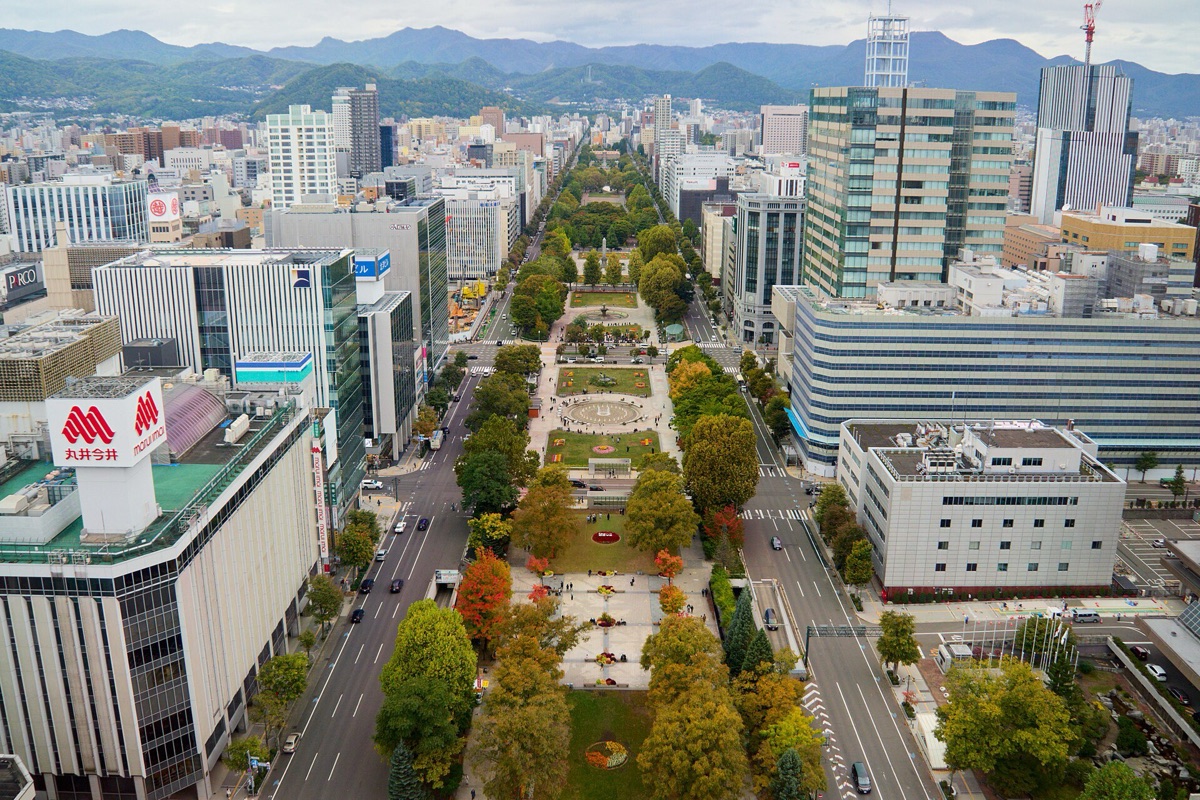
Hokkaido's capital was built after the Development Commission was set up here in 1869, on a grid of numbered blocks with a 1.5-kilometre firebreak through the middle that became Odori Park. Every February the Snow Festival fills it with snow sculptures, the 1972 Winter Olympics left a ski jump and ski runs within reach of the centre, and Sapporo calls miso ramen, soup curry and jingisukan, mutton grilled at the table, its own.
Share
Plan by budget
One city, three ways to travel it.
How much does Sapporo cost per day? Budget travellers get by on about $45 a day, mid-range trips run around $120, and luxury starts near $380 — accommodation, food, transport and activities included. That makes Sapporo the joint 56th most expensive of 114 cities for a mid-range trip (see all 114 ranked).
Daily budget · Budget
Sapporo is easy to do cheaply. Odori Park, Hokkaido Shrine, Moerenuma Park and the Snow Festival cost nothing, a capsule bed or a business-hotel room runs $30–65, and a bowl of miso ramen or soup curry is under $12.
Where your money goes
How to Get There
What to Do
An aquarium on floors 4–6 of moyuk SAPPORO by Tanukikoji, opened in July 2023, with penguins and jellyfish; open to 22:00
Map ↗ Get tickets on Tiqets →The 38th-floor deck 160 m above Sapporo Station, open until 22:00; the men's toilets have the view too
Map ↗ Get tickets on Tiqets →Isamu Noguchi's park, opened in 2005, with a glass pyramid, the 30-metre Play Mountain and a 25-metre fountain; free
Map ↗ Get tickets on Tiqets →Where to Stay
Business hotel of 200 rooms on 13 floors in Susukino, five minutes from Susukino Station's exit 4 and near Tanukikoji
Three-star business hotel with a hot-spring bath, steps from the Tanukikoji arcade and four minutes from Odori Park
Capsule hotel opposite Parco by Odori Station, with men's and women's capsules, private cabins, a large bath and a sauna
Nightly prices are approximate. Check the price for your dates before you book.
Where to Eat
An eight-seat counter in Susukino for rich miso ramen, open from 10:30 until 2:00 or 3:00 at night
Soup curry with crisp Shiretoko chicken and Hokkaido vegetables in a broth, two minutes from Susukino Station, English menu
Nijo Market's best-known morning counter: sea urchin, salmon roe and king crab over rice, walk-in only
The Susukino original, open since 1954: mutton grilled on a dome-shaped pan; cash only, and the queue starts at 17:30
Sample 3-Day Itinerary
Red brick and the Clock Tower
Sea urchin and salmon roe over rice at Nijo Ichiba Ohiso, then the Sapporo Clock Tower.
The free ground floor of the red-brick Former Hokkaido Government Office and a walk down Odori Park.
Miso ramen at Keyaki Susukino Honten and a stroll through the Tanukikoji arcade.
Shrine, beer and mutton
The Tozai line to Maruyama Park and Hokkaido Shrine, founded in 1871.
The Sapporo Beer Museum, with a three-beer tasting set for ¥1,200.
Mutton on a dome-shaped grill at Jingisukan Daruma Honten in Susukino.
Noguchi's park
Toho line and bus to Moerenuma Park, Isamu Noguchi's glass pyramid and Play Mountain.
Back for soup curry at Soup Curry Suage+ in Susukino.
The Ganso Sapporo Ramen Yokocho alley and Odori Park lit up at night.
Buy a subway 1-Day Card for ¥830, or the ¥520 Donichika ticket at weekends and holidays. Reach Nijo Market before 9:00, when the donburi counters are quiet. Carry cash: Jingisukan Daruma and many small counters take nothing else.
Daily budget · Mid-range
Mid-range is a hotel with its own hot-spring bath, the city from the 38th floor of the JR Tower and from Mount Moiwa at night, the AOAO aquarium, and dinners of crab kaiseki and jingisukan in the red-brick beer hall.
Where your money goes
How to Get There
What to Do
An aquarium on floors 4–6 of moyuk SAPPORO by Tanukikoji, opened in July 2023, with penguins and jellyfish; open to 22:00
Map ↗ Get tickets on Tiqets →The 38th-floor deck 160 m above Sapporo Station, open until 22:00; the men's toilets have the view too
Map ↗ Get tickets on Tiqets →Ropeway, running since 1958, and a mini cable car up Mount Moiwa for the night view over the city; ¥2,100 return
Map ↗ Get tickets →Where to Stay
On floors 7–18 of the COCONO SUSUKINO building, linked to Susukino Station, with a public bath, sauna and an 18th-floor roof terrace
Tokyu's apartment-style hotel on Minami 2-jo near Tanukikoji and Odori Park, two minutes from the Nishi 4-chome tram stop
A modern ryokan-style hotel with its own hot-spring bath on Kita 1-jo, west of the centre, 600 m from Nishi 11-chome Station
Nightly prices are approximate. Check the price for your dates before you book.
Where to Eat
A 60-seat conveyor-belt sushi bar with local herring and squid; expect a wait at lunch, as no bookings are taken
Jingisukan and draft beer in the red-brick Kaitakushi-kan beside the beer museum; ¥6,500 all-you-can-eat in winter
Twenty seats for northern Italian pasta with Hokkaido produce and Sorachi wines, from a chef trained in Friuli and Veneto
Crab kaiseki of king and snow crab in private rooms near the station, open since 1985; courses from ¥10,500
Sample 3-Day Itinerary
Above the city
The JR Tower Observation Deck T38 on the 38th floor over Sapporo Station.
Penguins and jellyfish at AOAO SAPPORO, then the Tanukikoji arcade.
Crab kaiseki at Kani Honke Sapporo Ekimae Honten, then the Mount Moiwa Ropeway for the night view.
Pioneer Hokkaido
Train to Shinrin Koen for the Historic Village of Hokkaido and its sixty old buildings.
The Sapporo Beer Museum's 55-minute guide tour with two tastings.
Jingisukan and draft beer in the red-brick hall of Sapporo Beer Garden.
Campus and counters
Hokkaido University Botanic Garden and the university's museum and ginkgo avenue.
Conveyor-belt sushi at Kaiten Zushi Triton Kita 8-jo Kosei, then Sapporo Factory's brick hall.
Northern Italian pasta and Sorachi wine at Semina.
Buy the T38 deck on Klook (¥640 instead of ¥740) and ride the Mount Moiwa ropeway after dark; it runs until 22:00. Book the Beer Museum's guide tour ahead: web booking closes at 9:30 on the day. In winter, Sapporo Beer Garden's King Buffet is ¥6,500 for 120 minutes.
Daily budget · Luxury
Luxury Sapporo is a room in the old brewery at the Hotel Sosei or high in the JR Tower, a private guide or driver for Otaru and the Jozankei gorge, a ski day on the 1972 Olympic slopes at Teine, and some of Japan's best sushi and kaiseki counters.
Where your money goes
How to Get There
What to Do
A day in the baths of the Jozankei Tsuruga Resort Spa Mori no Uta in the mountain gorge, with transfer from Sapporo Station
Map ↗ Get tickets →A car and driver for the day from your Sapporo hotel to the Jozankei gorge and Otaru's canal, priced per car, not per person
Map ↗ Get tickets →A full day with your own guide through Sapporo and Otaru's canal district of old warehouses and gas lamps
Map ↗ Get tickets →Where to Stay
Accor's MGallery hotel of 118 rooms in a former brewery building at Sapporo Factory that keeps its original features, near Bus Center-mae
On floors 23–34 of the JR Tower over Sapporo Station, with a hot-spring spa and the Sky J bar on the 35th floor
A 22-floor hotel of 482 rooms on Kita 5-jo, about nine minutes' walk west of Sapporo Station, with suites on its Plaza Floors
Nightly prices are approximate. Check the price for your dates before you book.
Where to Eat
Nine counter seats in Susukino for tempura at market price, two sittings a night at 18:00 and 20:30
French cooking with a sommelier and a wine focus in a 30-seat room near Maruyama Park; closed Tuesdays and Wednesdays
Masaaki Miyakawa's seven-seat counter near Maruyama, Tabelog's top-rated table in Sapporo, known for sea urchin; ¥32,000 course
Tea-kaiseki of Hokkaido produce at a counter and private rooms by Nishi 18-chome Station; the usual menu is ¥33,000
Sample 3-Day Itinerary
Otaru with a guide
A private guided day in Sapporo and Otaru starts with the canal and its warehouses.
Back through Sapporo with your guide, by the Clock Tower and Odori Park.
The seven-seat omakase at Sushi Miyakawa near Maruyama.
Into the gorge
A private car charter: Sapporo, Jozankei and Otaru, heading first up the Toyohira gorge.
Jozankei's Iwato Kannondo cave temple and a ryokan bath, then Otaru's canal at dusk.
Tempura at the nine-seat counter of Tempura Araki in Susukino.
Snow or steam
A skiing day at Sapporo Teine in season, or the Mori no Uta spa day at Jozankei.
Lunch at Restaurant Moliere near Maruyama Park and a walk to Hokkaido Shrine.
Tea-kaiseki of Hokkaido produce at Suyama.
Sushi Miyakawa takes bookings for the following month by phone from 11:00 on the first business day of each month; Tempura Araki takes them two months ahead. The Teine season runs from late November to early May. Bring cash for the smaller counters.
About Sapporo
When to go, and what it's like on the ground.
Best time to visit
June to September for mild days (a daily mean of 21–22°C in July and August) and the Odori Park beer gardens; early February for the Snow Festival, when rooms cost most; late November to early May for skiing at Teine.
Cold and snowy in winter, mild in summer: the daily mean is about −3°C in January and February, with snow on 25–29 days a month from December to February, and 21–22°C in July and August. Some rain or snow falls on about 175 days a year.
- January: -3°C average high, 22 rain days, moderate crowds
- February: -3°C average high, 19 rain days, high season
- March: 1°C average high, 18 rain days, low crowds
- April: 7°C average high, 12 rain days, low crowds
- May: 13°C average high, 10 rain days, moderate crowds
- June: 17°C average high, 9 rain days, moderate crowds
- July: 21°C average high, 9 rain days, high season
- August: 22°C average high, 11 rain days, high season
- September: 19°C average high, 12 rain days, moderate crowds
- October: 12°C average high, 14 rain days, moderate crowds
- November: 5°C average high, 18 rain days, low crowds
- December: -1°C average high, 20 rain days, moderate crowds
Getting around
Getting around Sapporo
Three subway lines (Namboku, Tozai and Toho) and a loop streetcar cover the city; a subway 1-Day Card is ¥830, or ¥520 at weekends. The Airport Rapid reaches New Chitose in 35–45 minutes for ¥1,230, and Kitaca or SAPICA cards work on the subway, trams and buses.
A travel eSIM gets you online the moment you land in Japan — data plans start at $4 — no roaming bill, no queue for a local SIM, and nothing to swap in and out of your phone. Install it before you fly.
On foot
Walking routes in Sapporo.
The red-brick government office, Odori Park, the Clock Tower, the TV Tower, Nijo Market's seafood, the Tanukikoji arcade and Susukino.
Hokkaido University's botanic garden and museum, the view from the station's 38th floor, the beer museum, lunch in the red-brick beer hall and the old brewery at Sapporo Factory.
Where to stay
Sapporo, neighbourhood by neighbourhood.
Sapporo Station
Every JR line and two subway lines meet under the JR Tower, with its 38th-floor deck and the Hotel Nikko on top. Hotels run from Toyoko Inns to five stars, and Hokkaido University's campus is a few minutes' walk away.
Best for mid-rangeOdori
The 1.5 km park that hosts the Snow Festival, the lilacs and the summer beer gardens, with the TV Tower at its east end, the Clock Tower a block north and the red-brick government office close by.
Best for mid-rangeSusukino & Tanukikoji
Japan's largest entertainment district north of Tokyo, with the Ramen Yokocho alley, and just north the 900-metre Tanukikoji arcade of about 200 shops. Business hotels and capsules cluster here.
Best for budgetNakajima Park
A large park south of Susukino around a pond, with the Hoheikan and the Sapporo Concert Hall, and its own subway station. A quieter base within walking distance of the nightlife.
Best for mid-rangeMaruyama
West of the centre on the Tozai line: Hokkaido Shrine, founded in 1871, in Maruyama Park, and many of the city's top tables, Sushi Miyakawa and Restaurant Moliere among them.
Best for luxuryJozankei
Sapporo's own onsen town in the Toyohira River gorge inside Shikotsu-Toya National Park, 75 minutes by bus, with ryokan baths, free foot baths and autumn colours around mid-October.
Best for luxuryLocal etiquette
Dos & Don'ts
Do
- Wash thoroughly before you get into an onsen bath, and keep your towel out of the water
- Check before you go if you have tattoos: many baths refuse them, Gardens Cabin's included
- Carry cash for small restaurants, market counters and ryokan
- Take off your shoes where slippers wait, and wear toilet slippers only in the toilet
- Take your rubbish with you: public bins are rare
- Smoke only in designated places; central Sapporo is a smoke-free zone with fines
Don't
- Tip: it is not customary
- Stand chopsticks upright in rice or pass food from chopsticks to chopsticks
- Talk on your phone on the subway or trains
- Point with a finger; use an open hand
- Arrive late for a counter booking: some cancel it after 15 to 30 minutes
- Skip a booking without cancelling: Shirokuma, a jingisukan bar, now limits bookings because of no-shows
Useful phrases
Say it like a local.
Beyond the city
Day trips worth the journey.
Otaru
A port town whose canal and warehouses were restored in the 1980s as museums, shops and restaurants, lit by old gas lamps at night.
Yoichi
Nikka's Yoichi Distillery, built in 1934 by Taketsuru Masataka; free self-guided visits, closed 25 December to 7 January.
Jozankei Onsen
Hot springs in the Toyohira River gorge: ryokan baths for day visitors, free foot baths and the Iwato Kannondo cave temple.
Noboribetsu
Hokkaido's best-known hot spring resort, with Jigokudani, a steaming volcanic valley, and the 50°C Oyunuma pond.
Upopoy
The National Ainu Museum and Park beside Lake Poroto in Shiraoi; book museum entry ahead, closed on Mondays.
Lake Shikotsu
A caldera lake in Shikotsu-Toya National Park, with an ice festival, the Hyoto Festival, in winter.
Where to eat
Must-try dishes.
Miso ramen
Sapporo calls itself the birthplace of miso ramen; a miso ramen alley opened in Susukino in 1951. Try it with butter and corn.
Soup curry
A thin, spiced curry broth with chicken and vegetables, made hotter on request; Garaku runs from level 1 to 40.
Jingisukan
Mutton grilled on a dome-shaped skillet with bean sprouts and onions, named after Genghis Khan and first recorded in 1931.
Kaisendon
Seafood over rice; at Nijo Market the classic is sea urchin and salmon roe, often with king crab, for breakfast.
Hokkaido crab
Hairy, snow, king and Hanasaki crab, served by season, boiled or as a kaiseki of many courses.
Sapporo Classic
The lager Sapporo sells only in Hokkaido, poured in the beer museum's tasting hall and on draft across town.
Travel insurance
Do I need travel insurance for Japan?
Travel insurance is strongly recommended for any trip to Sapporo. Safety is rated Very safe. Susukino is Japan's largest entertainment district north of Tokyo and is fine for visitors who ignore the touts. From December to February it snows on most days, so wear shoes with grip. — even in safe destinations, unexpected medical emergencies or trip cancellations can be costly. Make sure your policy covers emergency medical treatment, hospitalisation, trip cancellation, and emergency evacuation.
Visa note: Visa-free for up to 90 days for UK, US, EU, Canadian and Australian passports. Japan plans an online pre-travel authorisation, JESTA, but it is not yet in force; check before travel.. Some countries require proof of travel insurance as part of the visa application.
Good to know
FAQ: Sapporo travel questions
Is Sapporo safe to visit?
Very safe. Susukino is Japan's largest entertainment district north of Tokyo and is fine for visitors who ignore the touts. From December to February it snows on most days, so wear shoes with grip.
When is the best time to visit Sapporo?
June to September for mild days (a daily mean of 21–22°C in July and August) and the Odori Park beer gardens; early February for the Snow Festival, when rooms cost most; late November to early May for skiing at Teine. Cold and snowy in winter, mild in summer: the daily mean is about −3°C in January and February, with snow on 25–29 days a month from December to February, and 21–22°C in July and August. Some rain or snow falls on about 175 days a year.
How much does a trip to Sapporo cost per day?
- Budget $45–$80 / day
- Mid-range $120–$200 / day
- Luxury $380–$750 / day
Do I need a visa to visit Japan?
Visa-free for up to 90 days for UK, US, EU, Canadian and Australian passports. Japan plans an online pre-travel authorisation, JESTA, but it is not yet in force; check before travel.
How do I get around Sapporo?
Three subway lines (Namboku, Tozai and Toho) and a loop streetcar cover the city; a subway 1-Day Card is ¥830, or ¥520 at weekends. The Airport Rapid reaches New Chitose in 35–45 minutes for ¥1,230, and Kitaca or SAPICA cards work on the subway, trams and buses. Sapporo has a metro system. Taxi base fare ~$4. Day pass ~$5.
Is tipping expected in Sapporo?
Tipping is not customary in Japan. Some sit-down restaurants add a 10% service charge, and many small restaurants and ryokan take cash only.
What currency is used in Japan?
The local currency is JPY, and the official language is Japanese.
Compare