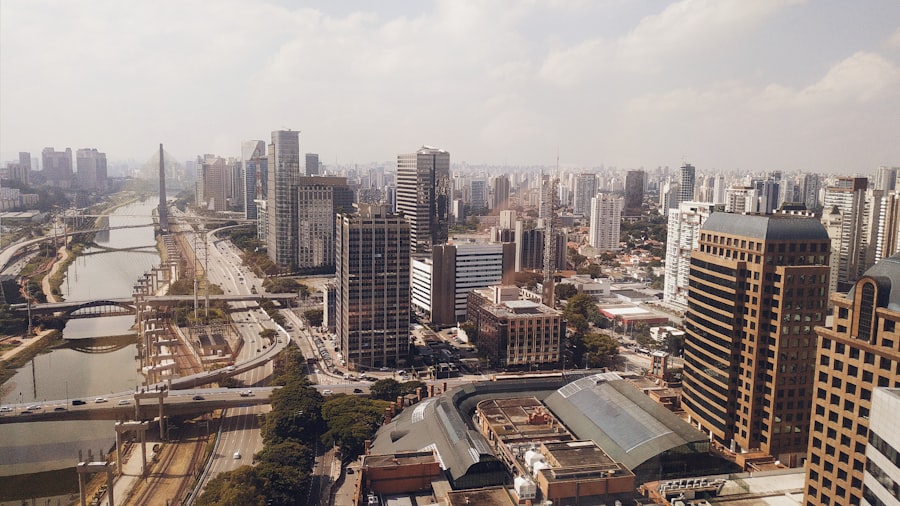
São Paulo on $40, $120 or $350 a day
Latin America's vast financial and cultural engine — a restless megacity of towering skylines, world-class restaurants, endless street art and a nightlife that never sleeps. Each November the São Paulo Grand Prix roars at Interlagos, a short, old-school anticlockwise circuit beloved for wild weather, passionate crowds and some of Formula 1's most dramatic finishes.
Share
Plan by budget
One city, three ways to travel it.
How much does São Paulo cost per day? Budget travellers get by on about $40 a day, mid-range trips run around $120, and luxury starts near $350 — accommodation, food, transport and activities included. That makes São Paulo the joint 50th cheapest of 110 cities for a mid-range trip (see all 110 ranked).
Daily budget · Budget
Budget São Paulo is per-kilo lunch buffets, corner padaria coffee and pão de queijo, hostels in Vila Madalena, and free art at MASP and the parks. The street-art alleys cost nothing.
Where your money goes
How to Get There
Where to Stay
Reliable budget chain right on Avenida Paulista by the metro
Map ↗ Check prices on Klook →Straightforward budget hotel near Ibirapuera Park, the city''s best green space.
Map ↗ Check prices on Klook →Selina''s São Paulo house in the Centro, mixing dorms and private rooms with co-working space.
Check prices on Klook →Where to Eat
A padaria cafezinho with warm cheese bread — the daily São Paulo ritual
Pay-by-weight buffets everywhere — a huge, cheap Paulistano lunch
The famous mortadella sandwich and pastel de bacalhau at the market
Map ↗Sample 3-Day Itinerary
Paulista & MASP
Walk Avenida Paulista; it closes to cars on Sundays and fills with musicians.
MASP (free on Tuesdays) for the glass-easel gallery.
Cheap boteco beer and pastel in Bela Vista.
Centro on foot
Municipal Market: the mortadella sandwich is the point, split one if you can.
Theatro Municipal, the Copan curve, and the Sé cathedral.
Ramen in Liberdade for under R$40.
Ibirapuera & street art
Ibirapuera Park — Niemeyer pavilions, free and vast.
Beco do Batman in Vila Madalena for the murals.
Bar crawl on Rua Aspicuelta, cheap and loud.
Eat at a por-quilo (pay-by-weight) buffet for a huge cheap lunch. MASP is free on Tuesdays; Beco do Batman street art is always free. For the GP, general admission at Interlagos is the cheapest — take an organised shuttle.
Daily budget · Mid-range
Mid-range means a boutique hotel in Jardins or Vila Madalena, a serious restaurant scene, and rooftop bars. Grand Prix grandstand seats fit comfortably here.
Where your money goes
How to Get There
Where to Stay
Refined tower off Paulista with a top-floor bar and pool
Map ↗ Check prices on Klook →Four-star in Jardins, the city''s best district for restaurants and walkable streets.
Map ↗ Check prices on Klook →Business-district four-star on Berrini with a pool, well placed for the southern business zone.
Map ↗ Check prices on Klook →Where to Eat
Cult deli for pastrami and reubens, a chef-driven casual favourite
Paulistano pizza is world-class — Bráz is a benchmark
Jefferson Rueda's wildly popular whole-hog restaurant, World's 50 Best
Map ↗Sample 3-Day Itinerary
Art & avenue
MASP and the Instituto Moreira Salles on Paulista.
Pinacoteca do Estado in the old centre.
Dinner in Pinheiros — this is what the city is actually good at.
Markets & parks
Municipal Market, then the Japanese garden in Ibirapuera.
Museu do Ipiranga, reopened and enormous.
Feijoada and a caipirinha in Vila Madalena.
Interlagos or the coast
Metro and train south to Interlagos for a circuit tour on a non-race weekend.
Or the coastal road to Santos for the beach and the football museum.
Churrascaria dinner back in the city.
Base in Jardins or Pinheiros for dining and safety. São Paulo has South America's best restaurant scene — book ahead. For the GP, the Arquibancada grandstands over the main straight and Senna S give the best action.
Daily budget · Luxury
Luxury São Paulo is the Rosewood and Fasano, World's-50-Best tasting menus, helicopter hops over the traffic, and Grand Prix Paddock Club at historic Interlagos.
Where your money goes
How to Get There
What to Do
Helicopter hop over the endless skyline — the local way to beat traffic
Private guide to MASP, Pinacoteca and the Jardins galleries and ateliers
Map ↗Chef-guided evening across the city's World's-50-Best tables
Where to Stay
Timeless Jardins luxury with the legendary Fasano restaurant
Map ↗ Check prices on Klook →Jean Nouvel tower of gardens at Cidade Matarazzo — the city's finest
Map ↗ Check prices on Klook →Five-star international hotel with a full spa, notable restaurants and the service standard the brand implies.
Map ↗ Check prices on Klook →Where to Eat
Timeless refined Italian in the legendary Jardins hotel
Michelin-level tasting menus showcasing Brazilian terroir
Sample 3-Day Itinerary
Jardins
Private guide through MASP and the Paulista collections.
Oscar Freire, then a spa afternoon.
One of the World's 50 Best tables — book months ahead.
City from above
Helicopter transfer over the largest private helicopter fleet in the world.
Instituto Tomie Ohtake and a private gallery circuit.
Tasting menu in Pinheiros with a Brazilian wine flight.
Coast or mountains
Chauffeur to Guarujá or up to Campos do Jordão.
Lunch at a coastal club or a mountain chalet.
Return for a late dinner in Jardins.
The Rosewood São Paulo and Fasano are the marquee stays. Locals beat the gridlock by helicopter — a hop to Interlagos is the ultimate race-day move. D.O.M. and A Casa do Porco are essential luxury tables.
About São Paulo
When to go, and what it's like on the ground.
Best time to visit
April–May and September–October are mild and drier; the Grand Prix runs in November. Summers (Dec–Mar) are warm and wet.
Humid subtropical: warm wet summers (Dec–Mar, 25–30°C, afternoon storms), mild drier winters (Jun–Aug, 12–22°C).
- January: 24°C average high, 15 rain days, moderate crowds
- February: 24°C average high, 13 rain days, moderate crowds
- March: 23°C average high, 12 rain days, moderate crowds
- April: 22°C average high, 8 rain days, high season
- May: 19°C average high, 7 rain days, high season
- June: 18°C average high, 5 rain days, high season
- July: 18°C average high, 5 rain days, moderate crowds
- August: 19°C average high, 5 rain days, moderate crowds
- September: 20°C average high, 8 rain days, high season
- October: 21°C average high, 11 rain days, high season
- November: 22°C average high, 12 rain days, high season
- December: 23°C average high, 14 rain days, moderate crowds
Getting around
Getting around São Paulo
Extensive metro plus buses, but sprawl is huge; use ride-hailing (Uber/99) for door-to-door safety. Interlagos is in the far south — allow ample time and pre-book transfers on race weekend.
A travel eSIM gets you online the moment you land in Brazil — data plans start at $4 — no roaming bill, no queue for a local SIM, and nothing to swap in and out of your phone. Install it before you fly.
On foot
Walking routes in São Paulo.
The founding courtyard, the theatre, the market hall and the modernist tower above it all.
The floating art museum, the park behind it and the alley of murals across the river valley.
Where to stay
São Paulo, neighbourhood by neighbourhood.
Jardins
The wealthiest central district: designer flagships on Rua Oscar Freire, the best restaurants in Brazil, and quiet tree-lined blocks a walk from Avenida Paulista.
Best for luxuryVila Madalena
Hilly streets of bars, galleries and the Beco do Batman alley of murals. Where paulistanos go out, and loud with it on Friday and Saturday.
Best for mid-rangePinheiros
The best eating in the city per square block, from botecos to tasting menus, with a metro station and a walk to Vila Madalena.
Best for mid-rangeAvenida Paulista & Bela Vista
The financial spine and MASP, with Bela Vista's old Italian quarter behind it. Two metro lines and the easiest base for a short stay.
Best for mid-rangeLiberdade
The largest Japanese diaspora quarter outside Japan: red lanterns, ramen counters and a Sunday street market. Cheap rooms and a central metro stop.
Best for budgetCentro & República
The old core — the Theatro Municipal, the Copan building, the Municipal Market. Cheapest beds in the city, but read the room after dark.
Best for budgetLocal etiquette
Dos & Don'ts
Do
- Use Uber or 99 rather than hailing on the street
- Tip the 10% "serviço" if it is not already on the bill
- Carry a card — São Paulo is close to cashless
- Take the metro; it is clean, cheap and faster than any car at rush hour
- Book the best restaurants weeks ahead — this is Brazil's dining capital
- Greet with a single kiss on the cheek in São Paulo (Rio does two)
Don't
- Flash a phone or watch on the street, especially in Centro after dark
- Expect beaches — the coast is an hour away over the mountains
- Assume it will be hot; the plateau sits at 800 m and turns cold and wet fast
- Drive into the centre on a weekday — the rodízio plate-number ban applies
- Compare it unfavourably to Rio in front of a paulistano
- Leave anything visible in a parked car
Useful phrases
Say it like a local.
Beyond the city
Day trips worth the journey.
Santos
The nearest beach, a working port, and the Pelé museum in the old exchange district.
Embu das Artes
A colonial craft town on the western edge, with a large weekend art and furniture market.
Campos do Jordão
An alpine-pastiche mountain town in the Mantiqueira range — chocolate, chalets and cool air.
Ilhabela
An Atlantic-forest island off São Sebastião: waterfalls, empty beaches and a car ferry.
Paraty
A cobbled colonial port between the mountains and the sea, on the Rio road.
Serra da Cantareira
One of the largest urban forests on earth, right on the city's northern edge.
Where to eat
Must-try dishes.
Sanduíche de Mortadela
A fist-thick pile of mortadella in a roll at the Mercado Municipal — the city's defining bite.
Virado à Paulista
Beans mashed with cassava flour, pork chop, sausage, kale, egg and rice. The Monday plate.
Pastel de Feira
A large deep-fried pastry of cheese or minced beef, from a street-market stall, with sugarcane juice.
Esfiha
Open or folded Levantine meat pastries — São Paulo has the largest Lebanese diaspora anywhere.
Coxinha
Teardrop croquettes of shredded chicken in a crisp crumb, the standard bar snack.
Feijoada
The black-bean and pork stew, eaten at long Saturday lunches rather than in the evening.
Cafezinho
A small, strong, sweet coffee — São Paulo state built its wealth on the beans behind it.
Travel insurance
Do I need travel insurance for Brazil?
Travel insurance is strongly recommended for any trip to São Paulo. Safety is rated Exercise caution — avoid displaying valuables, use apps for taxis, and be alert at night and in the centre. — even in safe destinations, unexpected medical emergencies or trip cancellations can be costly. Make sure your policy covers emergency medical treatment, hospitalisation, trip cancellation, and emergency evacuation.
Visa note: Visa-free or eVisa for most Western passports — check current Brazil rules before travel.. Some countries require proof of travel insurance as part of the visa application.
Good to know
FAQ: São Paulo travel questions
Is São Paulo safe to visit?
Exercise caution — avoid displaying valuables, use apps for taxis, and be alert at night and in the centre.
When is the best time to visit São Paulo?
April–May and September–October are mild and drier; the Grand Prix runs in November. Summers (Dec–Mar) are warm and wet. Humid subtropical: warm wet summers (Dec–Mar, 25–30°C, afternoon storms), mild drier winters (Jun–Aug, 12–22°C).
How much does a trip to São Paulo cost per day?
- Budget $40–$90 / day
- Mid-range $120–$260 / day
- Luxury $350–$900 / day
Do I need a visa to visit Brazil?
Visa-free or eVisa for most Western passports — check current Brazil rules before travel.
How do I get around São Paulo?
Extensive metro plus buses, but sprawl is huge; use ride-hailing (Uber/99) for door-to-door safety. Interlagos is in the far south — allow ample time and pre-book transfers on race weekend. São Paulo has a metro system. Taxi base fare ~$6. Day pass ~$5.
Is tipping expected in São Paulo?
10% service is usually added to restaurant bills; extra tipping is not expected.
What currency is used in Brazil?
The local currency is BRL, and the official language is Portuguese.
Compare