Johannesburg on $40, $100 or $300 a day
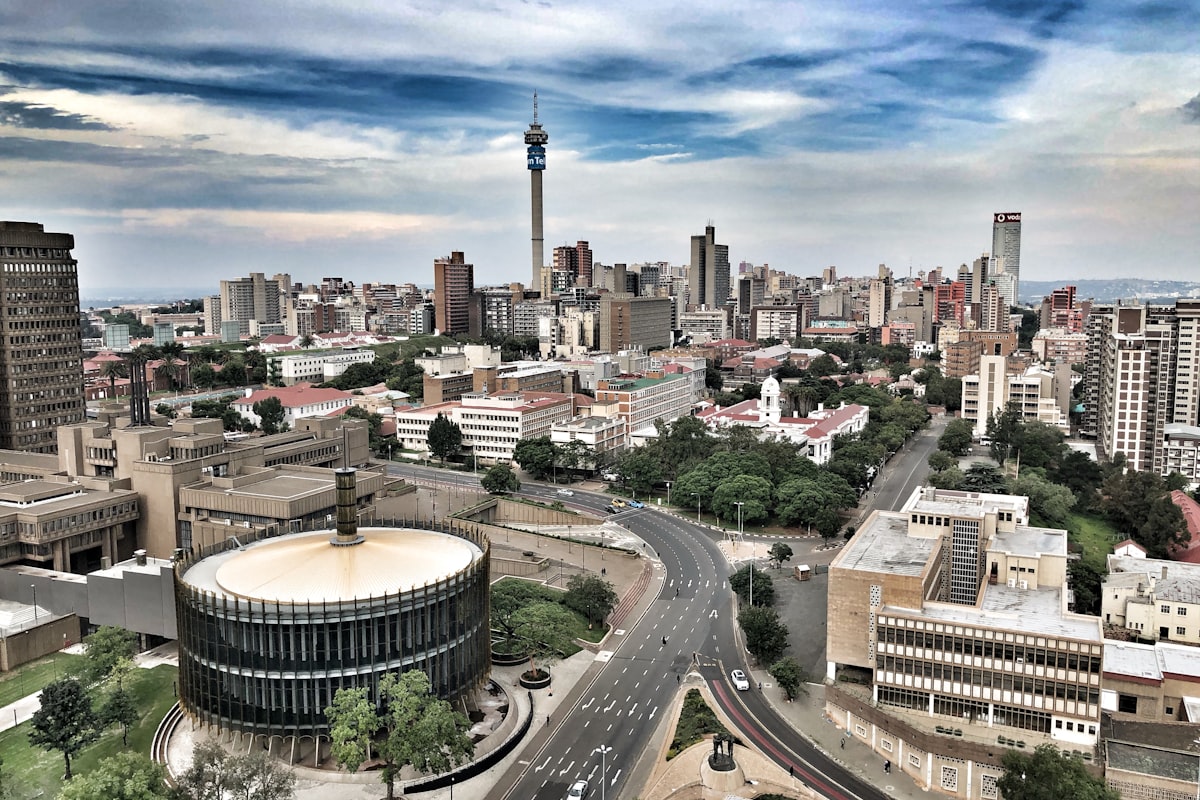
Johannesburg — Joburg, Jozi, eGoli (City of Gold) — is Africa's most dynamic and economically powerful city. Born from the 1886 gold rush, it grew into a sprawling metropolis of five million that is the continent's financial engine. The Apartheid Museum is one of the world's most powerful historical institutions; the regenerated Maboneng Precinct and Braamfontein are thriving cultural hubs; the Soweto township contains Nelson Mandela's and Desmond Tutu's homes side by side on the same street. This is a city that demands engagement.
Share
Plan by budget
One city, three ways to travel it.
How much does Johannesburg cost per day? Budget travellers get by on about $40 a day, mid-range trips run around $100, and luxury starts near $300 — accommodation, food, transport and activities included. That makes Johannesburg the joint 39th cheapest of 110 cities for a mid-range trip (see all 110 ranked).
Daily budget · Budget
Joburg is reasonably good value, though safety considerations shape the budget experience. Hostels in Melville, Maboneng, or near the Sandton Gautrain station are the best base. South African food — braai, bunny chow, boerewors rolls, and biltong — is cheap and excellent. The craft beer scene is excellent and affordable. Walking independently in some areas is inadvisable — use Uber throughout.
Where your money goes
How to Get There
What to Do
The half-day that explains South Africa — the Apartheid Museum's gut-punch, Vilakazi Street's two Nobel laureates, and Soweto telling its own story.
Read guide → Map ↗ Get tickets on Tiqets →This museum is architecturally interesting and packed with thoughtful, often brutal, reminders of South Africa’s history.
Map ↗ Get tickets on Tiqets →Nowhere can the story of South Africa's turbulent past and its extraordinary transition to democracy be told as it is at Constitution Hill. Constitution Hill is a national heritage site situated in the Johannesburg CBD and is home to the Constitutional Court of South Africa- the highest court in the country on constitutional matters. Once a place of injustice and brutality, where South Africa's leading political activists, including Nelson Mandela and Mahatma Gandhi, were detained, the site has been transformed into a place of solidarity and democracy, home to the Women's Gaol museum, Number Four Museum, and Old Fort Museum. Apart from its engaging and gripping exhibitions, Constitution Hill is also open to the public for guided tours and has become an important platform for Heritage, Education, and Tourism related programmes. The vast variety of programmes hosted at Constitution Hill enable us to embrace current issues, celebrate days of national significance, address matters of public interest and create a forum for public debate. With its rich history and character Constitution Hill boasts of ideal platforms to educate and learn about South Africa's story. ConHill, as it is famously known, also offers a variety of multi-purpose venues, suitable for conferencing, performances, a large array of events and for public activities and programmes.
Map ↗ Get tickets on Tiqets →Where to Stay
Hostel accommodation with dorm beds and, usually, a few private rooms.
Check prices on Klook →Simple budget hostel with dorms and private rooms, aimed at travellers passing through the city.
Check prices on Klook →Brilliant cultural hostel in the Maboneng precinct, vibrant and safe
Map ↗Where to Eat
South African-born global chain, excellent peri-peri chicken, very cheap
Saturday market in Braamfontein — artisanal food, craft beer, local music
Map ↗Township shebeen (informal bar) with braai and traditional beer, local experience
Café in the creative precinct, good breakfast and lunch, budget-friendly
Sample 3-Day Itinerary
Apartheid History
The Apartheid Museum (~$8) — essential context for the city.
Constitution Hill (~$6).
Cheap eats and live music in Braamfontein.
Soweto
A Soweto bicycle or combi tour (budget option).
The Mandela House and the Hector Pieterson Museum.
A shisa nyama (braai) at a Soweto spot.
Markets & Maboneng
The Neighbourgoods Market (Saturdays) in Braamfontein.
Maboneng galleries and street art.
Melville's 7th Street bars.
Always use Uber or bolt, never hail street taxis. Stay in Maboneng (creative precinct, café culture) or Melville (university neighbourhood, cheap restaurants). The Neighbourgoods Market in Braamfontein on Saturdays is excellent for budget eating. Soweto tours with a local guide are essential and cost ZAR 400–600 ($22–33). The Apartheid Museum is the single most important thing to do in Joburg and costs ZAR 150 ($8). Constitution Hill is free on certain days. Never walk with a phone or camera visibly in hand in the CBD.
Daily budget · Mid-range
Mid-range Joburg is genuinely excellent value for money. Boutique hotels and stylish guesthouses in Sandton or Melville, outstanding steak restaurants and South African wine, and extraordinary cultural experiences — township tours, Apartheid Museum, Constitution Hill — make this one of Africa's most rewarding city breaks. The wine culture (Cape winelands are 2 hours by flight) is world-class.
Where your money goes
How to Get There
What to Do
The half-day that explains South Africa — the Apartheid Museum's gut-punch, Vilakazi Street's two Nobel laureates, and Soweto telling its own story.
Read guide → Map ↗ Get tickets on Tiqets →For the best way to see Johannesburg & Soweto. Travel by double decker, open-top red bus to explore the City of Gold’s attractions at your own pace. Simply hop off and on at any of our stops with your ticket. Buses connect to the unique Soweto small group, live guided tour, allowing you to visit this vibrant area near Johannesburg. Regular departures, 7 days a week – from 9am daily. Secure parking and departure points at "The Zone in Rosebank" or start from our office near the Gautrain Station at Rosebank. Visit the Johannesburg Zoo, the Military Museum, the Apartheid Museum, Constitution Hill and a lot more. All day - Every day!
Map ↗ Get tickets on Tiqets →Where to Stay
Design-led four-star in Rosebank, walkable to the Gautrain, galleries and the Sunday market.
Map ↗ Check prices on Klook →Stylish art-filled boutique hotel in Illovo, excellent restaurant
Check prices on Klook →IHG four-star in Rosebank with a rooftop pool, in the safest and most walkable part of the city.
Check prices on Klook →Where to Eat
Acclaimed vegetarian Indian restaurant in Fordsburg's Indian quarter, remarkable
Hip all-day restaurant in the Maboneng Precinct, modern South African menu
Outstanding traditional Zimbabwean-South African cuisine, creative and honest
Sample 3-Day Itinerary
History & City
A guided Apartheid Museum and Constitution Hill.
A Maboneng art walk.
A Sandton dinner.
Soweto & Culture
A guided Soweto tour with lunch.
The Mandela House and the Orlando Towers.
Live jazz.
Cradle of Humankind
A day trip to the Cradle of Humankind fossil site.
The Maropeng visitor centre.
A Rosebank dinner.
Sandton is the safest and most developed area — called "the richest square mile in Africa." The Apartheid Museum is essential — allow 3 hours minimum. A guided Soweto township tour (including Mandela's house and Tutu's former home on Vilakazi Street) is the most important cultural experience available. The Neighbourgoods Market in Braamfontein on Saturdays is outstanding. South African Pinotage and Chenin Blanc are superb — explore the list at any decent restaurant.
Daily budget · Luxury
Luxury Joburg is world-class in the northern suburbs. The Saxon Hotel (where Mandela completed his autobiography) and the Four Seasons Westcliff are among Africa's finest. Fine dining at Marble, The Shortmarket Club, and Salsify is genuinely excellent. The private game reserve day trip from Joburg to Madikwe or Pilanesberg (2 hours) offers outstanding safari alongside city luxury.
Where your money goes
How to Get There
What to Do
The half-day that explains South Africa — the Apartheid Museum's gut-punch, Vilakazi Street's two Nobel laureates, and Soweto telling its own story.
Read guide → Map ↗ Get tickets on Tiqets →Private helicopter to Pilanesberg NP for a bush lunch, extraordinary
Get tickets on Tiqets →Private guided tour of Joburg's apartheid and freedom history with expert guide
Get tickets on Tiqets →Where to Stay
Hillside luxury overlooking the Johannesburg Zoo, extraordinary views
Check prices on Klook →Grand Italian-style hotel in Sandton, the city's most central luxury
Map ↗ Check prices on Klook →Five-star international hotel with a full spa, notable restaurants and the service standard the brand implies.
Map ↗ Check prices on Klook →Where to Eat
Wesley Randles' upscale restaurant, outstanding cocktails and creative cuisine
SA's most celebrated restaurant by David Higgs, theatrical fire-cooking
Map ↗Peter Tempelhoff's Cape Town import — one of SA's finest tasting menus
Sample 3-Day Itinerary
Private History
A private guide through the Apartheid Museum and Constitution Hill.
A spa in Sandton.
Tasting menu at Marble or DW Eleven-13.
Cradle & Air
A private Cradle of Humankind and Sterkfontein Caves tour.
A helicopter flip over the city.
Fine dining.
Pilanesberg Safari
A private day safari to Pilanesberg (Big Five).
An afternoon game drive.
Return for a farewell dinner.
The Saxon Boutique Hotel in Sandhurst is South Africa's most prestigious small hotel — 10 suites in Mandela's writing sanctuary. A private game drive to Madikwe Game Reserve (2.5 hours from Joburg) combines perfectly with city luxury. Marble restaurant by David Higgs is South Africa's most acclaimed steakhouse and fire-kitchen restaurant. The Joburg Art Fair in November is one of Africa's most significant cultural events. Private helicopter flight to the Pilanesberg National Park for a bush lunch is outstanding.
Sight guides
Johannesburg Sight Guides
About Johannesburg
When to go, and what it's like on the ground.
Best time to visit
March – May, September – October (mild, dry)
A high-altitude (1,750 m) climate of sunny, mild days year-round. Warm, stormy summers (Oct–Mar, afternoon thunderstorms) and cold, crisp, dry winters with near-freezing nights. Almost always sunny.
- January: 20°C average high, 13 rain days, moderate crowds
- February: 20°C average high, 11 rain days, moderate crowds
- March: 18°C average high, 9 rain days, moderate crowds
- April: 16°C average high, 5 rain days, high season
- May: 13°C average high, 2 rain days, moderate crowds
- June: 11°C average high, 1 rain day, moderate crowds
- July: 11°C average high, 1 rain day, moderate crowds
- August: 13°C average high, 1 rain day, moderate crowds
- September: 16°C average high, 3 rain days, high season
- October: 18°C average high, 8 rain days, high season
- November: 18°C average high, 12 rain days, moderate crowds
- December: 19°C average high, 12 rain days, moderate crowds
Getting around
Getting around Johannesburg
Car-dependent and sprawling. The Gautrain links the airport, Sandton and Pretoria; otherwise use Uber/Bolt — cheap and far safer than walking or minibus taxis. Sandton, Rosebank and Maboneng are the walkable pockets, by day.
A travel eSIM gets you online the moment you land in South Africa — data plans start at $4 — no roaming bill, no queue for a local SIM, and nothing to swap in and out of your phone. Install it before you fly.
Where to stay
Johannesburg, neighbourhood by neighbourhood.
Sandton
Africa's richest square mile: Nelson Mandela Square, luxury malls, fine dining and the safest, glossiest hotels. The default base for most visitors.
Best for luxuryMaboneng
A revitalised inner-city precinct of galleries, rooftop markets, street art and lofts — visit by day with awareness.
Best for mid-rangeRosebank
Walkable and relatively safe: the Sunday African craft market, galleries, malls and good restaurants.
Best for mid-rangeMelville
A leafy old suburb of bookshops, bars and cheap eats on 7th Street — the closest Joburg gets to a backpacker scene.
Best for budgetBraamfontein
A student-and-arts district by the university: the weekend Neighbourgoods Market, murals and a buzzing café scene.
Best for budgetSoweto
The township that shaped South Africa's history: the Mandela House, the Hector Pieterson Museum, shisa nyama braais and bicycle tours.
Best for mid-rangeLocal etiquette
Dos & Don'ts
Do
- Use Uber or Bolt — they're cheap and far safer than walking
- Stay in secure areas (Sandton, Rosebank) and ask locals what's safe
- Tip car guards a few rand and the petrol attendants who fill your tank
- Engage with the history respectfully — apartheid is recent and raw
- Greet warmly; "howzit" is the universal hello
- Keep car doors locked and phones out of sight in traffic
Don't
- Walk around the CBD, or anywhere, at night
- Flash valuables, phones or jewellery
- Leave anything visible in a parked car
- Wander townships without a local guide
- Try the minibus taxis as a visitor — they're confusing and risky
- Treat Soweto tours as a spectacle — these are people's homes
Useful phrases
Say it like a local.
Beyond the city
Day trips worth the journey.
Cradle of Humankind
A UNESCO site of hominid fossils and the Sterkfontein Caves, with the Maropeng centre.
Pretoria
The jacaranda-lined administrative capital: the Union Buildings and Voortrekker Monument.
Pilanesberg
A Big Five game reserve set in an ancient volcanic crater.
Sun City
A glitzy casino-and-waterpark resort beside Pilanesberg.
Soweto
The historic township: the Mandela House, Vilakazi Street and the Hector Pieterson Museum.
Where to eat
Must-try dishes.
Braai
The national barbecue — boerewors sausage, lamb chops and steak over wood coals.
Bunny Chow
A hollowed-out loaf filled with curry — a Durban-Indian icon found citywide.
Boerewors Roll
A coiled farmer's sausage in a roll with tomato relish — the South African hot dog.
Pap & Chakalaka
Maize porridge with a spicy vegetable relish — the braai staple.
Bobotie
Spiced minced meat baked under an egg custard — a Cape-Malay classic.
Biltong
Air-dried, spiced cured meat — the beloved national snack.
Malva Pudding
A sweet, sticky apricot sponge served hot with custard.
Travel insurance
Do I need travel insurance for South Africa?
Travel insurance is strongly recommended for any trip to Johannesburg. Safety is rated Exercise heightened caution — violent and petty crime are real; avoid walking, use cars, and stay in secure areas like Sandton and Rosebank. — even in safe destinations, unexpected medical emergencies or trip cancellations can be costly. Make sure your policy covers emergency medical treatment, hospitalisation, trip cancellation, and emergency evacuation.
Visa note: Visa-free for up to 90 days for many Western nationalities; check requirements for your passport.. Some countries require proof of travel insurance as part of the visa application.
Good to know
FAQ: Johannesburg travel questions
Is Johannesburg safe to visit?
Exercise heightened caution — violent and petty crime are real; avoid walking, use cars, and stay in secure areas like Sandton and Rosebank.
When is the best time to visit Johannesburg?
March – May, September – October (mild, dry) A high-altitude (1,750 m) climate of sunny, mild days year-round. Warm, stormy summers (Oct–Mar, afternoon thunderstorms) and cold, crisp, dry winters with near-freezing nights. Almost always sunny.
How much does a trip to Johannesburg cost per day?
- Budget $40–$65 / day
- Mid-range $100–$185 / day
- Luxury $300–$580 / day
Do I need a visa to visit South Africa?
Visa-free for up to 90 days for many Western nationalities; check requirements for your passport.
How do I get around Johannesburg?
Car-dependent and sprawling. The Gautrain links the airport, Sandton and Pretoria; otherwise use Uber/Bolt — cheap and far safer than walking or minibus taxis. Sandton, Rosebank and Maboneng are the walkable pockets, by day. Taxi base fare ~$2. Day pass ~$5.
Is tipping expected in Johannesburg?
Expected — 10–15% at restaurants; tip petrol attendants, car guards (a few rand) and guides.
What currency is used in South Africa?
The local currency is ZAR (R), and the official language is English, Zulu.
Compare