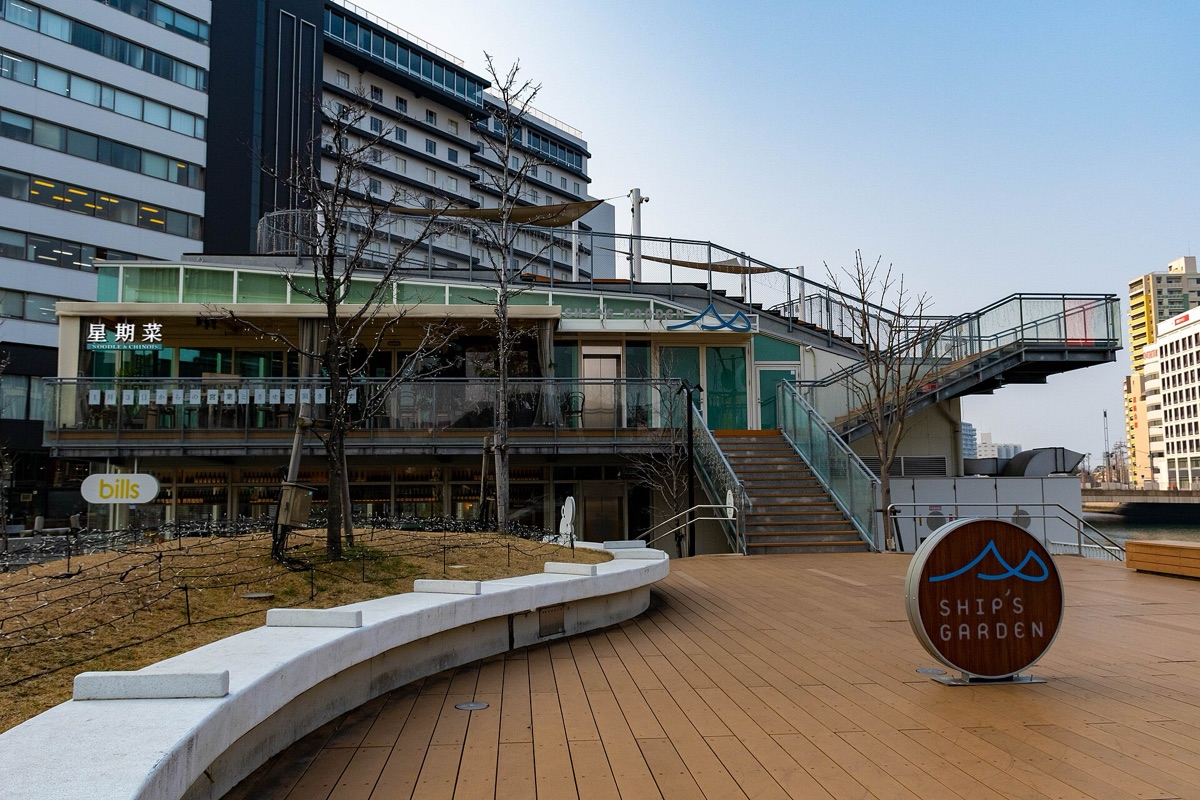
Fukuoka on $45, $120 or $450 a day
Kyushu's largest city joins two old towns across the Naka River: Hakata, the merchants' port, and Fukuoka, the castle town, merged in 1889. About a hundred yatai stalls open at dusk in Nakasu, Tenjin and Nagahama, Hakata ramen comes in pork-bone broth, and the airport is five minutes from Hakata Station by subway.
Share
Plan by budget
One city, three ways to travel it.
How much does Fukuoka cost per day? Budget travellers get by on about $45 a day, mid-range trips run around $120, and luxury starts near $450 — accommodation, food, transport and activities included. That makes Fukuoka the joint 56th most expensive of 114 cities for a mid-range trip (see all 114 ranked).
Daily budget · Budget
Fukuoka is cheap to eat in: a bowl of tonkotsu at Hakata Issou costs under ¥1,000 and a yatai supper a few thousand yen. The castle ruins, Ohori Park and the temples of old Hakata are free, and the subway day pass is ¥640. A hostel bed or a pod near Hakata Station or in Nakasu keeps the night cheap.
Where your money goes
What to Do
teamLab's digital forest on the 5th floor of BOSS E·ZO by the PayPay Dome: catch and collect animals, climb, draw
Map ↗ Get tickets on Tiqets →Aquarium of Kyushu's seas, with sharks and sea otters, on the sandbar across Hakata Bay, 20 minutes by ferry from Momochi
Map ↗ Get tickets on Tiqets →Walls, gates and turrets of Kuroda Nagamasa's early-17th-century castle, the largest in Kyushu in the Edo period — free
Map ↗ Get tickets on Tiqets →Where to Stay
Hostel in Tenyamachi, two subway stops from Hakata Station, with dorms, private rooms, a 9th-floor lounge and free breakfast
Hotel about 300 metres from Hakata Station on Hakata Eki Chuo-gai, five minutes by car from the airport
204-room hotel in Kamikawabata-machi, Hakata, opened in 2019, 300 m from Nakasu-Kawabata station and a short walk from Canal City
Nightly prices are approximate. Check the price for your dates before you book.
Where to Eat
Tonkotsu ramen from three pots of pork-bone broth, six minutes' walk from Hakata Station; on Tabelog's top-100 ramen list every year since 2020. Cash only
The ramen chain's flagship by Nakasu-Kawabata station: tonkotsu at a 40-seat counter, open 24 hours
Small gyoza fried and served on a hot iron pan; 120 seats, no bookings, cash only, evenings except Sunday
About 20 stalls on the riverbank at the southern tip of Nakasu from about 6pm: Hakata ramen, oden and yakitori at a counter for seven or eight
Sample 3-Day Itinerary
Old Hakata
Shofukuji, Japan's first Zen temple, and the wooden Great Buddha of Tochoji next door.
Kushida Shrine and the Hakata Machiya Folk Museum, then tonkotsu at Hakata Issou.
Ramen, oden and skewers at the Nakasu yatai stalls by the river.
Castle and lake
The walls and turrets of the Fukuoka Castle Ruins in Maizuru Park.
A lap of the pond in Ohori Park and its Japanese garden.
Gyoza on the iron pan at Hakata Gion Tetsunabe.
Dazaifu
The bus from Hakata to Dazaifu Tenmangu, and an umegae mochi on the approach.
The moss and rock gardens of Komyozenji, then back to Tenjin by Nishitetsu train.
Late tonkotsu at Ichiran Honsha Sohonten, open all night.
Carry ¥3,000–5,000 a head in small notes for the yatai, and go early on Fridays and Saturdays, when the popular stalls have queues. Many stalls close one night a week, often Sunday, and in bad weather. On the subway a contactless card stops charging at the day-pass price.
Daily budget · Mid-range
Mid-range Fukuoka is a four-star in Tenjin or Nakasu with its own large bath, Fukuoka Tower and teamLab by the bay, a ferry to Nokonoshima, a coach day on the Itoshima coast, and dinners at the old houses of the city's dishes: mizutaki, miso motsunabe and grilled eel.
Where your money goes
What to Do
teamLab's digital forest on the 5th floor of BOSS E·ZO by the PayPay Dome: catch and collect animals, climb, draw
Map ↗ Get tickets on Tiqets →The 234-metre tower of 1989, clad in 8,000 half-mirrors, with its top deck at 123 metres over Momochi beach
Map ↗ Get tickets →Eight hours by coach: Shiraito Falls, Miyajidake Shrine, Ichiran no Mori and the wedded rocks of Sakurai Futamigaura
Map ↗ Get tickets →Where to Stay
171-room hotel at 2-8 Tenjin, 200 metres from Tenjin Station, with a cooked-to-order breakfast
Four-star in Nakasu, two minutes from Nakasu-Kawabata station, with a 13th-floor bath opening onto a water garden
Gion hotel ten minutes' walk from Hakata Station with its own natural hot-spring bath, renovated in April 2026
Nightly prices are approximate. Check the price for your dates before you book.
Where to Eat
Grilled eel over rice in Nakasu since 1873; the special unagi donburi is ¥3,100. Closed Tuesday and Wednesday
Hakata chicken hotpot in a house with a hundred years of history; the bone-in mizutaki is ¥3,300. Closed Sundays
Haruyoshi izakaya for mackerel landed by Goto Islands fishermen and served the day it is caught; best in winter
The house that made motsunabe with miso: beef offal, cabbage and chives in a miso broth, as courses from ¥5,500
Sample 3-Day Itinerary
By the bay
teamLab Forest Fukuoka in BOSS E·ZO beside the PayPay Dome.
Fukuoka Tower's 123-metre deck, then the sand of Momochi beach.
Miso motsunabe at Hakata Motsunabe Yamanaka Akasaka.
Island and eel
Subway to Meinohama and the ferry to Nokonoshima Island Park.
Back to Nakasu for eel over rice at Hakata Meidai Yoshizuka Unagiya.
Chicken hotpot at Mizutaki Nagano.
The Itoshima coast
The Itoshima coastal day tour leaves Fukuoka for Shiraito Falls and Miyajidake Shrine.
Ichiran no Mori and the wedded rocks of Sakurai Futamigaura.
Mackerel landed that day at Kiharu no Gomasaba ya in Haruyoshi.
Book Mizutaki Nagano and Yamanaka a few days ahead; Yamanaka serves hotpot for two or more and admits no children under 12 on weekdays. Buy teamLab Forest tickets online, as the desk queue is long. The Mitsui Garden has a 13th-floor bath, and the Dormy Inn Hakata Gion its own hot spring.
Daily budget · Luxury
Luxury Fukuoka is a room high above the city at the Ritz-Carlton in Daimyo or ONE FUKUOKA HOTEL in Tenjin, omakase at Sushi Sakai, a driver for the Itoshima coast and Dazaifu, and a guided night of the yatai and the river.
Where your money goes
What to Do
Aquarium of Kyushu's seas, with sharks and sea otters, on the sandbar across Hakata Bay, 20 minutes by ferry from Momochi
Map ↗ Get tickets on Tiqets →Sake tasting at Hakata's last working brewery, in a cellar over 150 years old and a registered cultural property
Map ↗ Get tickets →An evening with a guide: the Fukuoka Tower deck, a cruise on the Naka river and supper at the yatai, for eight at most
Map ↗ Get tickets →Where to Stay
Opened in June 2023 on the top floors of Fukuoka Daimyo Garden City, the tower on the old Daimyo school site
42 rooms on the 18th and 19th floors of ONE FUKUOKA BLDG, opened in Tenjin in April 2025, linked to Tenjin Station
208-room hotel of 2019 by the shinkansen exit of Hakata Station, with a rooftop hot-spring pool and open-air spa
Nightly prices are approximate. Check the price for your dates before you book.
Where to Eat
Aged Miyazaki Oshioka jidori grilled as a course at a ten-seat counter, opened 2024; Tabelog Bronze 2026. No children
Japanese cuisine for 14 in Sumiyoshi, two Michelin stars on its debut in the 2019 Fukuoka guide; lunch Wednesday to Sunday
Ten-course French from a chef trained in Paris and Burgundy, with over 300 AOC wines and 20–30 cheeses; the course is ¥28,000
Daigo Sakai's 12-seat counter in Nishinakasu: three Michelin stars in the 2019 Fukuoka guide, Tabelog Gold or Silver every year since 2019
Sample 3-Day Itinerary
Across the bay
The ferry from Momochi to Uminonakamichi Marine World.
The Ishikura Shuzo sake tasting in its old Hakata cellar.
Omakase at Sushi Sakai, booked weeks ahead.
Itoshima and Dazaifu
Private car to Itoshima and Dazaifu: Shiraito Falls first.
The wedded rocks at Futamigaura, then Dazaifu Tenmangu on the way back.
The yakitori course at Yakitori Koto.
Yatai with a guide
Kaiseki lunch at Oryori Furukawa in Sumiyoshi.
The Fukuoka Art Museum and the Japanese garden in Ohori Park.
The night tour with yatai dinner: Fukuoka Tower, the river cruise and the stalls.
Sushi Sakai takes bookings by phone only, in two-hour sittings, and charges in full if you are over 30 minutes late. Restaurant Arena must be booked by the day before. The Miyako Hotel Hakata has a rooftop hot-spring pool directly above Hakata Station's shinkansen exit.
About Fukuoka
When to go, and what it's like on the ground.
Best time to visit
March–May and October–November. Cherry blossom at the castle ruins late March to early April; Hakata Dontaku on 3–4 May; the Gion Yamakasa float races 1–15 July, in the summer heat; the November sumo tournament sells out.
Humid subtropical: August averages 28°C with highs over 32°C, January 7°C with highs near 10°C. It rains on 10–13 days a month, most in June and July; October is the driest month.
- January: 7°C average high, 11 rain days, low crowds
- February: 8°C average high, 11 rain days, low crowds
- March: 11°C average high, 11 rain days, moderate crowds
- April: 15°C average high, 11 rain days, high season
- May: 20°C average high, 10 rain days, high season
- June: 23°C average high, 13 rain days, low crowds
- July: 27°C average high, 12 rain days, high season
- August: 28°C average high, 11 rain days, moderate crowds
- September: 25°C average high, 11 rain days, low crowds
- October: 20°C average high, 8 rain days, moderate crowds
- November: 14°C average high, 10 rain days, moderate crowds
- December: 9°C average high, 10 rain days, moderate crowds
Getting around
Getting around Fukuoka
Three subway lines link the airport, Hakata Station (five minutes from the airport) and Tenjin; single fares are ¥210–380, a day pass ¥640, and a contactless card is capped at the pass price. Nishitetsu buses start at ¥150, and Nishitetsu trains run from Tenjin to Dazaifu and Yanagawa.
A travel eSIM gets you online the moment you land in Japan — data plans start at $4 — no roaming bill, no queue for a local SIM, and nothing to swap in and out of your phone. Install it before you fly.
On foot
Walking routes in Fukuoka.
Enni's temple, the Great Buddha of Tochoji, Japan's first Zen temple, the weavers' house, Kushida Shrine, Canal City and the yatai on Nakasu.
ACROS's terraced garden, the castle walls, Ohori Park and its garden, Dalí at the art museum, the King of Na's gold seal, the beach and Fukuoka Tower at dusk.
Where to stay
Fukuoka, neighbourhood by neighbourhood.
Hakata Station area
The shinkansen, the airport subway and most of the business hotels and hostels. North of the tracks lies old Hakata's temple quarter: Jotenji, Tochoji and Shofukuji.
Best for budgetNakasu
The island between the Naka and Hakata rivers, with some 3,500 restaurants and stores, the row of yatai at its southern tip and the city's red-light district. The Okura and the Mitsui Garden are here.
Best for mid-rangeGion & Kawabata
Kushida Shrine, the Kawabata shopping arcade, the Hakata Machiya Folk Museum and Canal City, between Hakata Station and Nakasu, with hostels and the Dormy Inn.
Best for budgetTenjin
The downtown of department stores and the Nishitetsu station for Dazaifu. ONE FUKUOKA BLDG, opened in 2025 on the old Fukuoka Building site, holds ONE FUKUOKA HOTEL; ACROS Fukuoka's terraced garden faces the park.
Best for luxuryDaimyo & Akasaka
Streets of shops and restaurants west of Tenjin. The Ritz-Carlton opened in 2023 in the Daimyo Garden City tower; Yamanaka's miso motsunabe is in Akasaka.
Best for luxuryOhori & Momochi
Ohori Park and the castle ruins on the old moat, then out to the bay: Momochi's 1 km beach, Fukuoka Tower, the PayPay Dome, BOSS E·ZO and the Hilton Sea Hawk.
Best for mid-rangeLocal etiquette
Dos & Don'ts
Do
- Use a toilet before you sit down at a yatai; the stalls have none
- Check a yatai's price board, or ask the price, before you order; prices and systems vary
- Carry ¥3,000–5,000 a head in small notes for the stalls
- Keep your bag at your feet or on your lap at a yatai, and tell the owner before bringing a large one
- Arrive five minutes early at Sushi Sakai, whose sittings start on the minute
- Buy teamLab Forest tickets online; the queue at the desk is long
Don't
- Turn up at a yatai in a big group; split up across several stalls
- Stay long at a yatai once you have eaten; others are waiting for the seats
- Expect raw fish at a yatai; the rules allow only cooked food
- Arrive more than 30 minutes late at Sushi Sakai; the booking is cancelled and charged in full
- Bring children under 12 to Yamanaka on a weekday, or to Yakitori Koto at all
- Count on a card at Hakata Issou or Hakata Gion Tetsunabe; both take cash only
Useful phrases
Say it like a local.
Beyond the city
Day trips worth the journey.
Dazaifu
Kyushu's seat of government for over 500 years: Dazaifu Tenmangu, the shrine of Sugawara Michizane, the Kyushu National Museum of 2005 and Komyozenji's gardens.
Yanagawa
A town of canals 50 km south: an hour's punt of about 4 km through the moats, with heated kotatsu boats from December to February, and the poet Kitahara Hakushu's birthplace.
Itoshima
The peninsula west of the city: beaches and surf, Shiraito Falls and the wedded rocks with their sea torii at Sakurai Futamigaura.
Karatsu
A Saga coast town with a castle of 1608 on the bay, Karatsu-yaki pottery, five kilometres of pines at Niji no Matsubara and the Kunchi float festival on 2–4 November.
Kitakyushu
Kokura Castle near the station, then Mojiko's old port, where Einstein stayed in 1922, and the tunnel under the Kanmon Strait, ten minutes on foot to Shimonoseki.
Where to eat
Must-try dishes.
Hakata ramen
Thin noodles in a thick, creamy pork-bone broth, topped with chashu pork.
Motsunabe
Beef or pork offal, cabbage, garlic, chives and chilli simmered at the table in soy or miso broth, finished with noodles or rice.
Mizutaki
Hakata chicken hotpot: whole chicken simmered for hours into a clear broth, eaten with ponzu.
Mentaiko
Spicy cod roe, which came to Fukuoka from Korea; eaten with rice, in pasta, raw or lightly seared.
Tetsunabe gyoza
Small pork, cabbage and spring-onion dumplings fried in batches and served on the hot iron pan.
Unagi donburi
Grilled eel glazed with sauce over rice, Hakata's at Yoshizuka Unagiya and Yanagawa's down the line.
Goma saba
Raw mackerel dressed with sesame, a Fukuoka izakaya dish best with winter fish.
Travel insurance
Do I need travel insurance for Japan?
Travel insurance is strongly recommended for any trip to Fukuoka. Safety is rated Nakasu, the yatai island, is also the city's red-light and entertainment district, busy late at night; walk past the touts and drink where prices are posted. — even in safe destinations, unexpected medical emergencies or trip cancellations can be costly. Make sure your policy covers emergency medical treatment, hospitalisation, trip cancellation, and emergency evacuation.
Visa note: Visa-free for up to 90 days for UK, US, EU, Canadian and Australian passports. An online travel authorisation, JESTA, is planned for around 2030.. Some countries require proof of travel insurance as part of the visa application.
Good to know
FAQ: Fukuoka travel questions
Is Fukuoka safe to visit?
Nakasu, the yatai island, is also the city's red-light and entertainment district, busy late at night; walk past the touts and drink where prices are posted.
When is the best time to visit Fukuoka?
March–May and October–November. Cherry blossom at the castle ruins late March to early April; Hakata Dontaku on 3–4 May; the Gion Yamakasa float races 1–15 July, in the summer heat; the November sumo tournament sells out. Humid subtropical: August averages 28°C with highs over 32°C, January 7°C with highs near 10°C. It rains on 10–13 days a month, most in June and July; October is the driest month.
How much does a trip to Fukuoka cost per day?
- Budget $45–$85 / day
- Mid-range $120–$220 / day
- Luxury $450–$1000 / day
Do I need a visa to visit Japan?
Visa-free for up to 90 days for UK, US, EU, Canadian and Australian passports. An online travel authorisation, JESTA, is planned for around 2030.
How do I get around Fukuoka?
Three subway lines link the airport, Hakata Station (five minutes from the airport) and Tenjin; single fares are ¥210–380, a day pass ¥640, and a contactless card is capped at the pass price. Nishitetsu buses start at ¥150, and Nishitetsu trains run from Tenjin to Dazaifu and Yanagawa. Fukuoka has a metro system. Taxi base fare ~$4. Day pass ~$4.
Is tipping expected in Fukuoka?
Tipping is not part of the custom. Where a restaurant charges for service it is on the bill: 10% at Yakitori Koto, a ¥440 table charge at Yamanaka.
What currency is used in Japan?
The local currency is JPY, and the official language is Japanese.
Compare