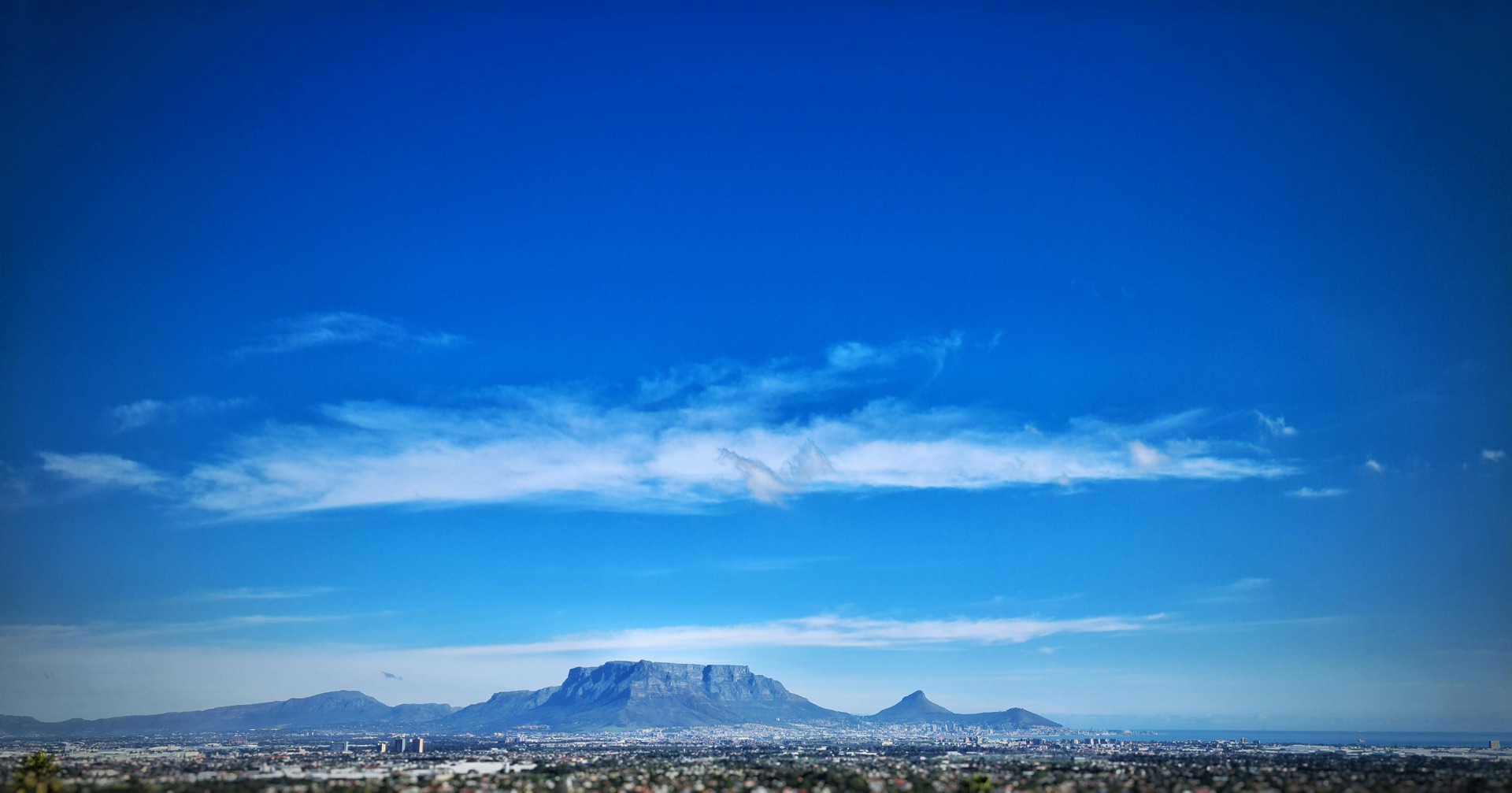
Cape Town on $35, $100 or $300 a day
Cape Town is the most beautiful city in the world by many measures — Table Mountain rising directly from the ocean, the Cape Peninsula winding to the meeting of two oceans, world-class wine country 45 minutes away, and some of Africa's finest restaurants. The favourable rand exchange rate makes it extraordinary value at every tier.
Share
Plan by budget
One city, three ways to travel it.
How much does Cape Town cost per day? Budget travellers get by on about $35 a day, mid-range trips run around $100, and luxury starts near $300 — accommodation, food, transport and activities included. That makes Cape Town the joint 35th cheapest of 110 cities for a mid-range trip (see all 110 ranked).
Daily budget · Budget
Cape Town is one of the best value cities on earth thanks to the rand exchange rate. Budget hostels in Green Point or De Waterkant run €15–25, a takeaway bunny chow costs €3, and Boulders Beach penguin colony is one of Africa's great free experiences. The main cost is getting here — once you arrive, everything is cheap.
Where your money goes
How to Get There
What to Do
The peninsula's grand finale — penguins at Boulders, the lighthouse cliffs at Cape Point, and Chapman's Peak Drive stitching it together.
Read guide → Map ↗ Get tickets on Tiqets →The flat-topped icon over the city — rotating cable car up, Platteklip Gorge for the committed, and the tablecloth cloud on schedule.
Read guide → Map ↗ Get tickets on Tiqets →The oldest building in South Africa — a 1666 star fort holding the country's founding contradictions, cannon fire at noon included.
Read guide → Map ↗ Get tickets on Tiqets →Where to Stay
Small guesthouse a block from Camps Bay beach — incredible value for the location
Map ↗ Check prices on Klook →Hostel accommodation with dorm beds and, usually, a few private rooms.
Map ↗ Check prices on Klook →Hostel accommodation with dorm beds and, usually, a few private rooms.
Check prices on Klook →Where to Eat
Whole snoek fish grilled on the harbour at Kalk Bay market — R60, with a beer
Cape Town's best bakery, De Waterkant, legendary croissants and coffee, queue out the door
Map ↗Bo-Kaap neighbourhood spot, Cape Malay breyani and bobotie, under R150 for two courses
Street food tour in Langa — vetkoek, braai, umngqusho, with a local guide, R250 total
Sample 3-Day Itinerary
Table Mountain & City
Table Mountain cable car (R420 return, book online - the cable car rotates during ascent for 360-degree views; the flat-topped summit is a biome of fynbos plants found nowhere else on earth). Walk the summit (1-2 hours, free on top). Alternatively hike up (free, 2h, the Platteklip Gorge route is well-marked).
Company's Garden (free). The South African Museum (R100 - the whale skeletons, the San rock paintings, the natural history collection). Lunch at a City Bowl cafe (R80-120 for a good lunch). The Bo-Kaap walk (free - photograph the painted houses, the mosque, the narrow lanes).
Waterfront evening: the Two Oceans sunset from the harbor walkway (free). Dinner at a Waterfront restaurant (R150-200pp for a full meal - more expensive than the city but the harbor views justify the premium once). A drink at the Bascule Whisky Bar in the Cape Grace Hotel (the finest whisky selection in Africa, R80-200 per pour).
Cape Point & Boulders Penguins
Rent a car (R400/day) or join an organized tour (R400-600pp). Cape Point (R353 entry to Table Mountain National Park, includes Cape of Good Hope): the southwestern tip of Africa, the lighthouse, the baboons (do not feed them), and the two-ocean myth (the actual southernmost meeting point of the Indian and Atlantic Oceans is further east at Cape Agulhas, but Cape Point is far more dramatic).
Drive back via Boulders Beach (R220 - the African penguin colony on the beach; 3,000 penguins, you can swim alongside them from the designated area). Simon's Town village for fish and chips (R90-120).
Return to Cape Town. Observatory for dinner: an Indian curry on Lower Main Road (R80-100pp for an excellent bunny chow or biryani). A craft beer at a local Obs bar (R40-60/pint).
Robben Island & Woodstock
Robben Island ferry (R900 including entry - the 3-hour tour is led by former political prisoners who were imprisoned here alongside Nelson Mandela; the island where Mandela spent 18 of his 27 prison years, and where he was able to see Table Mountain daily but could not leave). Book weeks ahead - it sells out.
Woodstock: the Old Biscuit Mill on a Saturday (free entry - the finest food market in South Africa, the farms of the Western Cape distilled into 50 stalls: Karoo lamb, Overberg wheat bread, Stellenbosch wine, the finest cheese in Africa). Or the Neighbourgoods Market (also Saturday).
Farewell dinner in the City Bowl: Societi Bistro or a Long Street restaurant (R150-200pp). A final South African craft beer (Devil's Peak King's Blockhouse IPA is the local benchmark, R60/pint). Long Street nightlife if the energy remains.
Buy a Day Tripper bus ticket (R250/€13) for unlimited City Sightseeing bus and Boulders Beach. Langa Township food tour is R250 including all food. Shop at the Cape Quarter market for fresh produce. Avoid carrying valuables in the CBD after dark.
Daily budget · Mid-range
Mid-range Cape Town is extraordinary value. A stylish boutique guesthouse in Sea Point runs R1,800–2,500/night (€90–125), a proper Cape Malay dinner with wine costs R400–600 (€20–30), and a full-day Winelands tour with tastings is R600 (€30). You live like royalty here.
Where your money goes
How to Get There
What to Do
Mandela's prison island, toured with former prisoners as guides — the ferry, the limestone quarry, and cell number 5. Book days ahead.
Read guide → Map ↗ Get tickets on Tiqets →The peninsula's grand finale — penguins at Boulders, the lighthouse cliffs at Cape Point, and Chapman's Peak Drive stitching it together.
Read guide → Map ↗ Get tickets on Tiqets →The flat-topped icon over the city — rotating cable car up, Platteklip Gorge for the committed, and the tablecloth cloud on schedule.
Read guide → Map ↗ Get tickets on Tiqets →Where to Stay
Beautiful Victorian townhouse in Gardens, acclaimed restaurant, intimate feel
Map ↗ Check prices on Klook →Eight-room hilltop hideaway in Higgovale — pool, views of Table Mountain and bay
Map ↗ Check prices on Klook →Four-star chain hotel, reliably comfortable rooms and full service without luxury pricing.
Map ↗ Check prices on Klook →Where to Eat
Kloof Street institution, breakfast to dinner, superb Cape Malay influences, local favourite
Map ↗South Africa's finest wine pairings, garden setting, excellent tasting menus
Map ↗Constantia valley elegance, contemporary Cape cuisine, panoramic mountain views
Map ↗Sample 3-Day Itinerary
Mountain, Museum & Atlantic
Table Mountain cable car (R420 return). At the summit: the 360-degree panorama, the fynbos walk, and the cafe. Return by cable car. Then the Zeitz MOCAA (R200 - the Jochen Zeitz collection of contemporary African art in the converted grain silo; the conversion itself, by architect Thomas Heatherwick, is extraordinary).
Camps Bay afternoon: the beach (free), lunch at a Camps Bay restaurant (R200-250pp), and a walk along the Atlantic Seaboard. Clifton 4th Beach (the most protected cove, popular with locals).
Dinner at The Test Kitchen (R800-1,000pp for the tasting menu - Luke Dale-Roberts's flagship, consistently on the World's 50 Best list; the finest restaurant in Africa; book 6-8 weeks ahead). Or: the more accessible The Shortmarket Club (R400-600pp).
Winelands Day Trip
Drive to Stellenbosch (45 min): the oak-lined university town, the finest Cape Dutch architecture in the country, and the Dorp Street restaurants. Tasting at Tokara (the hilltop estate with Stellenbosch valley views, the best setting in the Winelands, R250 for 5 wines). Then Franschhoek (30 min further): the most beautiful wine village in South Africa.
Franschhoek lunch at a winery estate (the Grande Provence estate restaurant, R200-300pp for a full lunch with wine pairing). Tasting at Rupert and Rothschild or Chamonix. Return to Cape Town via the R44 coastal route.
Dinner at a Constantia estate restaurant (La Colombe at Silvermist, R700-900pp for the tasting menu - the finest tasting menu in South Africa not at The Test Kitchen; the mountain fynbos setting is extraordinary).
Cape Peninsula Drive
Self-drive Cape Peninsula: the Chapman's Peak Drive (R55 toll - the 9km coastal road carved into the cliff face above the Atlantic, one of the finest coastal drives in the world), then Noordhoek Beach (the long white sand beach, free), then Cape Point (R353 entry).
Boulders Beach penguins (R220). Simon's Town for lunch (fresh fish at the Quarterdeck, R180-250pp). Return via the False Bay coast road (the warm-water side of the peninsula) and Kalk Bay (the fishing village with the best antique shops in Cape Town).
Farewell dinner at the Waterfront: Harbour House (R300-400pp, fresh snoek, rock lobster, and linefish from the boats in the harbor below the restaurant). A nightcap at the Zeitz MOCAA rooftop if there is an event.
Book the Cape Point via Chapman's Peak Drive and Boulder's Beach in one day — rent a car, it's the best day trip in Africa. Stellenbosch and Franschhoek restaurants are Michelin-level for a fraction of European prices. The V&A Waterfront is very safe and has excellent seafood.
Daily budget · Luxury
Luxury Cape Town centres on Clifton Beach villas, The Ellerman House, and the One&Only V&A. A Winelands helicopter tour and private wine cellar dinner at a Franschhoek estate costs less than a similar experience anywhere in Europe. Privately guided safari day trips operate to Aquila and Inverdoorn.
Where your money goes
How to Get There
What to Do
The peninsula's grand finale — penguins at Boulders, the lighthouse cliffs at Cape Point, and Chapman's Peak Drive stitching it together.
Read guide → Map ↗ Get tickets on Tiqets →The flat-topped icon over the city — rotating cable car up, Platteklip Gorge for the committed, and the tablecloth cloud on schedule.
Read guide → Map ↗ Get tickets on Tiqets →The oldest building in South Africa — a 1666 star fort holding the country's founding contradictions, cannon fire at noon included.
Read guide → Map ↗ Get tickets on Tiqets →Where to Stay
V&A Waterfront luxury resort with two islands, exceptional spa and dining
Map ↗ Check prices on Klook →Africa's finest small luxury hotel — 13 rooms, art collection, Bantry Bay views
Map ↗ Check prices on Klook →Rooftop pool and bar above the Zeitz MOCAA, the most dramatic rooms in Cape Town
Check prices on Klook →Where to Eat
Constantia historic wine estate, exceptional local ingredients, private garden dining
Luke Dale Roberts' flagship — most sought-after booking in Africa, Dark Room tasting menu
Map ↗Private chef, 8 guests maximum, paired with South Africa's finest old vintages
Private cellar dinner at a Franschhoek grand cru estate, helicopter included
Sample 3-Day Itinerary
Private Cape Town
Private helicopter flight over the Cape Peninsula (from R4,500pp for 30 min: Table Mountain, the Cape Flats, Chapman's Peak, the Cape of Good Hope, and the Atlantic coastline from the air - the geography of Cape Town explained in 30 minutes). Breakfast at the One&Only Cape Town or the Silo Hotel (the finest hotel in Africa, in the converted grain silo; the rooms look out over the Waterfront and Table Mountain).
Lunch at The Test Kitchen (reserve 8 weeks ahead for lunch or dinner). Private afternoon: a private wine tasting with the winemaker at Beau Constantia (the finest caldera-view estate in the Constantia valley, arranged through the hotel, R500-1,000pp for a private vertical).
Dinner at La Colombe (R1,200-1,500pp for the full tasting menu with wine pairing - the finest wine-and-food pairing experience in South Africa; the views over Constantia valley into False Bay). A private sunset on the Silo Hotel rooftop.
Private Cape & Winelands
Private chauffeured day to the Winelands: Tokara (private barrel tasting with the winemaker), then Rupert and Rothschild (the finest Cabernet Sauvignon in South Africa, private tour of the cellar), then Franschhoek for lunch at Haute Cabriere (the cliff-side winery restaurant, R400-600pp for the tasting lunch).
Continue to Babylonstoren (the most beautiful farm estate in South Africa - the 3-hectare garden, the farm-to-table Babel restaurant, and the historic Cape Dutch homestead). Afternoon tea in the garden (R250pp including garden entry).
Return to Cape Town. Private chef dinner at a Camps Bay villa arranged through the hotel: a braai (the South African barbecue ritual - fire-cooked Karoo lamb, boerewors sausage, potjiekos) with a sommelier-selected South African wine flight.
Shark Cage & Farewell
Shark cage diving at Gansbaai (2.5h from Cape Town - R2,500-3,500pp including transport; the great white sharks of Dyer Island, in the "shark alley" between the island and Geyser Rock with its 60,000-strong Cape fur seal colony; no scuba certification required). The most extraordinary wildlife experience in South Africa.
Return to Cape Town for lunch. Final Table Mountain hike (the Skeleton Gorge trail through the Kirstenbosch gardens, 2h each way, R220 Kirstenbosch entry - the most beautiful approach to the summit through indigenous forest). Or: a Kirstenbosch summer concert (November-April, R250 - outdoor concerts in the finest botanical garden in the world, the mountain behind and the Cape Flats below).
Farewell dinner at Pier restaurant in the Cape Grace Hotel (R600-800pp - the finest hotel restaurant at the Waterfront, the harbor views at night, and the West Coast rock lobster tails). A final South African single-vineyard Pinotage or a Vin de Constance dessert wine (the most famous wine in South African history, once Napoleon's favorite).
Ellerman House on Bantry Bay is one of Africa's finest small luxury hotels — 13 rooms, extraordinary art collection, private pool overlooking the Atlantic. Helicopter to Franschhoek for lunch at The Test Kitchen, then fly back over Cape Point — €300 all in.
Sight guides
Cape Town Sight Guides
About Cape Town
When to go, and what it's like on the ground.
Best time to visit
November - April
Mediterranean climate with warm, dry summers and wet winters. November-April is the Cape summer: warm and sunny (25-30 degrees C), the beaches are swimmable (Atlantic side is cold year-round at 14 degrees C but the False Bay side warms to 22 degrees C), and the city is at its most vibrant. December-January is the busiest and most expensive period - book ahead. The Cape Winelands are at their finest in the harvest (February-March): the vineyards turn gold and the estates are welcoming. May-October is the Cape winter: wet, occasionally stormy (the Cape of Storms is not a myth), but mild (12-18 degrees C) and excellent for whale watching in Walker Bay (June-November, the southern right whales calve in the sheltered bay near Hermanus - the finest land-based whale watching in the world).
- January: 22°C average high, 4 rain days, high season
- February: 22°C average high, 4 rain days, high season
- March: 21°C average high, 5 rain days, moderate crowds
- April: 18°C average high, 7 rain days, moderate crowds
- May: 16°C average high, 8 rain days, low crowds
- June: 14°C average high, 10 rain days, low crowds
- July: 13°C average high, 11 rain days, low crowds
- August: 14°C average high, 10 rain days, low crowds
- September: 15°C average high, 8 rain days, moderate crowds
- October: 17°C average high, 6 rain days, moderate crowds
- November: 19°C average high, 5 rain days, high season
- December: 21°C average high, 4 rain days, high season
Getting around
Getting around Cape Town
Cape Town's public transport is limited - the MyCiTi bus covers some routes (R7-40) but the city is best navigated by Uber (safe, cheap, available 24/7; most trips within the tourist zone cost R40-120/$2-6 USD). Do not use metered taxis or minibus taxis. Rental cars are excellent for day trips to the Winelands (45 min), Cape Point (1h), and the Garden Route. The Golden Arrow buses connect the suburbs but are not recommended for tourists. The Cape Metro train line is scenic but has had security issues - check current advice.
A travel eSIM gets you online the moment you land in South Africa — data plans start at $4 — no roaming bill, no queue for a local SIM, and nothing to swap in and out of your phone. Install it before you fly.
On foot
Walking routes in Cape Town.
The botanical garden in the middle of town, the old square, the painted Bo-Kaap streets and the fort.
The cableway to the top, then the promenade along the cold ocean into the harbour.
Where to stay
Cape Town, neighbourhood by neighbourhood.
V&A Waterfront
The Victoria and Alfred Waterfront: the 19th-century working harbor redeveloped into the most visited tourist destination in Africa. The Two Oceans Aquarium (R230 - the sharks, the penguins, and the living coral display), the Nelson Mandela Gateway ferry to Robben Island, and the finest restaurants in Cape Town are all here. The harbor views of Table Mountain are the definitive Cape Town image. The Zeitz MOCAA (the Museum of Contemporary Art Africa in the converted grain silo, R200 - the finest collection of contemporary African art in the world) is at the Waterfront's northern edge.
Best for mid-rangeCity Bowl & Bo-Kaap
The city centre below Table Mountain: the Company's Garden (the oldest garden in South Africa, free - the original VOC vegetable garden for passing ships, now a public park with a 500-year-old pear tree and the South African Museum at its edge). The Bo-Kaap neighborhood on the slopes above the CBD: the brightly painted houses (pink, yellow, green) of the Cape Malay community descend from slaves brought by the Dutch East India Company from Southeast Asia and India in the 17th century. The Bo-Kaap Museum (R50) and the mosque (the oldest in South Africa) are here.
Best for mid-rangeDe Waterkant & Green Point
The neighborhood between the Waterfront and the City Bowl: De Waterkant is the most LGBTQ+-friendly neighborhood in Africa, with excellent bars, brunch spots, and the Cape Quarter shopping centre. The Cape Town Stadium (the 2010 World Cup venue, free exterior, tours available) is in Green Point. The Green Point Urban Park (free - a public park created for the World Cup, excellent walking and cycling paths) is here. The neighborhood has some of the best affordable restaurants in central Cape Town.
Best for budgetCamps Bay & Atlantic Seaboard
The Atlantic coast neighborhood west of Signal Hill: Camps Bay beach (the most glamorous beach in Cape Town - white sand, the Twelve Apostles mountain backdrop, and the bluest water in the city; the Atlantic is cold here but it doesn't stop the beautiful people). The Camps Bay strip of bars and restaurants is where Cape Town shows off. Clifton beaches (the four coves, calm and fashionable, R0 to access) are 5 minutes north. The Atlantic Seaboard coast road to Hout Bay winds through some of the most dramatic coastal scenery in the world.
Best for luxuryObservatory & Woodstock
The neighborhoods east of the City Bowl: Observatory (Obs) is Cape Town's bohemian university neighborhood - the cheapest bars, the best curry restaurants (the Lower Main Road has 6 Indian restaurants in a row), independent record shops, and the most diverse crowd in Cape Town. Woodstock has gentrified rapidly - the Old Biscuit Mill (Saturday market, the finest food market in South Africa, free to enter), Neighbourgoods Market, and the street art along Albert Road. The Zeitz MOCAA is accessible from Woodstock.
Best for budgetConstantia & Winelands
The wine valley south of the city: the Constantia wine valley is the oldest wine-producing area in the Southern Hemisphere (Groot Constantia estate was established in 1685 and once supplied Napoleon with wine on St Helena). The estates (Groot Constantia, Beau Constantia, Uitsig) are all within 15 minutes of the city centre. The Constantia Nek trail into Table Mountain National Park starts from the valley. The neighborhood has Cape Town's finest restaurants and some of the most beautiful accommodation in South Africa.
Best for luxuryLocal etiquette
Dos & Don'ts
Do
- Tip 10–15% at restaurants
- Greet warmly — South Africans appreciate a chat
- Carry sunscreen — the UV is intense and dry
- Tip car guards a few rand and petrol attendants
- Use Uber or Bolt at night rather than walking
- Try the wines — the Cape produces world-class bottles
Don't
- Walk lonely streets after dark
- Leave bags visible in a car
- Hike Table Mountain alone or without checking the weather — fog rolls in fast
- Discuss politics or race casually — it's painful and complex
- Treat townships as photo subjects — go with a community-led tour
- Ignore the wind — the "Cape Doctor" sou'wester can ground cable cars
Useful phrases
Say it like a local.
Beyond the city
Day trips worth the journey.
Cape Point & Boulders
Cape of Good Hope's lighthouse and the Boulders Beach African penguin colony.
Stellenbosch & Franschhoek
The famous Cape Winelands — vineyards, mountain valleys and food on a wine tram.
Robben Island
The prison island where Mandela was held for 18 years, by ferry from the V&A.
Hermanus
Whale-watching (Jun–Nov) from the cliffs of the Walker Bay.
West Coast / Cederberg
Spring wildflowers, San rock art and big-sky landscapes north of the city.
Where to eat
Must-try dishes.
Braai
Boerewors, lamb chops and steak over wood embers — South Africa's national meal.
Cape Malay Curry
Mild, fragrant curries (lamb bredie, denningvleis) from the Bo-Kaap's Cape Malay tradition.
Bunny Chow
A hollowed-out loaf filled with curry — Durban-Indian origin, found citywide.
Bobotie
Spiced minced meat under an egg custard — the Cape-Malay classic.
Snoek
Smoky barbecued local fish, traditional Western Cape fare with apricot jam.
Koesisters
Spiced Cape-Malay syrup doughnuts, coated in coconut.
Pinotage Wine
South Africa's signature red grape, a Cinsault-Pinot Noir cross.
Travel insurance
Do I need travel insurance for South Africa?
Travel insurance is strongly recommended for any trip to Cape Town. Safety is rated Exercise caution - Cape Town has high inequality and associated crime. Stick to well-touristed areas (the Waterfront, the City Bowl, the Atlantic Seaboard). Use Uber exclusively (never hail street taxis or walk to your car alone at night in unfamiliar areas). The tourist areas are generally safe during the day. Do not display expensive items unnecessarily. — even in safe destinations, unexpected medical emergencies or trip cancellations can be costly. Make sure your policy covers emergency medical treatment, hospitalisation, trip cancellation, and emergency evacuation.
Visa note: Visa-free for most Western nationalities for 90 days (US, EU, UK, CA, AU). South Africa requires that your passport be valid for 30 days after your intended departure and have at least 2 blank pages.. Some countries require proof of travel insurance as part of the visa application.
Good to know
FAQ: Cape Town travel questions
Is Cape Town safe to visit?
Exercise caution - Cape Town has high inequality and associated crime. Stick to well-touristed areas (the Waterfront, the City Bowl, the Atlantic Seaboard). Use Uber exclusively (never hail street taxis or walk to your car alone at night in unfamiliar areas). The tourist areas are generally safe during the day. Do not display expensive items unnecessarily.
When is the best time to visit Cape Town?
November - April Mediterranean climate with warm, dry summers and wet winters. November-April is the Cape summer: warm and sunny (25-30 degrees C), the beaches are swimmable (Atlantic side is cold year-round at 14 degrees C but the False Bay side warms to 22 degrees C), and the city is at its most vibrant. December-January is the busiest and most expensive period - book ahead. The Cape Winelands are at their finest in the harvest (February-March): the vineyards turn gold and the estates are welcoming. May-October is the Cape winter: wet, occasionally stormy (the Cape of Storms is not a myth), but mild (12-18 degrees C) and excellent for whale watching in Walker Bay (June-November, the southern right whales calve in the sheltered bay near Hermanus - the finest land-based whale watching in the world).
How much does a trip to Cape Town cost per day?
- Budget $35–$65 / day
- Mid-range $100–$200 / day
- Luxury $300–$700 / day
Do I need a visa to visit South Africa?
Visa-free for most Western nationalities for 90 days (US, EU, UK, CA, AU). South Africa requires that your passport be valid for 30 days after your intended departure and have at least 2 blank pages.
How do I get around Cape Town?
Cape Town's public transport is limited - the MyCiTi bus covers some routes (R7-40) but the city is best navigated by Uber (safe, cheap, available 24/7; most trips within the tourist zone cost R40-120/$2-6 USD). Do not use metered taxis or minibus taxis. Rental cars are excellent for day trips to the Winelands (45 min), Cape Point (1h), and the Garden Route. The Golden Arrow buses connect the suburbs but are not recommended for tourists. The Cape Metro train line is scenic but has had security issues - check current advice. Taxi base fare ~$4. Day pass ~$15.
Is tipping expected in Cape Town?
10-15% at restaurants is expected and essential - service workers earn very low base wages. Always tip in cash where possible. Tip parking attendants R5-10. Tip petrol station attendants who pump your fuel (R5-10). Hotel staff and tour guides appreciate generous tips.
What currency is used in South Africa?
The local currency is ZAR (R), and the official language is Afrikaans, English, and Xhosa (English is the lingua franca of business and tourism; you will never need another language).
Compare